

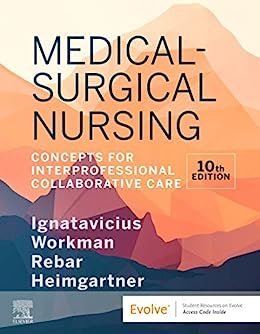
Medical-Surgical Nursing: Concepts for Interprofessional Collaborative Care 10th Edition, ISBN-13: 978-0323612425
Original price was: $100.00.$19.99Current price is: $19.99.
Safe & secure checkout
Description
Description
Medical-Surgical Nursing: Concepts for Interprofessional Collaborative Care 10th Edition, ISBN-13: 978-0323612425
[PDF eBook eTextbook]
- Publisher: Elsevier; 10th edition (October 30, 2020)
- Language: English
- 1632 pages (Large File: 49 MB)
- ISBN-10: 0323612423
- ISBN-13: 978-0323612425
Master the essential medical-surgical nursing content you’ll need for success on the Next Generation NCLEX® Exam (NGN) and safe clinical practice! Medical-Surgical Nursing: Concepts for Interprofessional Collaborative Care, 10th Edition uses a conceptual approach to provide adult health knowledge and help you develop the clinical nursing judgment skills that today’s medical-surgical nurses need to deliver safe, effective care. “Iggy” emphasizes three emerging trends in nursing ― interprofessional collaborative care, concept-based learning, and clinical judgment and systems thinking ― trends that will ground you in how to think like a nurse and how to apply your knowledge in the classroom, simulation laboratory, and clinical settings. A perennial bestseller, “Iggy” also features NCLEX Exam-style Challenge and Mastery questions to prepare you for success on the NGN!
Table of Contents:
Cover image
Title page
Table of Contents
Priority Concept Exemplars
Front Matter
Copyright
Contributors
Reviewers
Preface
Dedication
About the Authors
Acknowledgments
Guide to Special Features
UNIT I. Concepts for Medical-Surgical Nursing
1. Overview of Professional Nursing Concepts for Medical-Surgical Nursing
Quality and Safety Education for Nurses’ Competencies
Patient-Centered Care
Safety
Teamwork and Collaboration
Evidence-Based Practice
Quality Improvement
Informatics
Clinical Judgment
Ethics
Health Care Disparities
2. Clinical Judgment and Systems Thinking
Overview
Health Care Concepts
Individual Patient Care: Critical Thinking, Clinical Reasoning, and Decision Making
Individual Patient Care: Clinical Judgment
The Health Care System: Environment of Care
The Health Care System: Role of the Interprofessional Health care Team
The Need for Systems Thinking
Moving from Clinical Judgment to Systems Thinking
3. Overview of Health Concepts for Medical-Surgical Nursing
Acid-Base Balance
Cellular Regulation
Clotting
Cognition
Comfort
Elimination
Fluid and Electrolyte Balance
Gas Exchange
Glucose Regulation
Immunity
Infection
Inflammation
Mobility
Nutrition
Pain
Perfusion
Sensory Perception
Sexuality
Tissue Integrity
4. Common Health Problems of Older Adults
Overview
Health Issues for Older Adults in Community-Based Settings
Health Issues for Older Adults in Hospitals and Long-Term Care Settings
Care Coordination and Transition Management
5. Assessment and Concepts of Care for Patients With Pain
Overview of Pain
6. Concepts of Genetics and Genomics
Overview
Genetic Biology Review
Patterns of Inheritance
Genetic/Genomic Testing
The Role of the Medical-Surgical Nurse in Genetic Counseling
Gene Therapy
7. Concepts of Rehabilitation for Chronic and Disabling Health Problems
Overview
8. Concepts of Care for Patients at End of Life
Overview of Death, Dying, and End of Life
Comfort Concept Exemplar: End of Life
Ethics and Dying
9. Concepts of Care for Perioperative Patients
Surgery Overview
Preoperative Phase
Postoperative Phase
UNIT II. Concepts of Emergency Care and Disaster Preparedness
10. Concepts of Emergency and Trauma Nursing
The Emergency Department Environment of Care
Staff and Patient Safety Considerations
Scope of Emergency Nursing Practice
Emergency Nursing Principles
Trauma Nursing Principles
11. Concepts of Care for Patients With Common Environmental Emergencies
Heat-Related Illnesses
Heat Exhaustion
Heat Stroke
Snakebites and Arthropod Bites and Stings
Lightning Injuries
Cold-Related Injuries
Hypothermia
Frostbite
Altitude-Related Illnesses
Drowning
12. Concepts of Disaster Preparedness
Types of Disasters
Impact of External Disasters
Emergency Preparedness and Response
Event Resolution and Debriefing
Role of Nursing in Community Emergency Preparedness and Response
Psychosocial Response of Survivors to Mass Casualty Events
UNIT III. Interprofessional Collaboration for Patients With Problems of Fluid, Electrolyte, and Acid-Base Balance
13. Concepts of Fluid and Electrolyte Balance
Anatomy and Physiology Review
Fluid and Electrolyte Balance
Fluid and Electrolyte Balance Concept Exemplar: Dehydration
Fluid Overload
Sodium Imbalance: Hyponatremia
Sodium Imbalance: Hypernatremia
Potassium Imbalance: Hypokalemia
Potassium Imbalance: Hyperkalemia
Calcium Imbalance: Hypocalcemia
Calcium Imbalance: Hypercalcemia
Magnesium Imbalance: Hypomagnesemia
Magnesium Imbalance: Hypermagnesemia
14. Concepts of Acid-Base Balance
Maintaining Acid-Base Balance
Acid-Base Chemistry
Body Fluid Chemistry
Acid-Base Regulatory Actions and Mechanisms
Acid-Base Imbalances
Acid-Base Balance Concept Exemplar: Acidosis
Alkalosis
15. Concepts of Infusion Therapy
Overview
Peripheral Intravenous Therapy
Central Intravenous Therapy
Infusion Systems
Nursing Care For Patients Receiving Intravenous Therapy
Complications of Intravenous Therapy
Intravenous Therapy and Care of the Older Adult
Subcutaneous Infusion Therapy
Intraosseous Infusion Therapy
Intra-Arterial Infusion Therapy
Intraperitoneal Infusion Therapy
Intraspinal Infusion Therapy
UNIT IV. Interprofessional Collaboration for Patients With Problems of Immunity
16. Concepts of Inflammation and Immunity
Overview
General Immunity: Inflammation
Adaptive Immunity
17. Concepts of Care for Patients With HIV Disease
Immunity Concept Exemplar: HIV Infection And Aids (HIV-III)
18. Concepts of Care for Patients With Hypersensitivity (Allergy) and Autoimmunity
Hypersensitivities/Allergies
Types of Hypersensitivity Reactions
Angioedema
Anaphylaxis
General Autoimmunity
Immunity Concept Exemplar: Systemic Lupus Erythematosus
Lyme Disease
19. Concepts of Cancer Development
Pathophysiology Review
Cancer Development
Health Promotion: Cancer Prevention
20. Concepts of Care for Patients With Cancer
Impact of Cancer on Physical Function
Impaired Immunity and Clotting
Altered GI Function
Altered Peripheral Nerve Function
Motor and Sensory Deficits
Altered Respiratory and Cardiac Function
Cancer Pain and Quality of Life
Cancer Management
Surgery
Radiation Therapy
Cytotoxic Systemic Therapy
Oncologic Emergencies
Sepsis and Disseminated Intravascular Coagulation
Syndrome of Inappropriate Antidiuretic Hormone
Spinal Cord Compression
Hypercalcemia
Superior Vena Cava Syndrome
Tumor Lysis Syndrome
Survivorship
21. Concepts of Care for Patients With Infection
Infection
Antimicrobial Resistance
Occupational and Environmental Exposure to Sources of Infection
Emerging Infectious Diseases and Bioterrorism
Problems Resulting from Inadequate Antimicrobial Therapy
UNIT V. Interprofessional Collaboration for Patients With Problems of the Skin, Hair, and Nails
22. Assessment of the Skin, Hair, and Nails
Anatomy And Physiology Review
Assessment: recognize Cues
23. Concepts of Care for Patients With Skin Problems
Tissue Integrity Concept Exemplar: Pressure Injury
Irritation Skin Disorders
Urticaria
Inflammatory Skin Disorders
Psoriasis
Skin Infections
Parasitic Disorders
Skin Trauma
Burns
Skin Cancer
Life-Threatening Skin Disorders
UNIT VI. Interprofessional Collaboration for Patients With Problems of the Respiratory System
24. Assessment of the Respiratory System
Anatomy and Physiology Review
Health Promotion and Maintenance
Assessment: Recognize Cues
25. Concepts of Care for Patients Requiring Oxygen Therapy or Tracheostomy
Oxygen Therapy
Tracheostomy
26. Concepts of Care for Patients With Noninfectious Upper Respiratory Problems
Upper Airway Obstruction
Gas Exchange Concept Exemplar: Obstructive Sleep Apnea
Epistaxis
Fractures of the Nose
Facial Trauma
Laryngeal Trauma
Cancer of the Nose and Sinuses
Head and Neck Cancer
27. Concepts of Care for Patients With Noninfectious Lower Respiratory Problems
Asthma
Gas Exchange Concept Exemplar: Chronic Obstructive Pulmonary Disease
Cystic Fibrosis
Pulmonary Arterial Hypertension
Idiopathic Pulmonary Fibrosis
Lung Cancer
28. Concepts of Care for Patients With Infectious Respiratory Problems
Seasonal Influenza
Pandemic Respiratory Infections
Gas Exchange Concept Exemplar: Pneumonia
Infection Concept Exemplar: Pulmonary Tuberculosis
Rhinosinusitis
Peritonsillar Abscess
Inhalation Anthrax
Endemic/Geographic Respiratory Infection
29. Critical Care of Patients With Respiratory Emergencies
Gas Exchange Concept Exemplar: Pulmonary Embolism
Acute Respiratory Failure
Acute Respiratory Distress Syndrome
The Patient Requiring Intubation and Ventilation
Chest Trauma
Pneumothorax and Hemothorax
UNIT VII. Interprofessional Collaboration for Patients With Problems of the Cardiovascular System
30. Assessment of the Cardiovascular System
Anatomy and Physiology Review
Assessment: Recognize Cues
31. Concepts of Care for Patients With Dysrhythmias
Review of Cardiac Conduction System
Electrocardiography
Common Dysrhythmias
Sinus Dysrhythmias
Atrial Dysrhythmias
Interprofessional Collaborative Care
Perfusion Concept Exemplar: Atrial Fibrillation
Ventricular Dysrhythmias
32. Concepts of Care for Patients With Cardiac Problems
Perfusion Concept Exemplar: Heart Failure
Valvular Heart Disease
Inflammations and Infections
Pericarditis
Rheumatic Carditis
Cardiomyopathy
33. Concepts of Care for Patients With Vascular Problems
Perfusion Concept Exemplar: Hypertension
Arteriosclerosis and Atherosclerosis
Peripheral Arterial Disease
Acute Peripheral Arterial Occlusion
Aneurysms of the Central Arteries
Aneurysms of the Peripheral Arteries
Aortic Dissection
Peripheral Venous Disease
Clotting Concept Exemplar: Venous Thromboembolism
Venous Insufficiency
Varicose Veins
34. Critical Care of Patients With Shock
Overview
Perfusion Concept Exemplar: Hypovolemic Shock
Infection Concept Exemplar: Sepsis and Septic Shock
35. Critical Care of Patients With Acute Coronary Syndromes
Chronic Stable Angina Pectoris
Perfusion Concept Exemplar: Acute Coronary Syndrome
UNIT VIII. Interprofessional Collaboration for Patients With Problems of the Hematologic System
36. Assessment of the Hematologic System
Anatomy and Physiology Review
Assessment: recognize cues
37. Concepts of Care for Patients With Hematologic Problems
Perfusion Concept Exemplar: Sickle Cell Disease
Anemia
Polycythemia Vera
Immunity Concept Exemplar: Leukemia and Preleukemia
Malignant Lymphomas
Multiple Myeloma
Thrombocytopenic Purpura
Transfusion Therapy
UNIT IX. Interprofessional Collaboration for Patients With Problems of the Nervous System
38. Assessment of the Nervous System
Anatomy and Physiology Review
Assessment: Recognize Cues
39. Concepts of Care for Patients With Problems of the Central Nervous System: The Brain
Cognition Concept Exemplar: Alzheimer’s Disease
Mobility Concept Exemplar: Parkinson Disease
Migraine Headache
Seizures and Epilepsy
Meningitis
40. Concepts of Care for Patients With Problems of the Central Nervous System: The Spinal Cord
Immunity Concept Exemplar: Multiple Sclerosis
Mobility Concept Exemplar: Spinal Cord Injury
Low Back Pain (Lumbosacral Back Pain)
Cervical Neck Pain
41. Critical Care of Patients With Neurologic Emergencies
Transient Ischemic Attack
Perfusion Concept Exemplar: Stroke
Cognition Concept Exemplar: Traumatic Brain Injury
Brain Tumors
UNIT X. Interprofessional Collaboration for Patients With Problems of the Sensory System
42. Assessment and Concepts of Care for Patients With Eye and Vision Problems
Anatomy and Physiology Review
Assessment: Recognize cues
Sensory Perception Concept Exemplar: Cataract
Sensory Perception Concept Exemplar: Glaucoma
Corneal Disorders
Corneal Abrasion, Ulceration, And Infection
Keratoconus
Retinal Disorders
Retinal Holes, Tears, and Detachments
Refractive Errors
Trauma
43. Assessment and Concepts of Care for Patients With Ear and Hearing Problems
Anatomy and Physiology Review
Sensory Perception Concept Exemplar: Hearing Loss
Otitis Media
External Otitis
Cerumen or Foreign Bodies
Mastoiditis
Tinnitus
Ménière Disease
Acoustic Neuroma
UNIT XI. Interprofessional Collaboration for Patients With Problems of the Musculoskeletal System
44. Assessment of the Musculoskeletal System
Anatomy and Physiology Review
Assessment: recognize cues
45. Concepts of Care for Patients With Musculoskeletal Problems
Cellular Regulation Concept Exemplar: Osteoporosis
Osteomyelitis
Bone Tumors
Disorders of the Hand
Disorders Of the Foot
46. Concepts of Care for Patients With Arthritis and Total Joint Arthroplasty
Mobility Concept Exemplar: Osteoarthritis
Immunity Oncept Exemplar: Rheumatoid Arthritis
47. Concepts of Care for Patients With Musculoskeletal Trauma
Mobility Concept Exemplar: Fracture
Lower Extremity Fractures
Fractures of the Chest and Pelvis
Compression Fractures of the Spine
Perfusion Concept Exemplar: Amputation
Carpal Tunnel Syndrome
Knee Injuries
Rotator Cuff Injuries
UNIT XII. Interprofessional Collaboration for Patients With Problems of the Gastrointestinal System
48. Assessment of the Gastrointestinal System
Anatomy and Physiology Review
Assessment: Recognize Cues
49. Concepts of Care for Patients With Oral Cavity and Esophageal Problems
A Healthy Oral Cavity
Tissue Integrity Concept Exemplar: Stomatitis
Oral Cavity Disorders
Erythroplakia
Leukoplakia
Oral Cancer
Sialadenitis
Nutrition Concept Exemplar: Gastroesophageal Reflux Disease (Gerd)
Hiatal Hernias
Esophageal Tumors
Esophageal Trauma
50. Concepts of Care for Patients With Stomach Disorders
Gastritis
Infection Concept Exemplar: Peptic Ulcer Disease (PUD)
Gastric Cancer
51. Concepts of Care for Patients With Noninflammatory Intestinal Disorders
Elimination Concept Exemplar: Intestinal Obstruction
Colorectal Cancer
Irritable Bowel Syndrome
Herniation
Hemorrhoids
52. Concepts of Care for Patients With Inflammatory Intestinal Disorders
Infection Concept Exemplar: Peritonitis
Appendicitis
Gastroenteritis
Inflammation Concept Exemplar: Ulcerative Colitis
Crohn’s Disease
Diverticular Disease
Celiac Disease
Parasitic Infection
53. Concepts of Care for Patients With Liver Problems
Cellular Regulation Concept Exemplar: Cirrhosis
Infection Concept Exemplar: Hepatitis
Liver Transplantation
54. Concepts of Care for Patients With Problems of the Biliary System and Pancreas
Inflammation Concept Exemplar: Cholecystitis
Inflammation Concept Exemplar: Acute Pancreatitis
Chronic Pancreatitis
Pancreatic Cancer
55. Concepts of Care for Patients With Malnutrition: Undernutrition and Obesity
Nutrition Standards for Health Promotion and Maintenance
Food Sensitivities
Nutrition Assessment
Nutrition Concept Exemplar: Undernutrition
Nutrition Concept Exemplar: Obesity
UNIT XIII. Interprofessional Collaboration for Patients With Problems of the Endocrine System
56. Assessment of the Endocrine System
Anatomy and Physiology Review
Assessment: Recognize Cues
57. Concepts of Care for Patients With Pituitary and Adrenal Gland Problems
Disorders of the Pituitary Gland
Hyperpituitarism
Diabetes Insipidus
Syndrome of Inappropriate Antidiuretic Hormone
Disorders of the Adrenal Gland
Fluid and electrolyte balance concept exemplar: hypercortisolism (cushing disease)
Hyperaldosteronism
58. Concepts of Care for Patients With Problems of the Thyroid and Parathyroid Glands
Cellular Regulation Concept Exemplar: Hypothyroidism
Hyperthyroidism
Thyroiditis
Thyroid Cancer
Hypoparathyroidism
Hyperparathyroidism
59. Concepts of Care for Patients With Diabetes Mellitus
Glucose Regulation Concept Exemplar: Diabetes Mellitus
UNIT XIV. Interprofessional Collaboration for Patients With Problems of the Renal/Urinary System
60. Assessment of the Renal/Urinary System
Anatomy and Physiology Review
Assessment: Recognize Cues
61. Concepts of Care for Patients With Urinary Problems
Elimination Concept Exemplar: Urinary Incontinence
Cystitis
Urethritis
Urolithiasis
Urothelial Cancer
62. Concepts of Care for Patients With Kidney Disorders
Elimination Concept Exemplar: Pyelonephritis
Acute Glomerulonephritis
Chronic Glomerulonephritis
Nephrotic Syndrome
Nephrosclerosis
Polycystic Kidney Disease
Hydronephrosis and Hydroureter
Renovascular Disease
Diabetic Nephropathy
Renal Cell Carcinoma
Kidney Trauma
63. Concepts of Care for Patients With Acute Kidney Injury and Chronic Kidney Disease
Acute Kidney Injury
Elimination Concept Exemplar: Chronic Kidney Disease
UNIT XV. Interprofessional Collaboration for Patients With Problems of the Reproductive System
64. Assessment of the Reproductive System
Anatomy and Physiology Review
Assessment: Recognize Cues
65. Concepts of Care for Patients With Breast Disorders
Benign Breast Disorders
Proliferative Breast Lesion With Atypia: Atypical Hyperplasia
Proliferative Breast Lesion Without Atypia: Fibroadenoma
Nonproliferative Breast Lesions: Fibrocystic Changes (Fccs) And Cysts
Large Breasts
Small Breasts
Breast Inflammation and Infection
Cellular Regulation Concept Exemplar: Breast Cancer
66. Concepts of Care for Patients With Gynecologic Problems
Sexuality Concept Exemplar: Uterine Leiomyoma
Pelvic Organ Prolapse
Endometrial Cancer
Ovarian Cancer
Cervical Cancer
Vulvovaginitis
Toxic Shock Syndrome
67. Concepts of Care for Patients With Male Reproductive Problems
Elimination Concept Exemplar: Benign Prostatic Hyperplasia
Cellular Regulation Concept Exemplar: Prostate Cancer
Testicular Cancer
Erectile Dysfunction
Vasectomy
Other Conditions Affecting the Male Reproductive System
68. Concepts of Care for Transgender Patients
Patient-Centered Terminology
Transgender Health Issues
69. Concepts of Care for Patients With Sexually Transmitted Infections
Introduction to Sexually Transmitted Infections
Genital Herpes
Syphilis
Condylomata Acuminata (Genital Warts)
Chlamydia Infection
Gonorrhea
Sexuality, Infection, and Pain Concept Exemplar: Pelvic Inflammatory Disease
NCLEX® Examination Challenges Answer Key
Mastery Questions Answer Key
Index
Donna Ignatavicius is nationally recognized as an expert in nursing education and medical-surgical/gerontological nursing and has a wealth of experiences as a nurse educator, clinical nurse specialist, and administrator for over 40 years. Currently, she provides curriculum consultation and presentations for nursing faculty on topics such as concept-based curriculum, assessment of learning methods, and active learning strategies through her consulting company, DI Associates, Inc. Additionally, she is the primary author of numerous articles and books, including Medical-Surgical Nursing: Concepts for Interprofessional Collaborative Care, 10th ed. (2021) and her new student workbook, Developing Clinical Judgment for Professional Nursing and the Next-Generation NCLEX-RN® Examination. In 2007 she was inducted as a fellow into the prestigious Academy of Nursing Education (ANEF) for her national contribution to the field of nursing education. In 2016 she obtained her Certified Nurse Educator® (CNE) credential; in 2020 she obtained her Academic Clinical Nurse Educator (CNEcl) credential.
What makes us different?
• Instant Download
• Always Competitive Pricing
• 100% Privacy
• FREE Sample Available
• 24-7 LIVE Customer Support




Reviews
There are no reviews yet.