

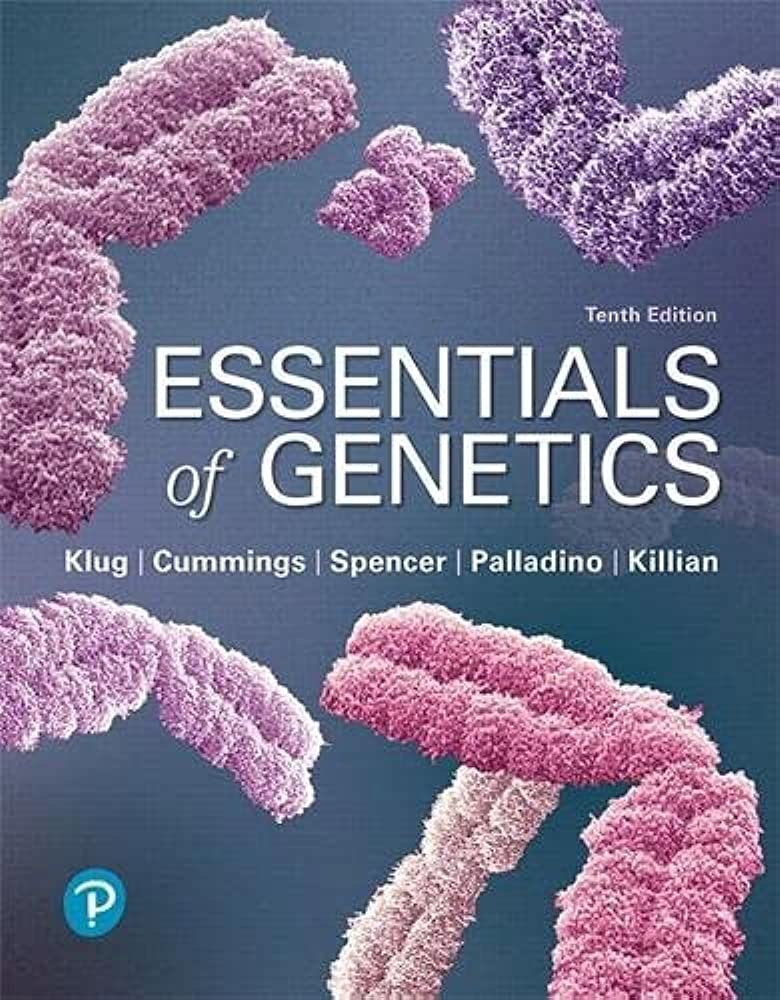
Essentials of Genetics 10th Edition by William Klug, ISBN-13: 978-0134898414
Original price was: $75.00.$24.99Current price is: $24.99.
Safe & secure checkout
Description
Description
Essentials of Genetics 10th Edition by William Klug, ISBN-13: 978-0134898414
[PDF eBook eTextbook]
- Publisher: Pearson; 10th edition (January 4, 2019)
- Language: English
- 608 pages
- ISBN-10: 0134898419
- ISBN-13: 978-0134898414
For all introductory genetics courses.
Focus on essential genetic topics and explore the latest breakthroughs.
Known for its focus on conceptual understanding, problem solving, and practical applications, the bestselling Essentials of Genetics strengthens problem-solving skills and explores the essential genetics topics that today’s students need to understand. The 10th Edition has been extensively updated to provide comprehensive coverage of important, emerging topics such as CRISPR-Cas, epigenetics, and genetic testing. Additionally, a new Special Topic chapter covers Advances in Neurogenetics with a focus on Huntington Disease, and new essays on Genetics, Ethics, and Society emphasize ethical considerations that genetics is bringing into everyday life. The accompanying Mastering Genetics online platform includes new tutorials on topics such as CRISPR-Cas and epigenetics, and new Dynamic Study Modules, which support student learning of key concepts and prepare them for class.
Table of Contents:
Title Page
Copyright Page
About the Authors
Contents
Chapter 1: Introduction to Genetics
1.1 Genetics Has an Interesting Early History
1.2 Genetics Progressed from Mendel to DNA in Less Than a Century
1.3 Discovery of the Double Helix Launched the Era of Molecular Genetics
1.4 Development of Recombinant DNA Technology Began the Era of DNA Cloning
1.5 The Impact of Biotechnology Is Continually Expanding
1.6 Genomics, Proteomics, and Bioinformatics Are New and Expanding Fields
1.7 Genetic Studies Rely on the Use of Model Organisms
1.8 Genetics Has Had a Profound Impact on Society
Problems and Discussion Questions
Chapter 2: Mitosis and Meiosis
2.1 Cell Structure Is Closely Tied to Genetic Function
2.2 Chromosomes Exist in Homologous Pairs in Diploid Organisms
2.3 Mitosis Partitions Chromosomes into Dividing Cells
2.4 Meiosis Creates Haploid Gametes and Spores and Enhances Genetic Variation in Species
2.5 The Development of Gametes Varies in Spermatogenesis Compared to Oogenesis
2.6 Meiosis Is Critical to Sexual Reproduction in All Diploid Organisms
2.7 Electron Microscopy Has Revealed the Physical Structure of Mitotic and Meiotic Chromosomes
EXPLORING GENOMICS: PubMed: Exploring and Retrieving Biomedical Literature
CASE STUDY: Timing is everything
Insights and Solutions
Problems and Discussion Questions
Chapter 3: Mendelian Genetics
3.1 Mendel Used a Model Experimental Approach to Study Patterns of Inheritance
3.2 The Monohybrid Cross Reveals How One Trait Is Transmitted from Generation to Generation
3.3 Mendel’s Dihybrid Cross Generated a Unique Ratio
3.4 The Trihybrid Cross Demonstrates That Mendel’s Principles Apply to Inheritance of Multiple Tra
3.5 Mendel’s Work Was Rediscovered in the EarlyTwentieth Century
EVOLVING CONCEPT OF THE GENE
3.6 Independent Assortment Leads to Extensive Genetic Variation
3.7 Laws of Probability Help to Explain Genetic Events
3.8 Chi‐Square Analysis Evaluates the Influence of Chance on Genetic Data
3.9 Pedigrees Reveal Patterns of Inheritance of Human Traits
3.10 Tay–Sachs Disease: The Molecular Basis of a Recessive Disorder in Humans
EXPLORING GENOMICS: Online Mendelian Inheritance in Man
CASE STUDY: To test or not to test
Insights and Solutions
Problems and Discussion Questions
Chapter 4: Modification of Mendelian Ratios
4.1 Alleles Alter Phenotypes in Different Ways
4.2 Geneticists Use a Variety of Symbols for Alleles
4.3 Neither Allele Is Dominant in Incomplete, or Partial, Dominance
4.4 In Codominance, the Influence of Both Alleles in a Heterozygote Is Clearly Evident
4.5 Multiple Alleles of a Gene May Exist in a Population
4.6 Lethal Alleles Represent Essential Genes
EVOLVING CONCEPT OF THE GENE
4.7 Combinations of Two Gene Pairs with Two Modes of Inheritance Modify the 9:3:3:1 Ratio
4.8 Phenotypes Are Often Affected by More Than One Gene
4.9 Complementation Analysis Can Determine if Two Mutations Causing a Similar Phenotype Are Alleles
4.10 Expression of a Single Gene May Have Multiple Effects
4.11 X‐Linkage Describes Genes on the X Chromosome
4.12 In Sex‐Limited and Sex‐Influenced Inheritance, an Individual’s Gender Influences the Phen
4.13 Genetic Background and the Environment Affect Phenotypic Expression
4.14 Extranuclear Inheritance Modifies Mendelian Patterns
GENETICS, ETHICS, AND SOCIETY: Mitochondrial Replacement and Three‐Parent Babies
CASE STUDY: Is it all in the genes?
Insights and Solutions
Problems and Discussion Questions
Chapter 5: Sex Determination and Sex Chromosomes
5.1 X and Y Chromosomes Were First Linked to Sex Determination Early in the Twentieth Century
5.2 The Y Chromosome Determines Maleness in Humans
5.3 The Ratio of Males to Females in Humans Is Not 1.0
5.4 Dosage Compensation Prevents Excessive Expression of X‐Linked Genes in Humans and Other Mammal
5.5 The Ratio of X Chromosomes to Sets of Autosomes Can Determine Sex
5.6 Temperature Variation Controls Sex Determination in Reptiles
GENETICS, ETHICS, AND SOCIETY: A Question of Gender: Sex Selection in Humans
CASE STUDY: Is the baby a boy or a girl?
Insights and Solutions
Problems and Discussion Questions
Chapter 6: Chromosome Mutations: Variation in Number and Arrangement
6.1 Variation in Chromosome Number: Terminology and Origin
6.2 Monosomy and Trisomy Result in a Variety of Phenotypic Effects
6.3 Polyploidy, in Which More Than Two Haploid Sets of Chromosomes Are Present, Is Prevalent in Plan
6.4 Variation Occurs in the Composition and Arrangement of Chromosomes
6.5 A Deletion Is a Missing Region of a Chromosome
6.6 A Duplication Is a Repeated Segment of a Chromosome
6.7 Inversions Rearrange the Linear Gene Sequence
6.8 Translocations Alter the Location of Chromosomal Segments in the Genome
6.9 Fragile Sites in Human Chromosomes Are Susceptible to Breakage
GENETICS, ETHICS, AND SOCIETY: Down Syndrome and Prenatal Testing—The New Eugenics?
CASE STUDY: Fish tales
Insights and Solutions
Problems and Discussion Questions
Chapter 7: Linkage and Chromosome Mapping in Eukaryotes
7.1 Genes Linked on the Same Chromosome Segregate Together
7.2 Crossing Over Serves as the Basis of Determining the Distance between Genes during Mapping
7.3 Determining the Gene Sequence during Mapping Requires the Analysis of Multiple Crossovers
7.4 As the Distance between Two Genes Increases, Mapping Estimates Become More Inaccurate
EVOLVING CONCEPT OF THE GENE
7.5 Chromosome Mapping Is Now Possible Using DNA Markers and Annotated Computer Databases
7.6 Other Aspects of Genetic Exchange
EXPLORING GENOMICS: Human Chromosome Maps on the Internet
CASE STUDY: Links to autism
Insights and Solutions
Problems and Discussion Questions
Chapter 8: Genetic Analysis and Mapping in Bacteria and Bacteriophages
8.1 Bacteria Mutate Spontaneously and Are Easily Cultured
8.2 Genetic Recombination Occurs in Bacteria
8.3 The F Factor Is an Example of a Plasmid
8.4 Transformation Is Another Process Leading to Genetic Recombination in Bacteria
8.5 Bacteriophages Are Bacterial Viruses
8.6 Transduction Is Virus‐Mediated Bacterial DNA Transfer
GENETICS, ETHICS, AND SOCIETY: Multidrug‐Resistant Bacteria: Fighting with Phage
CASE STUDY: To test or not to test
Insights and Solutions
Problems and Discussion Questions
Chapter 9: DNA Structure and Analysis
9.1 The Genetic Material Must Exhibit Four Characteristics
9.2 Until 1944, Observations Favored Protein as the Genetic Material
9.3 Evidence Favoring DNA as the Genetic Material Was First Obtained during the Study of Bacteria an
9.4 Indirect and Direct Evidence Supports the ConceptThat DNA Is the Genetic Material in Eukaryotes
9.5 RNA Serves as the Genetic Material in Some Viruses
9.6 The Structure of DNA Holds the Key to Understanding Its Function
EVOLVING CONCEPT OF THE GENE
9.7 Alternative Forms of DNA Exist
9.8 The Structure of RNA Is Chemically Similar to DNA, but Single Stranded
9.9 Many Analytical Techniques Have Been Useful during the Investigation of DNA and RNA
EXPLORING GENOMICS: Introduction to Bioinformatics: Blast
CASE STUDY: Credit where credit is due
Insights and Solutions
Problems and Discussion Questions
Chapter 10: DNA Replication
10.1 DNA Is Reproduced by Semiconservative Replication
10.2 DNA Synthesis in Bacteria Involves Five Polymerases, as Well as Other Enzymes
10.3 Many Complex Issues Must Be Resolved during DNA Replication
10.4 A Coherent Model Summarizes DNA Replication
10.5 Replication Is Controlled by a Variety of Genes
10.6 Eukaryotic DNA Replication Is Similar to Replication in Bacteria, but Is More Complex
10.7 Telomeres Solve Stability and Replication Problemsat Eukaryotic Chromosome Ends
GENETICS, ETHICS, AND SOCIETY: Telomeres: The Key to a Long Life?
CASE STUDY: At loose ends
Insights and Solutions
Problems and Discussion Questions
Chapter 11: Chromosome Structure and DNA Sequence Organization
11.1 Viral and Bacterial Chromosomes Are Relatively Simple DNA Molecules
11.2 Mitochondria and Chloroplasts Contain DNA Similar to Bacteria and Viruses
11.3 Specialized Chromosomes Reveal Variations in the Organization of DNA
11.4 DNA Is Organized into Chromatin in Eukaryotes
11.5 Eukaryotic Genomes Demonstrate Complex Sequence Organization Characterized by Repetitive DNA
11.6 The Vast Majority of a Eukaryotic Genome Does Not Encode Functional Genes
EXPLORING GENOMICS: Database of Genomic Variants: Structural Variations in the Human Genome
CASE STUDY: Helping or hurting?
Insights and Solutions
Problems and Discussion Questions
Chapter 12: The Genetic Code and Transcription
12.1 The Genetic Code Exhibits a Number of Characteristics
12.2 Early Studies Established the Basic Operational Patterns of the Code
12.3 Studies by Nirenberg, Matthaei, and Others Deciphered the Code
12.4 The Coding Dictionary Reveals the Function of the 64 Triplets
12.5 The Genetic Code Has Been Confirmed in Studies of Bacteriophage MS2
12.6 The Genetic Code Is Nearly Universal
12.7 Different Initiation Points Create Overlapping Genes
12.8 Transcription Synthesizes RNA on a DNA Template
12.9 RNA Polymerase Directs RNA Synthesis
12.10 Transcription in Eukaryotes Differs from Bacterial Transcription in Several Ways
12.11 The Coding Regions of Eukaryotic Genes Are Interrupted by Intervening Sequences Called Introns
EVOLVING CONCEPT OF THE GENE
12.12 RNA Editing May Modify the Final Transcript
12.13 Transcription Has Been Visualized by Electron Microscopy
CASE STUDY: Treatment dilemmas
GENETICS, ETHICS, AND SOCIETY: Treating Duchenne Muscular Dystrophy with Exon‐Skipping Drugs
Insights and Solutions
Problems and Discussion Questions
Chapter 13: Translation and Proteins
13.1 Translation of mRNA Depends on Ribosomes and Transfer RNAs
13.2 Translation of mRNA Can Be Divided into Three Steps
13.3 High‐Resolution Studies Have Revealed Many Details about the Functional Bacterial Ribosome
13.4 Translation Is More Complex in Eukaryotes
13.5 The Initial Insight That Proteins Are Important in Heredity Was Provided by the Study of Inborn
13.6 Studies of Neurospora Led to the One‐Gene: One‐Enzyme Hypothesis
13.7 Studies of Human Hemoglobin Established That One Gene Encodes One Polypeptide
EVOLVING CONCEPT OF THE GENE
13.8 Variation in Protein Structure Is the Basis of Biological Diversity
13.9 Proteins Function in Many Diverse Roles
CASE STUDY: Crippled ribosomes
Insights and Solutions
Problems and Discussion Questions
Chapter 14: Gene Mutation, DNA Repair, and Transposition
14.1 Gene Mutations Are Classified in Various Ways
14.2 Mutations Can Be Spontaneous or Induced
14.3 Spontaneous Mutations Arise from Replication Errors and Base Modifications
14.4 Induced Mutations Arise from DNA Damage Caused by Chemicals and Radiation
14.5 Single‐Gene Mutations Cause a Wide Range of Human Diseases
14.6 Organisms Use DNA Repair Systems to Counteract Mutations
14.7 The Ames Test Is Used to Assess the Mutagenicity of Compounds
14.8 Transposable Elements Move within the Genome and May Create Mutations
CASE STUDY: An unexpected diagnosis
Insights and Solutions
Problems and Discussion Questions
Chapter 15: Regulation of Gene Expression in Bacteria
15.1 Bacteria Regulate Gene Expression in Response to Environmental Conditions
15.2 Lactose Metabolism in E. coli Is Regulated by an Inducible System
15.3 The Catabolite‐Activating Protein (CAP) Exerts Positive Control over the lac Operon
15.4 The Tryptophan (trp) Operon in E. coli Is a Repressible Gene System
EVOLVING CONCEPT OF THE GENE
15.5 RNA Plays Diverse Roles in Regulating Gene Expression in Bacteria
15.6 CRISPR‐Cas Is an Adaptive Immune System in Bacteria
CASE STUDY: MRSA in the National Football League (NFL)
Insights and Solutions
Problems and Discussion Questions
Chapter 16: Regulation of Gene Expression in Eukaryotes
16.1 Organization of the Eukaryotic Cell Facilitates Gene Regulation at Several Levels
16.2 Eukaryotic Gene Expression Is Influenced by Chromatin Modifications
16.3 Eukaryotic Transcription Initiation Requires Specific Cis‐Acting Sites
16.4 Eukaryotic Transcription Initiation Is Regulated by Transcription Factors That Bind to Cis‐Ac
16.5 Activators and Repressors Interact with General Transcription Factors and Affect Chromatin Stru
16.6 Regulation of Alternative Splicing Determines Which RNA Spliceforms of a Gene Are Translated
16.7 Gene Expression Is Regulated by mRNA Stability and Degradation
16.8 Noncoding RNAs Play Diverse Roles in Posttranscriptional Regulation
16.9 mRNA Localization and Translation Initiation Are Highly Regulated
16.10 Posttranslational Modifications Regulate Protein Activity
EXPLORING GENOMICS: Tissue‐Specific Gene Expression
CASE STUDY: A mysterious muscular dystrophy
Insights and Solutions
Problems and Discussion Questions
Chapter 17: Recombinant DNA Technology
17.1 Recombinant DNA Technology Began with Two Key Tools: Restriction Enzymes and Cloning Vectors
17.2 DNA Libraries Are Collections of Cloned Sequences
17.3 The Polymerase Chain Reaction is A Powerful Technique for Copying DNA
17.4 Molecular Techniques for Analyzing DNA and RNA
17.5 DNA Sequencing Is the Ultimate Way to Characterize DNA at the Molecular Level
17.6 Creating Knockout and Transgenic Organisms for Studying Gene Function
17.7 Genome Editing with CRISPR‐Cas
EXPLORING GENOMICS: Manipulating Recombinant Dna: Restriction Mapping
CASE STUDY: Ethical issues and genetic technology
Insights and Solutions
Problems and Discussion Questions
Chapter 18: Genomics, Bioinformatics, and Proteomics
18.1 Whole‐Genome Sequencing Is Widely Used for Sequencing and Assembling Entire Genomes
18.2 DNA Sequence Analysis Relies on Bioinformatics Applications and Genome Databases
18.3 The Human Genome Project Revealed Many Important Aspects of Genome Organization in Humans
18.4 The “Omics” Revolution Has Created a New Era of Biological Research
EVOLVING CONCEPT OF THE GENE
18.5 Comparative Genomics Provides Novel Information about the Human Genome and the Genomes of Model
18.6 Metagenomics Applies Genomics Techniques to Environmental Samples
18.7 Transcriptome Analysis Reveals Profiles of Expressed Genes in Cells and Tissues
18.8 Proteomics Identifies and Analyzes the Protein Composition of Cells
18.9 Synthetic Genomes and the Emergence of Synthetic Biology
GENETICS, ETHICS, AND SOCIETY: Privacy and Anonymity in the Era of Genomic Big Data
EXPLORING GENOMICS: Contigs, Shotgun Sequencing, and Comparative Genomics
CASE STUDY: Your microbiome may be a risk factor for disease
Insights and Solutions
Problems and Discussion Questions
Chapter 19: The Genetics of Cancer
19.1 Cancer Is a Genetic Disease at the Level of Somatic Cells
19.2 Cancer Cells Contain Genetic Defects Affecting Genomic Stability, DNA Repair, and Chromatin Mod
19.3 Cancer Cells Contain Genetic Defects Affecting Cell‐Cycle Regulation
19.4 Proto‐oncogenes and Tumor‐suppressor Genes Are Altered in Cancer Cells
19.5 Cancer Cells Metastasize and Invade Other Tissues
19.6 Predisposition to Some Cancers Can Be Inherited
19.7 Environmental Agents Contribute to Human Cancers
GENETICS, ETHICS, AND SOCIETY: Breast Cancer: The Ambiguities and Ethics of Genetic Testing
CASE STUDY: Cancer‐killing bacteria
Insights and Solutions
Problems and Discussion Questions
Chapter 20: Quantitative Genetics and Multifactorial Traits
20.1 Quantitative Traits Can Be Explained in Mendelian Terms
20.2 The Study of Polygenic Traits Relies on Statistical Analysis
20.3 Heritability Values Estimate the Genetic Contribution to Phenotypic Variability
20.4 Twin Studies Allow an Estimation of Heritability in Humans
20.5 Quantitative Trait Loci Are Useful in Studying Multifactorial Phenotypes
CASE STUDY: A chance discovery
GENETICS, ETHICS, AND SOCIETY: Rice, Genes, and the Second Green Revolution
Insights and Solutions
Problems and Discussion Questions
Chapter 21: Population and Evolutionary Genetics
21.1 Genetic Variation Is Present in Most Populations and Species
21.2 The Hardy–Weinberg Law Describes Allele Frequencies and Genotype Frequencies in Population Ge
21.3 The Hardy–Weinberg Law Can Be Applied to Human Populations
21.4 Natural Selection Is a Major Force Driving Allele Frequency Change
21.5 Mutation Creates New Alleles in a Gene Pool
21.6 Migration and Gene Flow Can Alter Allele Frequencies
21.7 Genetic Drift Causes Random Changes in Allele Frequency in Small Populations
21.8 Nonrandom Mating Changes Genotype Frequency but Not Allele Frequency
21.9 Speciation Can Occur through Reproductive Isolation
21.10 Phylogeny Can Be Used to Analyze Evolutionary History
GENETICS, ETHICS, AND SOCIETY: Tracking Our Genetic Footprints out of Africa
CASE STUDY: A tale of two Olivias
Insights and Solutions
Problems and Discussion Questions
SPECIAL TOPICS IN MODERN GENETICS 1: Epigenetics
ST 1.1 Molecular Alterations to the Genome Create an Epigenome
ST 1.2 Epigenetics and Monoallelic Gene Expression
ST 1.3 Epigenetics and Cancer
ST 1.4 Epigenetic Traits Are Heritable
ST 1.5 Epigenome Projects and Databases
SPECIAL TOPICS IN MODERN GENETICS 2: Genetic Testing
ST 2.1 Testing for Prognostic or Diagnostic Purposes
ST 2.2 Prenatal Genetic Testing to Screen for Conditions
BOX 1 Recommended Uniform Screening Panel
ST 2.3 Genetic Testing Using Allele‐Specific Oligonucleotides
ST 2.4 Microarrays for Genetic Testing
ST 2.5 Genetic Analysis of Individual Genomes by DNA Sequencing
BOX 2 Undiagnosed Diseases Network
BOX 3 Genetic Analysis for Pathogen Identification During Infectious Disease Outbreaks
ST 2.6 Genome‐Wide Association Studies Identify Genome Variations That Contribute to Disease
ST 2.7 Genetic Testing and Ethical, Social, and Legal Questions
SPECIAL TOPICS IN MODERN GENETICS 3: Gene Therapy
ST 3.1 What Genetic Conditions Are Candidates for Treatment by Gene Therapy?
ST 3.2 How Are Therapeutic Genes Delivered?
BOX 1 ClinicalTrials.gov
ST 3.3 The First Successful Gene Therapy Trial
ST 3.4 Gene Therapy Setbacks
ST 3.5 Recent Successful ‐Trials by Conventional Gene Therapy Approaches
ST 3.6 Genome‐Editing Approaches to Gene Therapy
ST 3.7 Future Challenges and ‐Ethical Issues
BOX 2 Glybera: The First Commercial Gene Therapy to be Approved in the West Lasted Only Five Years
BOX 3 Gene Doping for Athletic Performance?
SPECIAL TOPICS IN MODERN GENETICS 4: Advances in Neurogenetics: The Study of Huntington Disease
ST 4.1 The Search for the Huntington Gene
BOX 1 George Huntington and His Namesake Disease
ST 4.2 The HTT Gene and Its Protein Product
ST 4.3 Molecular and Cellular Alterations in Huntington Disease
ST 4.4 Transgenic Animal Models of Huntington Disease
ST 4.5 Cellular and Molecular Approaches to Therapy
SPECIAL TOPICS IN MODERN GENETICS 5: DNA Forensics
ST 5.1 DNA Profiling Methods
BOX 1 The Pitchfork Case: The First Criminal Conviction Using DNA Profiling
ST 5.2 Interpreting DNA Profiles
ST 5.3 Technical and Ethical Issues Surrounding DNA Profiling
BOX 2 The Kennedy Brewer Case: Two Bite‐Mark Errors and One Hit
BOX 3 A Case of Transference: The Lukis Anderson Story
SPECIAL TOPICS IN MODERN GENETICS 6: Genetically Modified Foods
ST 6.1 What Are GM Foods?
BOX 1 The Tale of GM Salmon—Downstream Effects?
ST 6.2 Methods Used to Create GM Plants
ST 6.3 GM Foods Controversies
BOX 2 The New CRISPR Mushroom
ST 6.4 The Future of GM Foods
SPECIAL TOPICS IN MODERN GENETICS 7: Genomics and Precision Medicine
ST 7.1 Pharmacogenomics
BOX 1 Preemptive Pharmacogenomic Screening: The PGEN4Kids Program
ST 7.2 Precision Oncology
BOX 2 Precision Cancer Diagnostics and Treatments: The Lukas Wartman Story
BOX 3 Cell Types in the Innate and Adaptive Immune Systems
BOX 4 Steps in Cytotoxic T‐cell Recognition, Activation, and Destruction of Cancer Cells
ST 7.3 Precision Medicine and Disease Diagnostics
ST 7.4 Technical, Social, and Ethical Challenges
BOX 5 Beyond Genomics: Personal Omics Profiling
Appendix Solutions to Selected Problems and Discussion Questions
Glossary
Credits
Index
Evolving Concept of the Gene
William S. Klug is an Emeritus Professor of Biology at The College of New Jersey (formerly Trenton State College) in Ewing, New Jersey, where he served as Chair of the Biology Department for 17 years. He received his B.A. degree in Biology from Wabash College in Crawfordsville, Indiana, and his Ph.D. from Northwestern University in Evanston, Illinois. Prior to coming to The College of New Jersey, he was on the faculty of Wabash College, where he first taught genetics, as well as general biology and electron microscopy. His research interests have involved ultrastructural and molecular genetic studies of development, utilizing oogenesis in Drosophila as a model system. He has taught the genetics course as well as the senior capstone seminar course in Human and Molecular Genetics to undergraduate biology majors for over four decades. He was the recipient in 2001 of the first annual teaching award given at The College of New Jersey, granted to the faculty member who “most challenges students to achieve high standards.” He also received the 2004 Outstanding Professor Award from Sigma Pi International, and in the same year, he was nominated as the Educator of the Year, an award given by the Research and Development Council of New Jersey. When not revising one of his textbooks, immersed in the literature of genetics, or trying to avoid double bogies, Dr. Klug can sometimes be found paddling in the Gulf of Mexico or in Maine’s Penobscot Bay.
Michael R. Cummings is a Research Professor in the Department of Biological, Chemical, and Physical Sciences at Illinois Institute of Technology, Chicago, Illinois. For more than 25 years, he was a faculty member in the Department of Biological Sciences and in the Department of Molecular Genetics at the University of Illinois at Chicago. He has also served on the faculties of Northwestern University and Florida State University. He received his B.A. from St. Mary’s College in Winona, Minnesota, and his M.S. and Ph.D. from Northwestern University in Evanston, Illinois. In addition to this text, he has written textbooks in human genetics and general biology. His research interests center on the molecular organization and physical mapping of the heterochromatic regions of human acrocentric chromosomes. At the undergraduate level, he teaches courses in molecular genetics, human genetics, and general biology, and has received numerous awards for teaching excellence given by university faculty, student organizations, and graduating seniors. When not teaching or writing, Dr. Cummings can often be found far offshore fishing for the one that got away.
Charlotte A. Spencer is a retired Associate Professor from the Department of Oncology at the University of Alberta in Edmonton, Alberta, Canada. She has also served as a faculty member in the Department of Biochemistry at the University of Alberta. She received her B.Sc. in Microbiology from the University of British Columbia and her Ph.D. in Genetics from the University of Alberta, followed by postdoctoral training at the Fred Hutchinson Cancer Research Center in Seattle, Washington. Her research interests involve the regulation of RNA polymerase II transcription in cancer cells, cells infected with DNA viruses, and cells traversing the mitotic phase of the cell cycle. She has taught undergraduate and graduate courses in biochemistry, genetics, molecular biology, and oncology. She has also written booklets in the Prentice Hall Exploring Biology series. When not writing and editing contributions to genetics textbooks, Dr. Spencer works on her hazelnut farm and enjoys the peace and quiet of a remote Island off the west coast of British Columbia.
Michael A. Palladino is Vice Provost for Graduate Studies, former Dean of the School of Science, and Professor of Biology at Monmouth University in West Long Branch, New Jersey. He received his B.S. degree in Biology from The College of New Jersey and his Ph.D. in Anatomy and Cell Biology from the University of Virginia. For more than 15 years he directed a laboratory of undergraduate student researchers supported by external funding from the National Institutes of Health, biopharma companies, and other agencies. He and his undergraduates studied molecular mechanisms involved in innate immunity of mammalian male reproductive organs and genes involved in oxygen homeostasis and ischemic injury of the testis. He has taught a wide range of courses including genetics, biotechnology, endocrinology, and cell and molecular biology. He has received several awards for research and teaching, including the 2009 Young Andrologist Award of the American Society of Andrology, the 2005 Distinguished Teacher Award from Monmouth University, and the 2005 Caring Heart Award from the New Jersey Association for Biomedical Research. He is co-author of the undergraduate textbook Introduction to Biotechnology. He was Series Editor for the Benjamin Cummings Special Topics in Biology booklet series, and author of the first booklet in the series, Understanding the Human Genome Project. When away from the university or authoring textbooks, Dr. Palladino can often be found watching or playing soccer or attempting to catch most any species of fish in freshwater or saltwater.
Darrell J. Killian is an Associate Professor and current Chair of the Department of Molecular Biology at Colorado College in Colorado Springs, Colorado. He received his B.A. degree in Molecular Biology and Biochemistry from Wesleyan University in Middletown, Connecticut, prior to working as a Research Technician in Molecular Genetics at Rockefeller University in New York, New York. He earned his Ph.D. in Developmental Genetics from New York University in New York, New York, and received his postdoctoral training at the University of Colorado―Boulder in the Department of Molecular, Cellular, and Developmental Biology. Prior to joining Colorado College, he was an Assistant Professor of Biology at the College of New Jersey in Ewing, New Jersey. His research focuses on the genetic regulation of animal development, and he has received funding from the National Institutes of Health and the National Science Foundation. Currently, he and his undergraduate research assistants are investigating the molecular genetic regulation of nervous system development using C. elegans and Drosophila as model systems. He teaches undergraduate courses in genetics, molecular and cellular biology, stem cell biology, and developmental neurobiology. When away from the classroom and research lab, Dr. Killian can often be found on two wheels exploring trails in the Pike and San Isabel National Forests.
What makes us different?
• Instant Download
• Always Competitive Pricing
• 100% Privacy
• FREE Sample Available
• 24-7 LIVE Customer Support
Reviews
There are no reviews yet.