

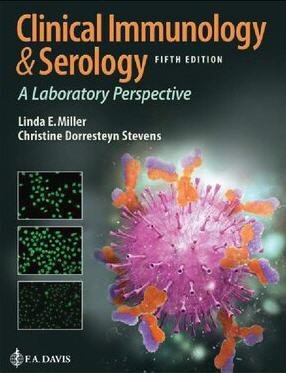
Clinical Immunology and Serology: A Laboratory Perspective 5th Edition by Christine Stevens, ISBN-13: 978-0803694408
Original price was: $50.00.$14.99Current price is: $14.99.
Safe & secure checkout
Description
Description
Clinical Immunology and Serology: A Laboratory Perspective 5th Edition by Christine Stevens, ISBN-13: 978-0803694408
[PDF eBook eTextbook]
- Publisher: F.A. Davis Company; Fifth edition (January 28, 2021)
- Language: English
- 648 pages
- ISBN-10: 0803694407
- ISBN-13: 978-0803694408
The perfect balance of theory and practice!
Here’s the practical introduction you need to understand the essential theoretical principles of clinical immunology and the serological and molecular techniques commonly used in the laboratory. You’ll begin with an introduction to the immune system; then explore basic immunologic procedures; examine immune disorders; and study the serological and molecular diagnosis of infectious disease.
An easy-to-read, student-friendly approach emphasizes the direct application of theory to clinical laboratory practice. Each chapter is a complete learning module with learning outcomes, chapter outlines, theoretical principles, illustrations, and definitions of relevant terminology. Review questions and case studies help you assess your mastery of the material. A glossary at the end of the book puts must-know information at your fingertips.
Table of Contents:
Contents
SECTION I
Nature of the Immune System
1 Introduction to Immunity and the Immune System
Christine Dorresteyn Stevens, EdD, MT(ASCP)
Immunity and Immunization
Innate Versus Adaptive Immunity
Cells of the Innate Immune System
Leukocytes in Peripheral Blood
Tissue Cells
Cells of the Adaptive Immune System
B Cells and Plasma Cells
T Cells
Innate Lymphoid Cells and Natural Killer Cells
Organs of the Immune System
Primary Lymphoid Organs
Secondary Lymphoid Organs
2 Innate Immunity
Christine Dorresteyn Stevens, EdD, MT(ASCP) and Nadine Lerret, PhD, MLSCM(ASCP)
External Defense System
Internal Defense System
Pattern Recognition Receptors
Pattern Recognition Receptors and Disease
Acute-Phase Reactants
Inflammation
Phagocytosis
Action of Natural Killer Cells
Innate Lymphoid Cells
3 Nature of Antigens and the Major Histocompatibility Complex
Aaron Glass, PhD, MBCM(ASCP)
Factors Influencing the Immune Response
Traits of Antigens and Immunogens
Epitopes
Haptens
Adjuvants
Relationship of Antigens to the Host
Major Histocompatibility Complex
Genes Coding for MHC Molecules (HLA Antigens)
Expression of Class I and II MHC Molecules
Structure of Class I MHC Molecules
Structure of Class II MHC Molecules
Role of Class I and II Molecules in the Immune Response
The Class I MHC–Peptide Presentation Pathway
The Class II MHC–Peptide Presentation Pathway
Clinical Significance of MHC
4 Adaptive Immunity
Aaron Glass, PhD, MBCM(ASCP)
T-Cell Differentiation
Double-Negative Stage
Double-Positive Stage
Single-Positive Stage
Mature T Cells
Stages in B-Cell Differentiation
Pro-B Cells
Pre-B Cells
Immature B Cells
Mature B Cells
Plasma Cells
The Role of T Cells in the Adaptive Immune Response
Antigen Presentation
Actions of T Helper and T Regulatory Cells
Action of Cytotoxic T Cells
The Role of B Cells in the Adaptive Immune Response
Immune Response to T-Dependent Antigens
Immune Response to T-Independent Antigens
5 Antibody Structure and Function
Linda E. Miller, PhD, MBCM(ASCP)SI
General Structure of Immunoglobulins
Two-Dimensional Structure
Treatment With Proteolytic Enzymes
Hinge Region
Isotypes, Allotypes, and Idiotypes
Three-Dimensional Structure of Antibodies
Antibody Classes
Immunoglobulin G (IgG)
Immunoglobulin M (IgM)
Immunoglobulin A (IgA)
Immunoglobulin D (IgD)
Immunoglobulin E (IgE)
Immunologic Memory: Primary and Secondary Antibody Responses
Antibody Specificity and Diversity
Clonal Selection
Immunoglobulin Genes
Rearrangement of Heavy-Chain Genes
Light-Chain Rearrangement
Additional Sources of Diversity
Immunoglobulin Class Switching
Monoclonal Antibodies
Hybridomas
Clinical and Research Applications
6 Cytokines
Aaron Glass, PhD, MB(ASCP)CM
Introduction to Cytokines
Cytokines in the Innate Immune Response
Cytokines and the Innate Response to Extracellular Microbes
The Interleukin-1 (IL-1) Cytokine Family
Tumor Necrosis Factors
Interleukin-6
Chemokines
Transforming Growth Factor-β
Interferon-α and Interferon-β (Type I Interferons)
Cytokines in the Adaptive Immune Response
Cytokines Produced by Th1 Cells
Cytokines Produced by Th2 Cells
Cytokines Associated With T-Regulatory Cells
Th17 Cytokines in Innate and Adaptive Immune Responses
Hematopoietic Growth Factors
Cytokine and Anti-Cytokine Therapies
Clinical Assays for Cytokines
7 The Complement System
Bradley Dixon, MD and Ashley Frazer-Abel, PhD, D(ABMLI)
Pathways of the Complement System
The Classical Pathway
The Lectin Pathway
The Alternative Pathway
System Controls
Regulation of the Classical and Lectin Pathways
Regulation of the Alternative Pathway
Regulation of Terminal Components
Complement Receptors and Their Biological Roles
Biological Manifestations of Complement Activation
Complement and Disease States
Abnormalities of Major Pathway Complement Components
Abnormalities of Regulatory Complement Components
Laboratory Detection of Complement Abnormalities
Immunologic Assays of Individual Components
Assays for the Classical Pathway
Alternative and Lectin Pathway Assays
Testing Levels of Complement Activation
Interpretation of Laboratory Findings
Complement Therapeutics
SECTION II
Basic Immunologic Procedures
8 Safety and Quality Management
Marjorie Schaub Di Lorenzo, MT(ASCP)SH
Laboratory Hazards
Biological Hazards
Sharps Hazards
Chemical Hazards
Safety Data Sheets (SDS)
Chemical Hygiene Plan
Radioactive Hazards
Electrical Hazards
Fire and Explosive Hazards
Physical Hazards
Quality Management
Procedure Manual
Preexamination Variables
Examination Variables
Postexamination Variables
Regulatory Issues
Clinical Laboratory Improvement Amendments (CLIA)
Clinical and Laboratory Standards Institute (CLSI)
The Joint Commission (TJC)
College of American Pathologists (CAP)
Quality Management Systems
Quality System Essentials
The Lean System
Six Sigma
Root Cause Analysis
9 Principles of Serological Testing
Linda E. Miller, PhD, MBCM (ASCP) SI and Christine Dorresteyn Stevens, EdD,
MT(ASCP)
Blood Specimen Preparation and Measuring
Dilutions
Simple Dilutions
Compound Dilutions
Serial Dilutions
Test Parameters
10 Precipitation and Agglutination Reactions
Christine Dorresteyn Stevens, EdD, MT(ASCP) and Linda E. Miller, PhD,
MBCM(ASCP)SI
Antigen–Antibody Binding
Affinity
Avidity
Law of Mass Action
Precipitation Curve
Three Zones of the Precipitation Reaction
Prozone and Postzone
Immunoturbidimetry and Nephelometry
Passive Immunodiffusion Techniques
Radial Immunodiffusion
Ouchterlony Double Diffusion
Electrophoretic Techniques
Comparison of Precipitation Techniques
Principles of Agglutination Reactions
Types of Agglutination Reactions
Direct Agglutination
Passive Agglutination
Reverse Passive Agglutination
Agglutination Inhibition
Instrumentation
Quality Control and Result Interpretation
11 Labeled Immunoassays
Paul R. Johnson, PhD, MBA, MT(ASCP), DABCC
Immunoassay Labels
General Immunoassay Formats
Heterogeneous Versus Homogeneous Immunoassays
Competitive Versus Noncompetitive Immunoassays
Radioimmunoassay (RIA)
Enzyme Immunoassays (EIAs)
Heterogeneous Enzyme Immunoassays
Competitive Enzyme Immunoassays
Noncompetitive Enzyme Immunoassays
Capture (Sandwich) Immunoassays
Biotin-Avidin Labeling
Interferences in Immunoassays
Antigen Interference
Antibody Interference
Biotin Interference
Other Technical Concerns
Homogeneous Enzyme Immunoassays
Chemiluminescent Immunoassays
Chemiluminescent Microparticle Immunoassay
Electrochemiluminescence Immunoassay
Fluorescent Immunoassays
Direct Immunofluorescence Assays
Indirect Immunofluorescence Assays
Multiplex Immunoassay (MIA)
Fluorescence Polarization Immunoassays
Rapid Immunoassays
12 Molecular Diagnostic Techniques
Lela Buckingham, PhD, MB(ASCP), DLM(ASCP)
DNA and RNA
Substituted Nucleotides
The Nucleic Acid Polymer
DNA Replication
RNA Synthesis
Protein Synthesis
DNA Sequence Changes
Polymorphisms
Electrophoresis
Gel Electrophoresis
Capillary Electrophoresis
Molecular Analysis
Strand Cleavage Methods
Specific Procedures
Hybridization Methods
Specific Procedures
Amplification Methods
Specific Procedures
DNA Sequencing
Specific Procedures
Chain Termination (Sanger) Sequencing
Pyrosequencing
Next-Generation Sequencing
Bioinformatics
13 Flow Cytometry and Laboratory Automation
Jeannie Guglielmo, MS, MAT, MLSCM(ASCP) and Songkai Hu, MA, MLSCM(ASCP)
Flow Cytometry
Instrumentation
Sample Preparation
Data Acquisition and Analysis
Clinical Applications
Immunoassay Automation
Validation
SECTION III
Immune Disorders
14 Hypersensitivity
Linda E. Miller, PhD, MBCM(ASCP)SI
Type I Hypersensitivity
Immunologic Mechanism
Genetic and Environmental Influences on Type I Hypersensitivity
Clinical Manifestations of Type I Hypersensitivity
Treatment of Type I Hypersensitivity
Testing for Type I Hypersensitivity
Type II Hypersensitivity
Immunologic Mechanism
Clinical Examples of Type II Hypersensitivity
Testing for Type II Hypersensitivity
Type III Hypersensitivity
Immunologic Mechanism
Clinical Examples of Type III Hypersensitivity
Testing for Type III Hypersensitivity
Type IV Hypersensitivity
Immunologic Mechanism
Clinical Manifestations of Type IV Hypersensitivity
Skin Testing for Delayed Hypersensitivity
Interferon Gamma Release Assays (IGRAs)
15 Autoimmunity
Linda E. Miller, PhD, MBCM(ASCP)SI
Etiology of Autoimmune Disease
Self-Tolerance
Genetics
Other Endogenous and Environmental Factors
Systemic Autoimmune Diseases
Systemic Lupus Erythematosus (SLE)
Anti-Nuclear Antibodies (ANAs)
Anti-Phospholipid Antibodies
Rheumatoid Arthritis (RA)
Other Systemic Autoimmune Rheumatic Diseases (SARDs)
Granulomatosis With Polyangiitis (Wegener’s Granulomatosis)
Anti-Neutrophil Cytoplasmic Antibodies (ANCAs)
Organ-Specific Autoimmune Diseases
Autoimmune Thyroid Diseases (AITDs)
Type 1 Diabetes Mellitus (T1D)
Celiac Disease
Autoimmune Liver Diseases
Multiple Sclerosis (MS)
Myasthenia Gravis (MG)
Anti-Glomerular Basement Membrane Disease (Goodpasture’s Syndrome)
16 Transplantation Immunology
John L. Schmitz, PhD, D(ABMLI, ABHI)
Histocompatibility Systems
Major Histocompatibility Complex (MHC) Antigens
Minor Histocompatibility Antigens (mHAs)
MHC Class I-Related Chain A (MICA) Antigens
ABO Blood Group Antigens
Killer Immunoglobulin-Like Receptors (KIRs)
Self-Antigens
Allorecognition
Transplant Rejection
Hyperacute Rejection
Acute Rejection
Chronic Rejection
Graft-Versus-Host Disease (GVHD)
Immunosuppressive Agents
Clinical Histocompatibility Testing
HLA Typing
HLA Phenotyping
HLA Genotyping
HLA Antibody Screening, Identification, and Crossmatching
Post-Transplant Testing
17 Tumor Immunology
Linda E. Miller, PhD, MBCM(ASCP) SI
Introduction to Tumor Biology
Tumor Antigens
Clinically Relevant Tumor Markers
Clinical Uses of Tumor Markers: Benefits and Limitations
Serum Tumor Markers
Laboratory Detection of Tumors
Tumor Morphology
Immunohistochemistry
Immunoassays for Circulating Tumor Markers
Molecular Methods in Cancer Diagnosis
Interactions Between the Immune System and Tumors
Immune Defenses Against Tumor Cells
Innate Immune Responses
Adaptive Immune Responses
Immunoediting and Tumor Escape
Elimination
Equilibrium
Escape
Immunotherapy
Active Immunotherapy and Cancer Vaccines
Passive Immunotherapy
Adoptive Immunotherapy
18 Immunoproliferative Diseases
Linda E. Miller, PhD, MBCM(ASCP) SI
Malignant Transformation of Hematologic Cells
Cell Properties
Genetic Changes
Classification of Hematologic Malignancies
Leukemias
Acute Lymphoblastic Leukemias (ALLs)
Chronic Lymphocytic Leukemia (CLL)/Small Lymphocytic Lymphoma (SLL)
Hairy-Cell Leukemia
Lymphomas
Hodgkin Lymphomas (HLs)
Non-Hodgkin Lymphomas (NHLs)
Plasma-Cell Dyscrasias
Monoclonal Gammopathy of Undetermined Significance (MGUS) and Smoldering
Multiple Myeloma (SMM)
Multiple Myeloma
Waldenström Macroglobulinemia
Heavy-Chain Diseases
Role of the Laboratory in Evaluating Immunoproliferative Diseases
Immunophenotyping by Flow Cytometry
Evaluation of Immunoglobulins
Serum Protein Electrophoresis (SPE)
Immunofixation Electrophoresis (IFE)
Serum Free Light-Chain (sFLC) Analysis
Evaluation of Genetic and Chromosomal Abnormalities
19 Immunodeficiency Diseases
Thomas S. Alexander, PhD, D(ABMLI)
Clinical Effects of Primary Immunodeficiency Diseases
The Nine Categories of Primary Immunodeficiency Diseases
Category 3: Predominantly Antibody Deficiencies
Category 1: Immunodeficiencies Affecting Cellular and Humoral Immunity
Category 2: Combined Immunodeficiencies With Associated or Syndromic Features
Category 4: Diseases of Immune Dysregulation
Category 5: Congenital Defects of Phagocyte Number, Function, or Both
Category 6: Defects in Intrinsic and Innate Immunity
Category 7: Autoinflammatory Disorders
Category 8: Complement Deficiencies
Category 9: Phenocopies of Primary Immunodeficiencies
Laboratory Evaluation of Immune Dysfunction
Screening Tests
Confirmatory Tests
Newborn Screening for Immunodeficiencies
Evaluation of Immunoglobulins
Bone Marrow Biopsy
Family History
Primary Immune Deficiencies in a Computer App
SECTION IV
Serological and Molecular Diagnosis of Infectious Disease
20 Serological and Molecular Detection of Bacterial Infections
James L. Vossler, MS, MLSCM(ASCP) SMCM
Human–Microbe Relationships
Bacterial Virulence Factors
Structural Virulence Features
Extracellular Virulence Factors
Endotoxin and Exotoxins
Immune Defenses Against Bacterial Infections and Mechanisms of Evasion
Immune Defense Mechanisms
Bacterial Evasion Mechanisms
Laboratory Detection and Diagnosis of Bacterial Infections
Bacterial Culture
Microscopic Visualization
Antigen Detection
Molecular Detection
Serological Diagnosis
Proteomics
Group A Streptococci (Streptococcus pyogenes)
Classification and Structure
Virulence Factors
Clinical Manifestations of Group A Streptococcal Infection
Group A Streptococcal Sequelae
Laboratory Diagnosis
Helicobacter pylori
Helicobacter pylori Virulence Factors
Pathology and Pathogenesis
Diagnosis of H. pylori Infection
Mycoplasma pneumoniae
Mycoplasma pneumoniae Pathogenesis
Dermatological Manifestations
Immunology of Mycoplasma pneumonia Infection
Laboratory Diagnosis of Mycoplasma pneumoniae Infection
Rickettsial Infections
Agents of Rickettsia-Related Disease
Rocky Mountain Spotted Fever
21 Spirochete Diseases
Hamida Nusrat, PhD, PHM
Syphilis
Characteristics of Treponema pallidum
Mode of Transmission
Stages of the Disease
Congenital Syphilis
Nature of the Immune Response
Laboratory Diagnosis
Direct Detection
Treatment
Lyme Disease
Characteristics of Borrelia Species
Mode of Transmission
Stages of the Disease
Nature of the Immune Response
Laboratory Diagnosis
Treatment
Leptospirosis
Characteristics of Leptospira Species
Mode of Transmission
Stages of the Disease
Laboratory Diagnosis
Treatment
22 Serological and Molecular Diagnosis of Parasitic and Fungal Infections
James L. Vossler, MS, MLSCM(ASCP)SMCM
Parasitic Immunology
Immune Responses to Parasites
Parasite Survival Strategies
Serodiagnosis of Parasitic Diseases
Molecular-Based Diagnosis of Parasitic Disease
Fungal Immunology
Characteristics of Fungi
Classification of Mycotic Infections (Mycoses)
Immune Responses to Fungi
Laboratory Diagnosis of Fungal Infections
Fungal Pathogens
23 Serological and Molecular Detection of Viral Infections
Linda E. Miller, PhD, MBCM(ASCP)SI and Deborah Josko, PhD, MLT(ASCP)M, SM
Immune Defenses Against Viral Infections
Viral Escape Mechanisms
Laboratory Testing for Viral Infections
Hepatitis Viruses
Hepatitis A
Hepatitis E
Hepatitis B
Hepatitis D
Hepatitis C
Herpes Virus Infections
Epstein-Barr Virus (EBV)
Cytomegalovirus (CMV)
Varicella-Zoster Virus (VZV)
Other Viral Infections
Rubella
Rubeola
Mumps
Human T-Cell Lymphotropic Viruses
24 Laboratory Diagnosis of HIV Infection
Linda E. Miller, PhD, I, MBCM(ASCP)SI
HIV Transmission
Characteristics of HIV
Composition of the Virus
Structural Genes
Viral Replication
Immunologic Manifestations
Immune Responses to HIV
Effects of HIV Infection on the Immune System
Clinical Symptoms of HIV Infection
Treatment and Prevention
Laboratory Testing for HIV Infection
Screening and Diagnosis
Testing Algorithms
Serological Test Principles
Qualitative Nucleic Acid Tests (NATs)
Disease Monitoring
CD4 T-Cell Enumeration
Quantitative Viral Load Assays
Drug-Resistance and Tropism Testing
Testing of Infants Younger Than 18 Months
25 Immunization and Vaccines
Linda E. Miller, PhD, MBCM(ASCP)SI
Vaccines
Historical Evolution of Vaccines
Types of Vaccines
Factors Influencing Immunogenicity
Challenges and Future Directions in Vaccine Development
Benefits and Adverse Effects of Vaccines
Passive Immunization
Passive Immunization as Therapy for Infectious Diseases
Advantages and Limitations of Passive Immunization
Immunosuppressive Effects of Passive Immunization
Monoclonal Antibodies
Adoptive Immunotherapy
Adoptive Immunotherapy for Cancer
CAR-T–Cell Therapy
Other Applications of Adoptive Immunotherapy
Glossary
References
Answer Key
Index
What makes us different?
• Instant Download
• Always Competitive Pricing
• 100% Privacy
• FREE Sample Available
• 24-7 LIVE Customer Support




Reviews
There are no reviews yet.