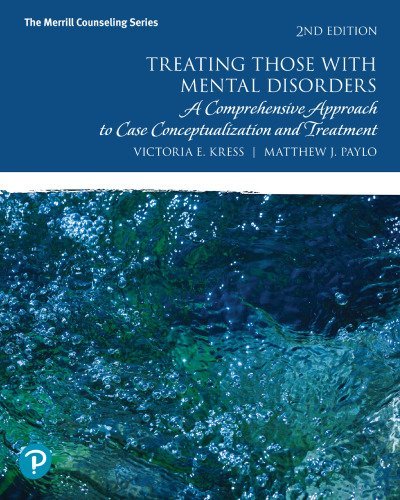
Treating Those with Mental Disorders: A Comprehensive Approach to Case Conceptualization and Treatment 2nd Edition
Original price was: $100.00.$19.99Current price is: $19.99.
Safe & secure checkout
Description
Description
Treating Those with Mental Disorders: A Comprehensive Approach to Case Conceptualization and Treatment 2nd Edition
[PDF eBook eTextbook] – Available Instantly
- Publisher : Pearson; 2nd edition (February 27, 2018)
- Language : English
- 624 pages
- ISBN-10 : 0134814568
- ISBN-13 : 978-0134814568
Practical guidance on selecting and applying treatments for clients who have mental disorders.
Treating Those with Mental Disorders: A Comprehensive Approach to Case Conceptualization and Treatment offers students and new counselors specific treatment planning, implementation, and intervention strategies in addition to background information on clinical issues and DSM-5 diagnoses and interventions.
A strength-based framework for conceptualizing and treating clients guides students through the process of selecting and implementing treatments. Real-life examples illustrate how critical counseling concepts and approaches are applied in actual practice. Updated with current, evidence-based treatment techniques, a new chapter on culture and ethics, and even more applications and examples, this highly practical resource empowers counselors to thoughtfully and deliberately help their clients tackle complex issues and difficulties.
Table of Contents:
About the Authors
Chapter Contributor Biographies
Preface
New to This Edition
VK Acknowledgments
MP Acknowledgments
Brief Contents
Contents
Chapter 1 Developing Effective Treatment Plans
The Foundations of Effective Treatment
Factors That Influence Counseling/Treatment Outcomes
Counselor Variables
Client Variables
Treatment Variables
What Is “Good” Treatment Planning?
Evidence Based
Individualized
Relational
Strength Based
Culturally and Contextually Sensitive
Practice Suggestions for Developing Treatment Plans
Be Collaborative with Clients
Consider the Severity of the Impairment(s)
Make Treatment Objectives SMART
Follow the “Golden Thread”
Be Flexible: Treatment Plans Are Not Static
A Conceptual Framework for Case Conceptualization and Treatment Planning
Components of the Conceptual Framework
Individual (I)
Countertransference
Culture
Contextual Assessment (C)
Assessment and Diagnosis (A)
Necessary Level of Care (N)
Strengths (S)
Treatment Approach (T)
Aim and Objectives of Treatment (A)
Research-Based Interventions/Treatments (R)
Therapeutic Support Services (T)
Summary
Chapter 2 Real World Treatment Planning: Systems, Culture, and Ethics
Treatment Planning: Working among and within Systems
Managed Care Systems
System Treatment Restraints
Accrediting Bodies
Agency Settings and Available Services
Diagnosis and Reimbursement
Payer Source, Session Number, and Service Restraints
Treatment Teams
Culture and Treatment
Limitations of the DSM and the Medical Model Approach to Treatment Planning
Normal Versus Abnormal Behavior
Cultural Validity
Positive Developments in The DSM
Practice Suggestions
Knowledge of the Strengths and Weaknesses of the DSM/Medical Model
Thorough and Sensitive Cultural Assessment
Counselor Personal Awareness
Collaborative Diagnosis and Treatment
Contextual Sensitivity
Ethics and Treatment
Common Ethics Issues Associated with Diagnosing and Treatment Planning
Informed Consent and Confidentiality
Accuracy Versus Misrepresentation
Multiple Relationships: The Therapeutic–Fiduciary Relationship Tension
Strategies for Facilitating Ethical Diagnosis and Treatment Practices
Thorough Informed Consent
Open Communication
Referring and Consulting with Health Care Professionals
Ascribing Accurate Diagnoses
Applications of Ethics Principles and Codes
Training, Consultation, and Supervision
Thorough Documentation
Summary
Chapter 3 Safety-Related Clinical Issues and Treatment Planning
Description of Safety-Related Clinical Issues
Counseling Suicidal Clients
Counselor Considerations
Client Characteristics
Assessment
Intervention
Counseling Homicidal Clients
Counselor Considerations
Client Characteristics
Assessment
Interventions
Counseling Interpersonal Partner Violence Victims
Counselor Considerations
Client Characteristics
Assessment
Intervention
Summary
Chapter 4 Depressive, Bipolar, and Related Disorders
Description of the Depressive, Bipolar, and Related Disorders
Counselor Considerations
Prognosis
Major Depressive Disorder (MDD)
Description of the Disorder and Typical Client Characteristics
Counselor Considerations
Assessment of Depressive Disorder
Treatment Models and Interventions
Cognitive Behavioral Therapy (CBT)
Mindfulness-Based Cognitive Therapy (MBCT)
Behavioral Activation Therapy (BAT)
Interpersonal Psychotherapy (IPT)
Adjunct Therapies
Electroconvulsive Therapy (ECT)
Bright Light Therapy
Neurofeedback
Transcranial Magnetic Stimulation (TMS)
Vagus Nerve Stimulation
Psychopharmacotherapy
Prognosis
Persistent Depressive Disorder (PDD)
Description of the Disorder and Typical Client Characteristics
Counselor Considerations
Treatment Models and Interventions
Cognitive Behavioral Therapy (CBT)
Mindfulness-Based Cognitive Therapy (MBCT)
Cognitive Behavioral Analysis System of Psychotherapy (CBASP)
Behavioral Activation Therapy (BAT)
Interpersonal Psychotherapy (IPT)
Psychopharmacotherapy
Prognosis
Premenstrual Dysphoric Disorder (PMDD)
Description of the Disorder and Typical Client Characteristics
Counselor Considerations
Treatment Models and Interventions
Cognitive Behavioral Therapy (CBT)
Psychoeducation
Psychopharmacotherapy
Prognosis
Disruptive Mood Dysregulation Disorder (DMDD)
Description of the Disorder and Typical Client Characteristics
Counselor Considerations
Treatment Models and Interventions
Parent Management Training (PMT)
Cognitive Behavioral Therapy (CBT)
Problem-Solving Skills Training (PSST)
Psychopharmacotherapy
Prognosis
Bipolar and Related Disorders
Description of the Disorders and Typical Client Characteristics
Counselor Considerations
Assessment of Bipolar Disorders
Treatment Models and Interventions
Cognitive Behavioral Therapy (CBT)
Mindfulness-Based Cognitive Therapy (MBCT)
Family Approaches
Family-Focused Therapy
Multifamily-Psychoeducation Psychotherapy
Interpersonal and Social Rhythm Therapy
Dialectical Behavior Therapy
Adjunct Approaches
Transcranial Magnetic Stimulation
Electroconvulsive Therapy
Cranial Electrotherapy Stimulation
Psychopharmacotherapy
Prognosis
Summary
Chapter 5 Anxiety Disorders
Description of the Anxiety Disorders
Counselor Considerations
Prognosis
Panic Disorder
Description of the Disorder and Typical Client Characteristics
Counselor Considerations
Treatment Models and Interventions
Cognitive Behavioral Therapy (CBT)
Panic Control Therapy (PCT)
Acceptance and Commitment Therapy (ACT)
Activity Overview
Treatment Goal(s) Addressed
Process Questions
Exercise
Psychopharmacotherapy
Prognosis
Specific Phobia
Description of the Disorder and Typical Client Characteristics
Counselor Considerations
Treatment Models and Interventions
Prognosis
Agoraphobia
Description of the Disorder and Typical Client Characteristics
Counselor Considerations
Treatment Models and Interventions
Activity Overview
Treatment Goal(s) Addressed
Process Questions
Prognosis
Social Anxiety Disorder
Description of the Disorder and Typical Client Characteristics
Counselor Considerations
Treatment Models and Interventions
Cognitive Behavioral Treatments (CBT)
Social Effectiveness Therapy (SET)
Relaxation Training
Exposure-Based Interventions
Acceptance and Commitment Therapy (ACT)
Cognitive Behavioral Group Therapy
Psychopharmacotherapy
Prognosis
Separation Anxiety Disorder
Description of the Disorder and Typical Client Characteristics
Counselor Considerations
Treatment Models and Interventions
Prognosis
Generalized Anxiety Disorder
Description of the Disorder and Typical Client Characteristics
Counselor Considerations
Treatment Models and Interventions
CBT: Borkovec’s Cognitive Avoidance Model (CAM)
CBT: Intolerance of Uncertainty Model (IUM)
Acceptance and Commitment Therapy (ACT)
Psychopharmacotherapy
Prognosis
Selective Mutism
Description of the Disorder and Typical Client Characteristics
Counselor Considerations
Treatment Models and Interventions
Behavior Therapy
Modular Cognitive Behavioral Therapy (M-CBT)
Play Therapy
Music Therapy
Psychopharmacotherapy
Prognosis
Summary
Chapter 6 Obsessive-Compulsive and Related Disorders
Description of the Obsessive-Compulsive and Related Disorders
Counselor Considerations
Prognosis
Obsessive-Compulsive Disorder
Description of the Disorder and Typical Client Characteristics
Counselor Considerations
Treatment Models and Interventions
Cognitive Behavioral Therapy (CBT)
Exposure and Response Prevention (ERP)
Cognitive Therapy
Mindfulness-Based Cognitive Therapy (MBCT)
Acceptance and Commitment Therapy (ACT)
Psychopharmacotherapy
Prognosis
Hoarding Disorder
Description of the Disorder and Typical Client Characteristics
Counselor Considerations
Treatment Models and Interventions
Cognitive Behavioral Therapy (CBT)
Community Support
Psychopharmacotherapy
Prognosis
Body Dysmorphic Disorder
Description of the Disorder and Typical Client Characteristics
Counselor Considerations
Treatment Models and Interventions
Exposure and Response Prevention (ERP)
Cognitive Behavioral Therapy (CBT)
Inference-Based Therapy (IBT)
Psychopharmacotherapy
Prognosis
Trichotillomania (Hair Pulling Disorder)
Description of the Disorder and Typical Client Characteristics
Counselor Considerations
Treatment Models and Interventions
Behavior Therapy
Acceptance and Commitment Therapy (ACT)
Dialectical Behavior Therapy (DBT)
Psychopharmacotherapy
Prognosis
Excoriation (Skin Picking) Disorder
Description of the Disorder and Typical Client Characteristics
Counselor Considerations
Treatment Models and Interventions
Cognitive Behavioral Therapy (CBT)
Habit Reversal Training (HRT)
Acceptance and Commitment Therapy (ACT)
Psychopharmacotherapy
Prognosis
Summary
Chapter 7 Trauma- and Stressor-Related Disorders
Description of the Trauma- and Stressor-Related Disorders
Counselor Considerations
Prognosis
Reactive Attachment Disorder and Disinhibited Social Engagement Disorder
Description of the Disorders and Typical Client Characteristics
Counselor Considerations
Treatment Models and Interventions
Prognosis
Acute Stress Disorder and Posttraumatic Stress Disorder
Description of the Disorders and Typical Client Characteristics
Counselor Considerations
Treatment Models and Interventions
Prolonged Exposure Therapy (PET; Exposure Therapy)
Cognitive Processing Therapy (CPT)
Stress Inoculation Training (SIT)
Eye Movement Desensitization Reprocessing (EMDR)
Trauma-Focused Cognitive Behavioral Therapy (TF-CBT)
Cognitive Behavioral Intervention for Trauma in Schools (CBITS) and Support for Students Exposed to Trauma (SSET)
Trauma Recovery and Empowerment Model (TREM; M-TREM)
Trauma Center-Trauma Sensitive Yoga (TC-TSY)
Psychopharmacotherapy
Prognosis
Adjustment Disorders
Description of the Disorder and Typical Client Characteristics
Counselor Considerations
Treatment Models and Interventions
Cognitive Behavioral Therapy (CBT)
Interpersonal Psychotherapy (IPT)
Solution-Focused Brief Therapy (SFBT)
Brief Psychodynamic Psychotherapy
Psychopharmacotherapy
Emerging Treatments
Prognosis
Summary
Chapter 8 Substance-Related and Addictive Disorders
Description of the Substance Use and Addictive Disorders
Counselor Considerations
Prognosis
Alcohol-Related Disorders
Description of the Disorder and Typical Client Characteristics
Counselor Considerations
Treatment Models and Interventions
Medical Detoxification
Residential Treatment
Outpatient-Based Treatments
Motivational Enhancement Therapy
Cognitive Behavioral Therapy (CBT)
Twelve-Step Facilitation
Family Therapy
Behavioral Self-Control Training (BSCT)
Psychopharmacotherapy
Prognosis
Drug-Related Disorders
Description of the Disorders and Typical Client Characteristics
Cannabis-Related Disorders
Opioid-Related Disorders
Stimulant-Related Disorders
Tobacco-Related Disorders
Counselor Considerations
Treatment Models and Interventions
Twelve-Step Facilitation
Psychopharmacotherapy and Medication-Assisted Treatment
Prognosis
Gambling Disorder
Description of the Disorder and Typical Client Characteristics
Counselor Considerations
Treatment Models and Interventions
Prognosis
Summary
Chapter 9 Personality Disorders
Description of the Personality Disorders
Counselor Considerations
Prognosis
Borderline Personality Disorder
Description of the Disorder and Typical Client Characteristics
Counselor Considerations
Treatment Models and Interventions
Dialectical Behavior Therapy (DBT)
Schema Therapy (ST)
Psychodynamic
Mentalization-Based Psychotherapy
Transference-Focused Psychotherapy
Cognitive Analytic Therapy
Stepps Group Therapy
Psychopharmacotherapy
Prognosis
Antisocial Personality Disorder (Dyssocial Personality Disorder)
Description of the Disorder and Typical Client Characteristics
Counselor Considerations
Treatment Models and Interventions
Schema Therapy (ST)
Mentalization-Based Therapy (MBT)
Cognitive Behavioral Therapy (CBT)
Psychopharmacotherapy
Prognosis
Narcissistic Personality Disorder
Description of the Disorder and Typical Client Characteristics
Counselor Considerations
Treatment Models and Interventions
Psychodynamic
Cognitive Behavioral Therapy (CBT)
Schema-Focused Therapy (ST)
Metacognitive Interpersonal Therapy (MCT)
Psychopharmacotherapy
Prognosis
Histrionic Personality Disorder
Description of the Disorder and Typical Client Characteristics
Counselor Considerations
Treatment Models and Interventions
Functional Analytic Psychotherapy (FAP)
Cognitive Analytic Therapy (CAT)
Cognitive Behavioral Therapy (CBT)
Psychopharmacotherapy
Prognosis
Obsessive-Compulsive Personality Disorder
Description of the Disorder and Typical Client Characteristics
Counselor Considerations
Treatment Models and Interventions
Cognitive Behavioral Therapy (CBT)
Dialectical Behavior Therapy (DBT)
Prognosis
Avoidant Personality Disorder
Description of the Disorder and Typical Client Characteristics
Counselor Considerations
Treatment Models and Interventions
Behavior Therapy (BT)
Gradual Exposure or Systematic Desensitization
Interpersonal Social Skills Training
Guided Imagery
Cognitive Behavioral Therapy (CBT)
Schema Therapy
Psychopharmacotherapy
Prognosis
Dependent Personality Disorder
Description of the Disorder and Typical Client Characteristics
Counselor Considerations
Treatment Models and Interventions
Psychodynamic Approaches
Schema Therapy
Cognitive Behavioral Therapy (CBT)
Psychopharmacotherapy
Prognosis
Schizotypal Personality Disorder
Description of the Disorder and Typical Client Characteristics
Counselor Considerations
Treatment Models and Interventions
Psychoeducation
Cognitive Behavioral Therapy (CBT)
Case Management
Psychopharmacotherapy
Prognosis
Schizoid Personality Disorder
Description of the Disorder and Typical Client Characteristics
Counselor Considerations
Treatment Models and Interventions
Behavior Therapy
Cognitive Behavioral Therapy (CBT)
Prognosis
Paranoid Personality Disorder
Description of the Disorder and Typical Client Characteristics
Counselor Considerations
Treatment Models and Interventions
Behavior Therapy (BT)
Cognitive Behavioral Therapy (CBT)
Psychopharmacotherapy
Prognosis
Summary
Chapter 10 Schizophrenia Spectrum and Other Psychotic Disorders
Description of the Schizophrenia Spectrum and Other Psychotic Disorders
Counselor Considerations
Prognosis
Schizophrenia
Description of the Disorder and Typical Client Characteristics
Counselor Considerations
Treatment Models and Interventions
Psychopharmacotherapy
Psychosocial Interventions
Peer/Advocacy Groups
Rehabilitation Resources
Considerations for Youth
Prognosis
Schizophreniform Disorder
Description of the Disorder and Typical Client Characteristics
Counselor Considerations
Treatment Models and Interventions
Prognosis
Brief Psychotic Disorder
Description of the Disorder and Typical Client Characteristics
Counselor Considerations
Treatment Models and Interventions
Prognosis
Delusional Disorder
Description of the Disorder and Typical Client Characteristics
Counselor Considerations
Treatment Models and Interventions
Acceptance and Commitment Therapy (ACT)
Psychopharmacotherapy
Prognosis
Schizoaffective Disorder
Description of the Disorder and Typical Client Characteristics
Counselor Considerations
Treatment Models and Interventions
Psychoeducation
Prognosis
Summary
Chapter 11 Feeding and Eating Disorders
Description of Eating Disorders
Counselor Considerations
Prognosis
Anorexia Nervosa
Description of the Disorder and Typical Client Characteristics
Counselor Considerations
Treatment Models and Interventions
Family-Based Treatment (FBT)
Cognitive Behavior Therapy (CBT)
Enhanced Cognitive Behavior Therapy for Eating Disorders (CBT-E)
Psychopharmacotherapy
Prognosis
Bulimia Nervosa
Description of the Disorder and Typical Client Characteristics
Counselor Considerations
Treatment Models and Interventions
Cognitive Behavior Therapy (CBT)
Interpersonal Psychotherapy (IPT)
Dialectical Behavior Therapy (DBT)
Family-Based Treatment Model (FBT)
Psychopharmacotherapy
Prognosis
Binge-Eating Disorder
Description of the Disorder and Typical Client Characteristics
Counselor Considerations
Treatment Models and Interventions
Cognitive Behavior Therapy: Self Help (CBT-SH)
Interpersonal Psychotherapy (IPT)
Dialectical Behavior Therapy
Psychopharmacotherapy
Prognosis
Description of the Feeding Disorders
Counselor Considerations
Prognosis
Pica
Description of the Disorder and Typical Client Characteristics
Counselor Considerations
Treatment Models and Interventions
Behavioral Management
Environmental Structuring
Prognosis
Rumination Disorder
Description of the Disorder and Typical Client Characteristics
Counselor Considerations
Treatment Models and Interventions
Diaphragmatic Breathing and Distraction
Self-Regulation/Monitoring
Aversive Techniques and Positive Reinforcement
Satiation
Family Counseling
Prognosis
Avoidant/Restrictive Food Intake Disorder
Description of the Disorder and Typical Client Characteristics
Counselor Considerations
Treatment Models and Interventions
Contingency Management
Shaping
Parent Training and Family Counseling
Prognosis
Summary
Chapter 12 Disruptive, Impulse-Control, Conduct, and Elimination Disorders
Description of the Disruptive, Impulse-Control, and Conduct Disorders
Counselor Considerations
Prognosis
Oppositional Defiant Disorder and Conduct Disorder
Description of the Disorders and Typical Client Characteristics
Counselor Considerations
Treatment Models and Interventions
Multisystemic Therapy (MST)
Family Therapy
Parent Management Training (PMT)
Behavior Therapy (BT)
Cognitive Behavioral Therapy (CBT)
Problem-Solving Skills Training (PSST)
School-Based Interventions
Psychopharmacotherapy
Prognosis
Intermittent Explosive Disorder
Description of the Disorder and Typical Client Characteristics
Counselor Considerations
Treatment Models and Interventions
Cognitive Behavioral Therapy (CBT)
Behavioral Therapy
Psychopharmacotherapy
Prognosis
Pyromania
Description of the Disorder and Typical Client Characteristics
Counselor Considerations
Treatment Models and Interventions
Dialectical Behavior Therapy (DBT)
Cognitive Behavioral Therapy (CBT)
Psychopharmacotherapy
Prognosis
Kleptomania
Description of the Disorder and Typical Client Characteristics
Counselor Considerations
Treatment Models and Interventions
Behavioral Therapy
Cognitive Behavioral Therapy (CBT)
Psychopharmacotherapy
Prognosis
Description of the Elimination Disorders
Counselor Considerations
Prognosis
Enuresis
Description of the Disorder and Typical Client Characteristics
Counselor Considerations
Treatment Models and Interventions
Enuresis Alarm
Operant Behavioral Interventions
Psychopharmacotherapy
Prognosis
Encopresis
Description of the Disorder and Typical Client Characteristics
Counselor Considerations
Treatment Models and Interventions
Toilet Education and Training
Creative Interventions
Nutritional Changes/Medications
Behavior Management
Prognosis
Summary
Chapter 13 Neurodevelopmental and Neurocognitive Disorders
Description of the Neurodevelopmental Disorders
Counselor Considerations
Prognosis
Intellectual Disability
Description of the Disorder and Typical Client Characteristics
Counselor Considerations
Treatment Models and Interventions
Prognosis
Autism Spectrum Disorder
Description of the Disorder and Typical Client Characteristics
Counselor Considerations
Treatment Models and Interventions
Applied Behavior Analysis (ABA)
DIR/Floortime Therapy
The Teacch Method
Psychopharmacotherapy
Prognosis
Attention-Deficit/Hyperactivity Disorder
Description of the Disorder and Typical Client Characteristics
Counselor Considerations
Treatment Models and Interventions
Cognitive Behavioral Therapy (CBT)
Neurofeedback
Psychopharmacotherapy
Prognosis
Communication Disorders
Description of the Disorders and Typical Client Characteristics
Counselor Considerations
Treatment Models and Interventions
Speech and Language Therapy
Narrative Therapy (NT)
Acceptance and Commitment Therapy (ACT)
Cognitive Behavioral Therapy (CBT)
Prognosis
Specific Learning Disorder
Description of the Disorder and Typical Client Characteristics
Counselor Considerations
Treatment Models and Interventions
Group Counseling
Career Counseling
Prognosis
Developmental Coordination Disorder
Description of the Disorder and Typical Client Characteristics
Counselor Considerations
Treatment Models and Interventions
Specific Skills
Sensory Integration Therapy (SIT)
Cognitive Behavioral Therapy (CBT)
Prognosis
Stereotypic Movement Disorder
Description of the Disorder and Typical Client Characteristics
Counselor Considerations
Treatment Models and Interventions
Prognosis
Tic Disorders
Description of the Disorders and Typical Client Characteristics
Counselor Considerations
Treatment Models and Interventions
Behavior Therapy
Cognitive Behavioral Therapy (CBT)
Psychopharmacotherapy
Prognosis
Description of the Neurocognitive Disorders
Counselor Considerations
Prognosis
Delirium
Description of the Disorder and Typical Client Characteristics
Counselor Considerations
Treatment Models and Interventions
Prognosis
Neurocognitive Disorders: Major or Mild
Description of the Disorders and Typical Client Characteristics
Counselor Considerations
Treatment Models and Interventions
Cognitive Behavioral Therapy (CBT)
Behavior Therapy
Reminiscence Therapy
Family/Caregiver Involvement
Psychopharmacotherapy
Prognosis
Summary
Chapter 14 Dissociative Disorders and Somatic Symptom and Related Disorders
Description of the Dissociative Disorders
Counselor Considerations
Prognosis
Dissociative Identity Disorder
Description of the Disorder and Typical Client Characteristics
Counselor Considerations
Treatment Models and Interventions
Prognosis
Dissociative Amnesia
Description of the Disorder and Typical Client Characteristics
Counselor Considerations
Treatment Models and Interventions
Sequential Treatment—Symptom Regulation and Narrative Therapy
Mindfulness-Based Therapy (MBT)
Prognosis
Depersonalization/Derealization Disorder
Description of the Disorder and Typical Client Characteristics
Counselor Considerations
Treatment Models and Interventions
Sequential Treatment—Symptom Regulation and Narrative Therapy
Eye Closure, Eye Movements
Prognosis
Description of the Somatic Symptom and Related Disorders
Counselor Considerations
Prognosis
Somatic Symptom Disorder
Description of the Disorder and Typical Client Characteristics
Counselor Considerations
Treatment Models and Interventions
Brief Psychodynamic Therapy
Cognitive Behavioral Therapy (CBT)
Affective-Cognitive Behavioral Therapy (A-CBT)
Psychopharmacotherapy
Prognosis
Illness Anxiety Disorder
Description of the Disorder and Typical Client Characteristics
Counselor Considerations
Treatment Models and Interventions
Cognitive Behavioral Therapy (CBT)
Exposure-Based Therapy
Mindfulness-Based Therapy (MBT)
Psychopharmacotherapy
Prognosis
Conversion Disorder (Functional Neurological Symptom Disorder)
Description of the Disorder and Typical Client Characteristics
Counselor Considerations
Treatment Models and Interventions
Psychoeducation
Mindfulness-Based Therapy (MBT)
Cognitive Behavioral Therapy (CBT)
Transcranial Magnetic Stimulation
Prognosis
Psychological Factors Affecting Other Medical Conditions
Description of the Disorder and Typical Client Characteristics
Counselor Considerations
Treatment Models and Interventions
Psychoeducation
Cognitive Behavioral Therapy (CBT)
Psychopharmacotherapy
Prognosis
Factitious Disorder
Description of the Disorder and Typical Client Characteristics
Counselor Considerations
Treatment Models and Interventions
Prognosis
Summary
Chapter 15 Sleep-Wake Disorders, Sexual Dysfunctions, Paraphilic Disorders, and Gender Dysphoria
Sleep-Wake Disorders, Sexual Dysfunctions, Paraphilic Disorders, and Gender Dysphoria
Sleep-Wake Disorders
Description of the Disorders and Typical Client Characteristics
Counselor Considerations
Treatment Models and Interventions
Insomnia
Hypersomnia
Breathing-Related Sleep Disorders
Circadian Rhythm Sleep-Wake Disorder
Parasomnias
Prognosis
Sexual Dysfunctions
Description of the Disorders and Typical Client Characteristics
Counselor Considerations
Treatment Models and Interventions
Sexual Desire Disorders (Female Sexual Interest/Arousal Disorder and Male Hypoactive Sexual Desire Disorder)
Erectile Dysfunction
Premature Ejaculation
Orgasmic Disorders (Female Orgasmic Disorder and Delayed Ejaculation)
Genito-Pelvic Pain/Penetration Disorder
Prognosis
Paraphilic Disorders
Description of the Disorders and Typical Client Characteristics
Counselor Considerations
Treatment Models and Interventions
Behavior Therapy (BT)
Cognitive Behavioral Therapy (CBT)
Psychopharmacotherapy
Prognosis
Gender Dysphoria
Description of the Disorders and Typical Client Characteristics
Counselor Considerations
Treatment Models and Interventions
Supportive Counseling
Real-Life Experiences
Gender Reassignment or Physical Interventions (I.E., Surgery or Hormonal Therapy)
Prognosis
Summary
References
Name Index
Victoria E. Kress, Ph.D./LPCC-S, NCC, CCMHC, is the director of the clinical mental health and addictions counseling programs at Youngstown State University. She has over 20 years of experience in various clinical settings. She has been the recipient of over 30 counseling awards, most recognizing her for her leadership, advocacy and mentorship initiatives. She is a past president of Chi Sigma Iota International and the Ohio Counseling Association. She has published over 120 peer-reviewed journal articles and book chapters and has coauthored 2 additional books: Beyond the DSM Story (Sage) and Counseling Children and Adolescents (Pearson).
Matthew J. Paylo, Ph.D./LPCC-S (OH), is an associate professor, director of the student affairs and college counseling program, and the program director of the counseling program at Youngstown State University. He has over 12 years of clinical experience in various settings including community mental health centers, prisons, hospitals, residential treatment facilities and college counseling centers. Matthew is passionate about implementing evidence-based interventions within therapeutic relationships that manifest empathy, unconditional positive regard and genuineness. He has published over 30 peer-reviewed journal articles and book chapters and has coauthored another book: Counseling Children and Adolescents (Pearson).
What makes us different?
• Instant Download
• Always Competitive Pricing
• 100% Privacy
• FREE Sample Available
• 24-7 LIVE Customer Support