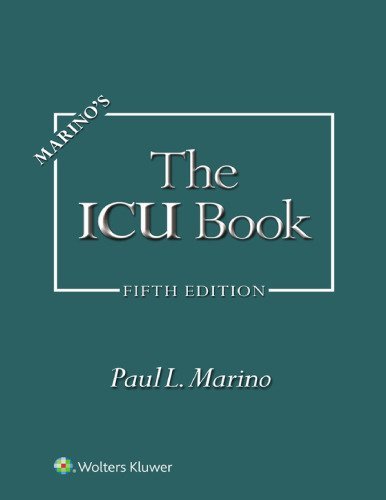
Marino’s The ICU Book 5th Edition by Paul L. Marino, ISBN-13: 978-1975176709
Original price was: $100.00.$24.99Current price is: $24.99.
Safe & secure checkout
Description
Description
Marino’s The ICU Book 5th Edition by Paul L. Marino, ISBN-13: 978-1975176709
[PDF eBook eTextbook] – Available Instantly
- Publisher: LWW; Fifth edition (November 23, 2024)
- Language: English
- 864 pages
- ISBN-10: 1975176707
- ISBN-13: 978-1975176709
Activation code NOT included.
Dr. Paul L. Marino’s concise, engaging writing style is just one of many reasons that Marino’s The ICU Book is the best-selling reference in critical care. This highly regarded, full-color resource contains the essential information needed to care for patients in any ICU, regardless of the specialty designation of the unit. The newly revised Fifth Edition continues the focus on practical aspects of patient care and will appeal to anyone with an interest in the care of critically ill patients. The intended audience incudes medical students, interns and residents in medicine, surgery, and anesthesiology, critical care physicians and nurses, physician’s assistants, respiratory therapists, and paramedics.
- Dr. Marino has been a practicing critical care specialist for 44 years, and the material in his book is a reflection of this vast experience.
- The text has been completely rewritten and incorporates the latest concepts and most recent clinical practice guidelines.
- Because this is a single-author text, the writing and style are consistent from chapter to chapter, and redundancies are held to a minimum.
- New chapters have been added on fluid management, approaches to clinical shock, acute pulmonary embolism, liver failure, and acute pancreatitis.
- As in prior editions, there are numerous illustrations and tables that highlight the material in the text, and each chapter ends with a section called “A Final Word” that presents a take-home message from the chapter.
- The text will be updated quarterly to include recently published guidelines and pertinent clinical studies.
Table of Contents:
Cover
Title Page
Copyright
Dedication
Preface to Fifth Edition
Acknowledgments
Contents
Section I VASCULAR ACCESS
Chapter 1 Vascular Access Primer
INTRODUCTION
CATHETER BASICS
Catheter Size
Flow Through Catheters
GENERAL-PURPOSE CATHETERS
Peripheral Catheters
Central Catheters
The Guidewire
Summation
VASCULAR ULTRASOUND
The Method
Orientation of the Beam
Protocol
INTRAOSSEOUS VASCULAR ACCESS
Indications
Establishing IO Access
IO Infusions
Complications
A FINAL WORD
Chapter 2 Central Venous Access
CONSIDERATIONS IN PREVENTION
Shrinking Indications
Infection Control Measures
INTERNAL JUGULAR VEIN
Anatomy
Cannulation Techniques
Complications
SUBCLAVIAN VEIN
Anatomy
Cannulation Techniques
Complications
FEMORAL VEIN
Anatomy
Cannulation Techniques
Complications
IMMEDIATE CONCERNS
Venous Air Embolism
Pneumothorax
Catheter Position
A FINAL WORD
Chapter 3 The Indwelling Vascular Catheter
ROUTINE CATHETER CARE
Protective Dressings
Replacing Catheters
Flushing Catheters
Occluded Catheters
NON-INFECTIOUS COMPLICATIONS
Catheter-Related Thrombosis
Vascular Perforation
CATHETER-RELATED BLOODSTREAM INFECTIONS
Pathogenesis
Clinical Features
Diagnosis
Management
Persistent Sepsis
A FINAL WORD
A Novel View of Catheter-Related Infections
Section II COMMON PRACTICES
Chapter 4 Alimentary Prophylaxis
MICROBIAL INVASION FROM THE BOWEL
The Intestinal Microbiome
Multiorgan Failure
Gastric Acid as an Antiseptic Agent
ALIMENTARY DECONTAMINATION
Oral Decontamination
Selective Digestive Decontamination
Probiotics
STRESS-RELATED MUCOSAL INJURY
Pathogenesis
Stress Ulcer Bleeding
Prophylaxis for Stress Ulcer Bleeding
The Case Against Stress Ulcer Prophylaxis
A FINAL WORD
Gastric Acidophobia
Chapter 5 Venous Thromboprophylaxis
RISK FACTORS
Major Surgery
Major Trauma
Acute Medical Illness
ICU Patients
Patient-Specific Factors
PARENTERAL PROPHYLACTIC REGIMENS
Unfractionated Heparin (UFH)
Low-Molecular-Weight Heparin (LMWH)
Fondaparinux
PROPHYLAXIS WITH ORAL AGENTS
Aspirin
Neuraxial Procedures
MECHANICAL THROMBOPROPHYLAXIS
Graded Compression Stockings
Intermittent Pneumatic Compression
Inferior Vena Cava Filters
WHICH REGIMEN FOR WHICH PATIENT?
Special Circumstances
Major General Surgery
Bariatric Surgery
Orthopedic Surgery
Neurosurgery
Cardiac Surgery
Major Trauma
Acute Medical Illness
A FINAL WORD
Riddle Me This
Chapter 6 Analgesia and Sedation in the ICU
THE ICU EXPERIENCE
Pain in The ICU
ANALGESIA WITH OPIOIDS
Drugs and Dosing Regimens
Patient-Controlled Analgesia
Adverse Effects of Opioids
ANALGESIA WITH NON-OPIOIDS
Acetaminophen
Ketorolac
Ketamine
Neuropathic Pain
ANXIETY IN THE ICU
Sedation
Monitoring Sedation
BENZODIAZEPINES
Midazolam
Lorazepam
Advantages
Disadvantages
SEDATION WITH RAPID-AROUSAL AGENTS
Propofol
Dexmedetomidine
ANTIPSYCHOTIC AGENTS
Haloperidol
A FINAL WORD
From Opiophobia to Opiophilia, and Back Again
Section III PHYSIOLOGICAL MONITORING
Chapter 7 Oximetry and Capnography
OXIMETRY: METHODOLOGY
Light Absorption by Hemoglobin
Early Oximetry
Pulse Oximetry
CO-Oximetry
Accuracy
OXIMETRY: APPLICATIONS
Arterial Oxygenation
Venous Oximetry
CAPNOGRAPHY: METHODOLOGY
Infrared Capnography
CAPNOGRAPHY: APPLICATIONS
Procedures
Changes in Cardiac Output
PaCO2 – PETCO2 Difference
A FINAL WORD
Helping Fill the Void
Chapter 8 The Pulmonary Artery Catheter
THE CATHETER
Catheter Placement
THE WEDGE PRESSURE
Wedge Pressure Tracing
Wedge Pressure Principle
Wedge vs Hydrostatic Pressure
THERMODILUTION CARDIAC OUTPUT
The Method
Sources of Error
Continuous Cardiac Output Measurements
CATHETER-DERIVED HEMODYNAMICS
Body Size
Cardiovascular Parameters
Oxygen Transport Parameters
Applications
A FINAL WORD
An Undeserved Reputation
Chapter 9 Systemic Oxygenation
OXYGEN IN BLOOD
Oxyhemoglobin Dissociation Curve
Oxygen Content of Blood
Arterial O2 Content
Anemia vs. Hypoxemia
Venous O2 Content
Volume Distribution of O2 in Blood
OXYGEN TRANSPORT
Oxygen Delivery (DO2)
Oxygen Uptake
Oxygen Extraction Ratio
OXYGEN EXTRACTION
The (SaO2 – SvO2) Difference
Venous O2 Saturation (SvO2)
Central Venous O2 Saturation (ScvO2)
Tissue O2 Saturation (StO2)
LACTATE
Lactate and Survival
Aerobic Lactate Production
Lactate as an Oxidative Fuel
A FINAL WORD
Is Cellular Hypoxia a Common Cause of Death?
Section IV INTRAVENOUS FLUID THERAPY
Chapter 10 Intravenous Fluids
SOME BASICS
Body Water Distribution
Osmotic Forces
CRYSTALLOID FLUIDS
Normal Saline
Ringer’s Lactate
Ringer’s Acetate
Other Balanced Salt Solutions
Hypertonic Saline
5% DEXTROSE SOLUTIONS
Protein-Sparing Effect
Volume Effects
Enhanced Lactate Production
Hyperglycemia
COLLOID FLUIDS
Volume Effects
Colloid Fluid Comparisons
Albumin Solutions
Hydroxyethyl Starches
The Dextrans
THE COLLOID–CRYSTALLOID CONUNDRUM
Early Focus on Crystalloids
Current Concerns
A Tailored Approach
A FINAL WORD
Chapter 11 Fluid Management
VENOUS RETURN
Determinants of Venous Return
Central Venous Pressure
Mean Systemic Pressure
PROBLEMS WITH FLUID RESUSCITATION
Plasma Volume
Distribution of Crystalloid Fluids
Assessment of Intravascular Volume
MARKERS OF TISSUE HYPOPERFUSION
Central Venous O2 Saturation
The PCO2 Gap
FLUID RESPONSIVENESS
No Fluid Challenge
Comment
A FINAL WORD
Getting Rid of Fluid
Section V BLOOD COMPONENTS
Chapter 12 Anemia and Red Blood Cell Transfusions
ANEMIA IN THE ICU
Definition of Anemia
ICU-Related Anemia
The Physiology of Anemia
THE TRANSFUSION TRIGGER
Guidelines
What’s Wrong?
RED BLOOD CELL TRANSFUSIONS
Preparations
Infusing Packed RBCs
Effects on Systemic Oxygenation
TRANSFUSION RISKS
Acute Hemolytic Reactions
Febrile Nonhemolytic Reactions
Hypersensitivity Reactions
Acute Lung Injury
Hydrostatic Pulmonary Edema
Nosocomial Infections
What’s Worse – Anemia or RBC Transfusions?
A FINAL WORD
Blood Volume vs. Blood Cells
Chapter 13 Platelets and Plasma
OVERVIEW OF HEMOSTASIS
Response to Injury
THROMBOCYTOPENIA
Pseudothrombocytopenia
Critically Ill Patients
HEPARIN-INDUCED THROMBOCYTOPENIA
Pathogenesis
Clinical Features
Diagnostic Testing
Risk Assessment
Alternative Anticoagulants
THROMBOTIC MICROANGIOPATHIES
Disseminated Intravascular Coagulation
Thrombotic Thrombocytopenia Purpura
Hemolytic Uremic Syndrome
PLATELET TRANSFUSIONS
Indications
Platelet Preparations
Response to Transfused Platelets
Adverse Effects
PLASMA PRODUCTS
Fresh Frozen Plasma
Adverse Reactions
Cryoprecipitate
A FINAL WORD
Changing Perceptions
Section VI SHOCK SYNDROMES
Chapter 14 Approaches to Clinical Shock
WHAT IS CLINICAL SHOCK?
Clinical Features
Types of Shock
BLOOD PRESSURE MONITORING
Direct Recordings
Indirect Measurements
TISSUE PERFUSION AND OXYGENATION
Oxygen Transport Parameters
The PCO2 Gap
Plasma Lactate
GENERAL MANAGEMENT
Volume Resuscitation
Vasopressor Infusions
VASOPRESSOR AGENTS
Norepinephrine
Epinephrine
Dopamine
Phenylephrine
Vasopressin
Angiotensin II
Midodrine
GOALS OF RESUSCITATION
Tissue Perfusion
Oxygen Transport
A FINAL WORD
Hypotension as a Consequence, not a Cause, of Shock
Chapter 15 Hemorrhagic Shock
ACUTE BLOOD LOSS
Compensatory Responses
Progressive Blood Loss
RESUSCITATION BASICS
The Catheters
Resuscitation Fluids
Rapid Infusion Systems
RESUSCITATION STRATEGIES
Hemorrhage Without Shock
Hemorrhagic Shock
Thromboelastography
Goals of Resuscitation
POSTRESUSCITATION INJURY
Pathophysiology
Management
A FINAL WORD
A Summation
Chapter 16 Cardiogenic Shock
PATHOPHYSIOLOGY
Etiologies
Hemodynamic Changes
Systemic Inflammation
MANAGEMENT
Monitoring
Optimizing Filling Pressures
Vasopressor Therapy
Inotropic Therapy
Cardiac Workload
MECHANICAL CARDIAC SUPPORT
Intra-Aortic Balloon Pump
Impella Catheters
ECMO
Device Selection
A FINAL WORD
Chapter 17 Inflammatory Shock Syndromes
INFLAMMATORY INJURY
Neutrophil Activation
Oxidant Injury
Inflammatory Organ Injury
SEPTIC SHOCK
Definitions
Pathophysiology
Monitoring
Management
TOXIC SHOCK SYNDROME
Pathogenesis
Clinical Presentation
Management
ANAPHYLAXIS
Clinical Features
Treatment
Anaphylactic Shock
A FINAL WORD
Inflammation (not hypoxia) as the Major Cause of Death in ICUs
Section VII CARDIAC DISORDERS
Chapter 18 Acute Heart Failure(s)
TYPES OF HEART FAILURE
Systolic vs. Diastolic Dysfunction
Right Heart Failure
CARDIOVASCULAR CONSEQUENCES
Progressive Stages of Heart Failure
Neurohumoral Responses
Venous Congestion
Biomarkers
MANAGEMENT STRATEGIES
High Blood Pressure
Normal Blood Pressure
Long-Term Therapies
Positive Pressure Breathing
A FINAL WORD
Be Cautious with Diuretics
Chapter 19 Tachyarrhythmias
RECOGNITION
Narrow-QRS-Complex Tachycardias
Wide- QRS- Complex Tachycardias
ATRIAL FIBRILLATION
Hospital-Related AF
Adverse Consequences
Heart Rate Control
Electrical Cardioversion
Stroke Prevention
Wolff-Parkinson-White Syndrome
MULTIFOCAL ATRIAL TACHYCARDIA
Acute Management
PAROXYSMAL SUPRAVENTRICULAR TACHYCARDIAS
Mechanism
AV Nodal Re-Entrant Tachycardia
Adenosine
VENTRICULAR TACHYCARDIA
VT versus SVT
Management
Torsade de Pointes
A FINAL WORD
Managing the Muddle
Chapter 20 Acute Coronary Syndromes
CORONARY THROMBOSIS
Pathogenesis
Clinical Syndromes
REPERFUSION STRATEGIES
Strategies
Thrombolytic Therapy
CARDIOPROTECTIVE MEASURES
Oxygen
Relieving Chest Pain
β-Receptor Antagonists
ANTITHROMBOTIC MEASURES
Antiplatelet Agents
Anticoagulant Therapy
LONG-TERM THERAPIES
ACUTE AORTIC DISSECTION
Pathophysiology
Clinical Presentation
Diagnostic Imaging
Management
A FINAL WORD
The O2 Supply-Demand Dogma
Chapter 21 Cardiac Arrest
BASIC LIFE SUPPORT
Time Dependence
Overview
Chest Compressions
Lung Inflations
Vascular Access
ADVANCED LIFE SUPPORT
VF and Pulseless VT
Asystole / PEA
Epinephrine
RESUSCITATION MONITORING
End-Tidal PCO2
Ultrasound
POST-RESUSCITATION PERIOD
Post-Cardiac Arrest Syndrome
Targeted Temperature Management
Other Concerns
Glycemic Control
Predicting Neurologic Recovery
A FINAL WORD
Perception vs. Reality
Section VIII RESPIRATORY DISORDERS
Chapter 22 Acute Pulmonary Embolism
CLINICAL EVALUATION
Clinical Presentation
D-Dimer Assay
Summary
DIAGNOSTIC IMAGING
Venous Ultrasound
CT Pulmonary Angiography
Lung Scintigraphy
Echocardiography
MANAGEMENT
Low-Risk PE
Intermediate-Risk PE
High-Risk RE
Hemodynamic Management
Vena Cava Filters
A FINAL WORD
An Exercise in Diagnostic Uncertainty
Chapter 23 Asthma and COPD in the ICU
BASICS
Monitoring Airway Obstruction
Aerosol Drug Delivery
ACUTE EXACERBATION OF ASTHMA
Short-Acting β2-Agonists
Anticholinergic Agents
Corticosteroids
Adjunctive Measures
Oxygen Therapy
Noninvasive Ventilation
ACUTE EXACERBATION OF COPD
Bronchodilator Therapy
Corticosteroids
Antibiotics
Oxygen Therapy
Noninvasive Ventilation
POSITIVE-PRESSURE VENTILATION
Dynamic Hyperinflation
Positive Pressure Ventilation
Ventilator Strategies
A FINAL WORD
Keeping it Simple
Chapter 24 Acute Respiratory Distress Syndrome
PATHOGENESIS
Inflammatory Injury
Predisposing Conditions
THE DIAGNOSIS OF ARDS
Clinical Features
Diagnostic Problems
Computed Tomography
NON-VENTILATOR MANAGEMENT
Patient Self-Induced Lung Injury (P-SILI)
Oxygen Therapy
Noninvasive Ventilation
Fluid Management
Corticosteroid Therapy
Prone Positioning
MECHANICAL VENTILATION IN ARDS
Ventilator-Induced Lung Injury
Lung Protective Ventilation
Airway Pressure Release Ventilation
Therapeutic Misdirection?
Extracorporeal Life Support
A FINAL WORD
The Evils of Inflammation
Section IX RESPIRATORY MANAGEMENT
Chapter 25 Oxygen Inhalation
INDICATIONS
Arterial O2 Content
Tolerance to Severe Hypoxemia
Implications
PHYSIOLOGICAL EFFECTS
Metabolic Rate
Oxygen as a Vasoconstrictor
Implications
OXYGEN DELIVERY SYSTEMS
Flow Rate and FIO2
Low-Flow Systems
High-Flow Systems
High-Flow Nasal O2
OXYGEN AS A SOURCE OF INJURY
Oxygen Metabolism
Neutrophil Activation
Antioxidant Protection
Oxidative Stress
PULMONARY OXYGEN TOXICITY
Species Differences
What FIO2 is Toxic?
A FINAL WORD
Why is Oxygen a Vasoconstrictor?
Chapter 26 Noninvasive Ventilation
METHODS OF NONINVASIVE VENTILATION
Continuous Positive Airway Pressure
Bi-Level Positive Airway Pressure
Pressure Support Ventilation
Proportional Assist Ventilation
Face Masks
USING NONINVASIVE VENTILATION
Type of Patient
Hypercapnic Respiratory Failure
Hypoxemic Respiratory Failure
CARDIAC PERFORMANCE
Preload
Afterload
Cardiac Output
A FINAL WORD
Don’t Forget About Intubation
Chapter 27 Conventional Mechanical Ventilation
THE VENTILATOR BREATH
Volume Control
Pressure Control
End-Expiratory Pressure
Mean Airway Pressure
Thoracic Compliance
ASSIST-CONTROL VENTILATION
Triggers
The Respiratory Cycle
INTERMITTENT MANDATORY VENTILATION
The Method
Adverse Effects
Summary
POSITIVE END-EXPIRATORY PRESSURE
Best PEEP
VENTILATOR SETTINGS
Assist-Control Ventilation
Volume vs. Pressure Control
Tidal Volume
Inspiratory Flow Rate
I:E Ratio
Respiratory Rate
PEEP
Occult PEEP
A FINAL WORD
A Loss of Focus
Chapter 28 The Ventilator-Dependent Patient
ARTIFICIAL AIRWAYS
Endotracheal Tubes
Tracheostomy
Cuff Management
AIRWAY CARE
Suctioning
Saline Instillation
Mucolytic Therapy
PULMONARY BAROTRAUMA
Clinical Presentation
Pneumothorax
Pleural Evacuation
OCCULT (INTRINSIC) PEEP
Adverse Effects
Monitoring Occult PEEP
Management
A FINAL WORD
Chapter 29 Ventilator-Associated Pneumonia
GENERAL INFORMATION
PREVENTIVE MEASURES
Oral Decontamination
The Ventilator Bundle
Airway Care
CLINICAL MANIFESTATIONS
Reliability
MICROBIOLOGICAL EVALUATION
Tracheal Aspirates
Bronchoalveolar Lavage
Protected Specimen Brush
Which Method is Preferred?
PARAPNEUMONIC EFFUSIONS
Classification
Antibiotics
Ineffective Drainage
ANTIMICROBIAL THERAPY
Risk Factors
Empiric Regimens
Treatment of Documented Pneumonia
A FINAL WORD
The Mortality Risk with VAP
Chapter 30 Discontinuing Mechanical Ventilation
VENTILATOR STRATEGIES
Patient-Triggered Breaths
Physiotherapy
Sedation Practices
THE SPONTANEOUS BREATHING TRIAL
Readiness
Methods
Success vs. Failure
Rapid Breathing
FAILURE OF SPONTANEOUS BREATHING
Cardiac Dysfunction
Respiratory Muscle Weakness
EXTUBATION
Airway Protective Reflexes
Laryngeal Edema
Post-extubation Stridor
A FINAL WORD
Avoiding Delays
Section X ACID-BASE DISORDERS
Chapter 31 Acid-Base Analysis
BASIC CONCEPTS
Hydrogen Ion Concentration and pH
Classification of Acid-Base Disorders
Responses to Metabolic Acid-Base Disorders
Responses to Respiratory Acid-Base Disorders
STEPWISE APPROACH TO ACID BASE ANALYSIS
Stage I: Identify Primary Acid-Base Disorders
Stage II: Identify Secondary Acid-Base Disorders
Stage III: Use The “Gaps” to Evaluate a Metabolic Acidosis
THE GAPS
The Anion Gap
The Delta Gap
Osmolal Gap
A FINAL WORD
Distrusting the Simplicity
Chapter 32 Lactic Acidosis and Ketoacidosis
LACTIC ACIDOSIS
The Evolving Lactate Paradigm
Prognostic Value
Causes of Hyperlactatemia
Diagnostic Considerations
ALKALI THERAPY
Acidosis is Not Harmful
Bicarbonate is Not an Effective Buffer
Bicarbonate is Counterproductive
Recommendation
KETOACIDS
Ketogenesis
Ketoacids in Blood
DIABETIC KETOACIDOSIS
Clinical Features
Management
Monitoring Acid-Base Status
ALCOHOLIC KETOACIDOSIS
Clinical Features
Diagnosis
Management
A FINAL WORD
Don’t Focus on the Acidosis
Chapter 33 Metabolic Alkalosis
PATHOGENESIS
Bicarbonate Homeostasis
Conditions That Promote Metabolic Alkalosis
CLINICAL CONSEQUENCES
Neurologic Manifestations
Hypoventilation
Oxyhemoglobin Dissociation Curve
EVALUATION
Low ECV, Low Urine CL
High ECV, High Urine CL
Other Causes
MANAGEMENT
Isotonic Saline
Potassium Chloride
Edematous States
A FINAL WORD
Spotlight on Chloride
Section XI RENAL & ELECTROLYTE DISORDERS
Chapter 34 Acute Kidney Injury
DIAGNOSTIC CRITERIA
Limitations
Other Monikers
COMMON CAUSES OF ACUTE KIDNEY INJURY
Relevant Pressures
Sepsis
Cardiorenal Syndrome
Abdominal Compartment Syndrome
Hepatorenal Syndrome
Nephrotoxins
DIAGNOSTIC CONSIDERATIONS
Ultrasound
Urinary Indices
MANAGEMENT
General Considerations
Renal Replacement Therapy
A FINAL WORD
The Dirac Equation & Acute Kidney Injury
Chapter 35 Sodium
OSMOTIC ACTIVITY
Relative Osmotic Activity
Units of Osmotic Activity
Plasma Osmolality
HYPERNATREMIA
Hypovolemic Hypernatremia
Normovolemic Hypernatremia
Hypervolemic Hypernatremia
HYPONATREMIA
Pseudohyponatremia
Hypovolemic Hyponatremia
Normovolemic Hyponatremia
Hypervolemic Hyponatremia
MANAGEMENT OF HYPONATREMIA
Hyponatremic Encephalopathy
Hypertonic (3%) Saline
Osmotic Demyelination Syndrome
Asymptomatic Hyponatremia
A FINAL WORD
What You See is Not What You Get
Chapter 36 Potassium
POTASSIUM BASICS
Potassium Distribution
Serum Potassium
Potassium Excretion
HYPOKALEMIA
Transcellular Shift
Potassium Depletion
Renal Potassium Loss
Extrarenal Potassium Loss
Clinical Manifestations
Management of Hypokalemia
HYPERKALEMIA
Mechanisms
Blood Transfusion
Cautopyreiophagia
Clinical Consequences
Management of Severe Hyperkalemia
A FINAL WORD
Tip of the Iceberg
Chapter 37 Magnesium
MAGNESIUM BASICS
Serum Magnesium
Urinary Magnesium
MAGNESIUM DEFICIENCY
Predisposing Conditions
Clinical Manifestations
Magnesium Replacement
Monitoring Magnesium Replacement
HYPERMAGNESEMIA
Predisposing Conditions
Clinical Features
Management
A FINAL WORD
Chapter 38 Calcium and Phosphorus
CALCIUM BASICS
Plasma Calcium
IONIZED HYPOCALCEMIA
Predisposing Conditions
Clinical Manifestations
Calcium Replacement Therapy
Summation
HYPERCALCEMIA
Clinical Manifestations
Management
HYPOPHOSPHATEMIA
Predisposing Conditions
Clinical Manifestations
Phosphate Replacement
Summation
HYPERPHOSPHATEMIA
Clinical Manifestations
Management
A FINAL WORD
The Normalization Heuristic
Section XII THE ABDOMEN & PELVIS
Chapter 39 Liver Failure
ACUTE LIVER FAILURE
Etiologies
Clinical Features
Hepatic Encephalopathy
ACUTE-ON-CHRONIC LIVER FAILURE
Variceal Hemorrhage
Spontaneous Bacterial Peritonitis
Hepatorenal Syndrome
A FINAL WORD
The Liver & Bowel Sepsis
Chapter 40 Acute Pancreatitis
PATHOGENESIS & PRESENTATION
Etiologies
General Features
Morphology
Diagnostic Criteria
Severity of Disease
Biliary Evaluation
MANAGEMENT
Fluid Management
Nutrition
Abdominal Complications
Specific Therapies
A FINAL WORD
Alcohol & Pancreatitis (?)
Chapter 41 Abdominal Infections in the ICU
ACALCULOUS CHOLECYSTITIS
Pathogenesis
Clinical Features
Diagnosis
Management
CLOSTRIDIUM DIFFICILE
Pathogenesis
Clinical Features
Treatment
Preventive Measures
COMPLICATED INTRA-ABDOMINAL INFECTIONS
Bowel Perforation
Postoperative Infections
A FINAL WORD
C. difficile and Gastric Acid
Chapter 42 Urinary Tract Infections in the ICU
PATHOGENESIS
Bacterial Adherence
Microbiology
Prevention
DIAGNOSIS AND TREATMENT
Diagnostic Criteria
Treatment
Candiduria
A FINAL WORD
Bacterial Adherence & Nosocomial Infections
Section XIII ALTERED BODY TEMPERATURE
Chapter 43 Thermoregulatory Disorders
HEAT-RELATED ILLNESS
Hyperthermia vs. Fever
Response to Thermal Stress
Syndromes
Heat Exhaustion
Heat Stroke
Rhabdomyolysis
DRUG-INDUCED HYPERTHERMIA SYNDROMES
Malignant Hyperthermia
Neuroleptic Malignant Syndrome
Serotonin Syndrome
HYPOTHERMIA
Pathogenesis
Predisposing Conditions
Clinical Presentation
Diagnostic Evaluation
Rewarming
A FINAL WORD
The Adaptable Human
Chapter 44 Fever in the ICU
FEVER BASICS
Thermometry
Definition of Fever
The Febrile Response
Sources of Fever
NONINFECTIOUS SOURCES OF FEVER
Early Postoperative Fever
Venous Thromboembolism
Blood Transfusions
Drug Fever
Other Sources
NOSOCOMIAL INFECTIONS
Surgical Site Infections
Other Considerations
GENERAL CONSIDERATIONS
Blood Cultures
Molecular Testing
Empiric Antimicrobial Therapy
ANTIPYRETIC THERAPY
Fever as a Host Defense Mechanism
Summation
Antipyretic Drugs
Cooling Blankets
A FINAL WORD
The 1927 Nobel Prize
Section XIV NERVOUS SYSTEM DISORDERS
Chapter 45 Disorders of Consciousness
ALTERED CONSCIOUSNESS
Altered States of Consciousness
Predisposing Conditions
DELIRIUM
Clinical Features
Diagnosis
Management
ALCOHOL WITHDRAWAL
Clinical Features
Management
Other Considerations
COMA
Etiologies
Bedside Evaluation
The Glascow Coma Score
BRAIN DEATH
Prerequisite Conditions
The Apnea Test
A FINAL WORD
Family Care
Chapter 46 Disorders of Movement
SEIZURES
Types of Seizures
Status Epilepticus
Outcomes
NEUROMUSCULAR WEAKNESS SYNDROMES
Myasthenia Gravis
Guillain–Barré Syndrome
Critical Illness Neuromyopathy
DRUG-INDUCED PARALYSIS
Commonly Used Agents
Monitoring
Reversal Agents
A Plea to Avoid Prolonged Paralysis
A FINAL WORD
Inflammation Strikes Again
Chapter 47 Acute Stroke in the ICU
ISCHEMIC STROKE
Respiratory Support
Hypertension Management
Hypotension
Glycemic Control
Fever
Other Measures
Echocardiography
CNS Complications
SPONTANEOUS INTRACEREBRAL HEMORRHAGE
Reversing Antithrombotic Agents
Other Measures
Intracranial Pressure
SUBARACHNOID HEMORRHAGE
Sources of Tissue Injury
Management
A FINAL WORD
Where’s the Beef?
Section XV NUTRITION & METABOLISM
Chapter 48 Nutritional Requirements
DAILY ENERGY EXPENDITURE
Oxidation of Nutritional Fuels
Indirect Calorimetry
A Simple Formula
Recommendations
SUBSTRATE REQUIREMENTS
Carbohydrates
Lipids
Protein Requirements
VITAMIN REQUIREMENTS
Thiamine Deficiency
Vitamin D Deficiency
Antioxidant Vitamins
ESSENTIAL TRACE ELEMENTS
Iron
Selenium
A FINAL WORD
A Fly in the Ointment
Chapter 49 Enteral Nutrition
GENERAL CONSIDERATIONS
Infectious Risk
Who and When
FEEDING FORMULAS
Caloric Density
Carbohydrate Content
Lipid Content
Conditionally Essential Nutrients
Overabundance of Feeding Formulas
CREATING A FEEDING REGIMEN
Step 1. Determine the daily energy and protein requirements.
Step 2. Select a feeding formula.
Step 3. Calculate the desired infusion rate.
Step 4. Adjust the protein intake, if necessary.
The Initial Period
FEEDING TUBES
Feeding Tube Placement
Misplaced Feeding Tubes
COMPLICATIONS OF ENTERAL NUTRITION
Tube Occlusion
Regurgitation/Aspiration
Diarrhea
A FINAL WORD
Eating as an Antimicrobial Defense Mechanism
Chapter 50 Parenteral Nutrition
SUBSTRATE SOLUTIONS
Dextrose Solutions
Amino Acid Solutions
Lipid Emulsions
ADDITIVES
Electrolytes
Vitamins
Trace Elements
CREATING A TPN REGIMEN
Step 1
Step 2
Step 3
Step 4
COMPLICATIONS
Carbohydrate Complications
Lipid Complications
Refeeding Syndrome
PERIPHERAL PARENTERAL NUTRITION
Method
A FINAL WORD
Chapter 51 Adrenal and Thyroid Dysfunction
ADRENAL SUPPRESSION IN THE ICU
Adrenal Activity
Critically Ill Patients
Clinical Manifestations
Diagnosis
Treatment
Steroids as Anti-Inflammatory Agents
EVALUATION OF THYROID FUNCTION
Thyroxine (T4) and Triiodothyronine (T3)
Thyroid-Stimulating Hormone (TSH)
Patterns of Abnormal Thyroid Function Tests
THYROTOXICOSIS
Clinical Manifestations
Diagnosis
Management
HYPOTHYROIDISM
Clinical Manifestations
Diagnosis
Treatment
A FINAL WORD
Much Ado About Not Much
Section XVI OVERDOSES & POISONS
Chapter 52 Pharmaceutical Drug Overdoses
ACETAMINOPHEN
Toxic Mechanism
Clinical Presentation
Risk Assessment
N-Acetylcysteine
Hemodialysis
Outcomes
BENZODIAZEPINES
Clinical Features
Management
β-RECEPTOR ANTAGONISTS
Toxic Manifestations
Glucagon
Phosphodiesterase Inhibitors
OPIOIDS
Clinical Features
Naloxone
SALICYLATES
Pathogenesis
Clinical Manifestations
Diagnosis
Management
A FINAL WORD
Regulating Acetaminophen
Chapter 53 Nonpharmaceutical Poisons
CARBON MONOXIDE
Pathophysiology
Clinical Features
Diagnosis
Management
CYANIDE POISONING
Pathogenesis
Clinical Features
TOXIC ALCOHOLS
Ethylene Glycol
Methanol
A FINAL WORD
Section XVII APPENDICES
Appendix 1 Units and Conversions
Appendix 2 Selected Reference Ranges
Appendix 3 The Body Fantastic
Index
What makes us different?
• Instant Download
• Always Competitive Pricing
• 100% Privacy
• FREE Sample Available
• 24-7 LIVE Customer Support