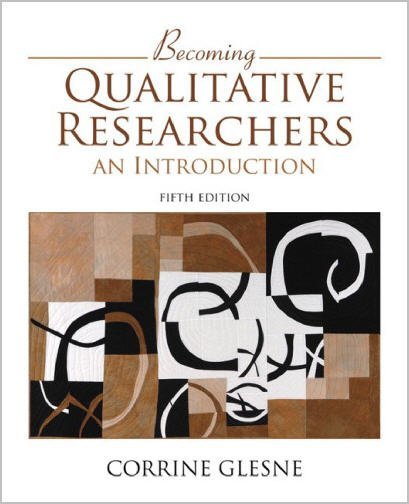
Becoming Qualitative Researchers: An Introduction 5th Edition by Corrine Glesne, ISBN-13: 978-0133859393
Original price was: $50.00.$14.99Current price is: $14.99.
Safe & secure checkout
Description
Description
Becoming Qualitative Researchers: An Introduction 5th Edition by Corrine Glesne, ISBN-13: 978-0133859393
[PDF eBook eTextbook] – Available Instantly
- Publisher : Pearson; 5th edition (December 24, 2014)
- Language : English
- 352 pages
- ISBN-10 : 0133859398
- ISBN-13 : 978-0133859393
Beginning researchers get an overview of qualitative research through a concise look at the practice of conducting research and the theory and debates that keep qualitative inquiry vibrant.
Table of Contents:
About the Author
Introduction: A Sense of Things to Come
Brief Contents
Contents
Chapter 1 Meeting Qualitative Inquiry
Beginnings
Searching
Ways of Knowing: Paradigms of Research
Logical Positivism/Logical Empiricism and Postempiricism
Interpretivism
Critical Theory
Postmodernism/Postcolonialism/Poststructuralism
Mixed Methods
Methodology, Inquiry Questions, and Methods: An Interaction
Interpretive Traditions of Qualitative Inquiry
Ethnography
Ethnography’s Historical Context.
Current Ethnography.
Autoethnography
Action Research
Possibilities of Qualitative Inquiry
What is to Come
Recommended Readings
Exercises
Chapter 2 Research Design and Other Prestudy Tasks: Doing What is Good for You
Introduction and Context
The Research Topic
Conceptual Framework
Seeking Relevant Literature
Using Theory
Creating a Framework for Concepts
Research Purposes
Research Statement and Questions
Selection of Research Methods
Selection of Site and Participants
Selection of Site
Site Selection Decisions.
Backyard Research.
Selection of Study Participants and Locations for Observations
Planning for Trustworthiness and time
Trustworthiness
The Time Frame
Meeting Participants: Access, Research Summaries, and the pilot
Gaining and Maintaining Access
The Lay Summary
The Pilot Study
Recommended Readings
Exercises
Class Exercises
Individual Exercises
Chapter 3 Being There: Developing Understanding Through Participant Observation, Documents, and Visual Research
The Participant-Observation Continuum
Participant-Observation Goals
The Participant-Observation Process
Early Days of Fieldwork
Observations
Fieldnotes
Making Notes.
Descriptive Notes.
Analytic Notes.
Research Diary.
Noting Advice.
Fieldwork Allies: Documents, Artifacts, and Visual Data
Documents and Artifacts
Archival Materials and Historical Research.
Current Documents and Artifacts.
Visual Data: Photography, Video, Maps, and Diagrams
Researcher-Created Visual Data.
Participant-Created or -Used Visual Data.
Collaboratively Created and/or Studied Visual Data.
Marginal or companion?
Recommended Readings
Exercises
Observation Activities
Document, Artifact, and Visual Activities
Chapter 4 Making Words Fly: Developing Understanding Through Interviewing
Developing Questions
Question Content
Shaping Interview Questions
Revising and Piloting Interview Questions
Conducting the Interview
Where? When? How Long? How Often?
The Interactive Nature of Interviewing
Probing
Recording, Transcribing, and Tracking
Recording
Transcribing
Tracking
Some Typical Problems in Interviewing
Focus Group Interviews
A Critique of the Conventional Interview
Recommended Readings
Exercises
Class Exercises
Individual Exercises
Chapter 5 Field Relations: Researcher Roles, Rapport, and Reflexivity
Researcher Roles and Predispositions
Anticipatory
A Learner
Analytic
Reassuring
Grateful
Field Relationships
Establishing and Maintaining Field Relationships
Rapport and Fitting in.
Building Trust and Taking Breaks.
Complicating and Enriching Dynamics in Field Relationships: Friendships and Power
Reflexivity
Subjectivity
Identities and Positionings
Trustworthiness
What Do You Notice?
Why Do You Notice What You Notice?
How Can You Interpret What You Notice?
Transformational Validity.
Asking Reflexive Questions
So What?
Recommended Readings
Exercises
Chapter 6 But Is It Ethical? Considering What Is “Right”
Respect, Beneficence, and Justice
The Principle of Respect: Informed and Voluntary Consent
The Principle of Beneficence: Privacy
Privacy, Consent, and the Internet.
Privacy, Consent, and Visual Research.
The Principle of Justice: The Vulnerable, Reciprocity, and Representation
Reciprocity.
Representation.
Ethical Codes
Researcher Roles and Ethical Dilemmas
Exploiter
Intervener/Reformer
Advocate
Friend
No Easy Solutions
Recommended Readings
Exercises
Chapter 7 Finding Your Story: Data Analysis
Varying Forms of Analysis
Thematic Analysis
Conversation Analysis
Narrative Analysis
Semiotics
Thematic Analysis: The Early Days
Memo Writing
Maintaining Some Semblance of Control
Rudimentary Categorizations
Entering the Code Mines
What Is a Code?
Approaches to Coding
Creating a Codebook
Putting Codes to Work
Displaying Data
Qualitative Data Analysis Software
Making Connections
Trustworthiness and Limitations
How Do You Know That Your Interpretation Is the Right One?
Delimitations and Limitations
Considerations
Recommended Readings
Exercises
Class Exercises
Individual Exercises
Chapter 8 Crafting Your Story: Writing Up Qualitative Data
The Conundrum of Representation
The Tale and the Teller
The Researcher’s Language
Depictions and Interpretations
Mind-Sets for Approaching Research Writing
Artist
Translator/Interpreter
Transformer
Strategies for Writing
Getting Started
Keeping At It
Drafts and Revisions
The Text: Questions of Style
Variety in Text Organization
Thematic.
Natural History.
Chronology.
Zoom Lens.
Narrative.
Separation of Narrative and Interpretation.
Amalgamation.
Data Display.
Specifics Of Style
Beginning and Ending
Recommended Readings
Exercises
Chapter 9 Improvising a Song of the World: Arts Based Research
Why Engage in Arts Based Research?
Approaches to Arts based Research
Ethnodrama
Poetics
Autoethnography
Fiction
Visual
Being accountable and Taking Risks
Being Accountable
Taking Risks
Recommended Readings
Exercises4
Chapter 10 The Continuing Search
Becoming Qualitative Researchers
Applications Of Qualitative Research
The Possibilities of Words and Other Forms of Presenting Research
Conference Presentations.
Publishing in Journals.
Publishing your Dissertation.
Applications of the Research Process
Developing Skills and Self-Learning.
Creating and Deepening Relationships.
Concluding Words
Recommended Readings
Exercises
Appendix A Descriptions of Several Qualitative Methodologies
Narrative Research
Grounded Theory
Case Study
Phenomenological Research
Appendix B Maintaining a Fieldwork Notebook
Glossary
References
Name Index
Corrine Glesne is a qualitative research methodologist and educational anthropologist, Corrine Glesne has conducted ethnographic research in the United States and abroad. Her text Becoming Qualitative Researchers has been translated into several languages, including Turkish and Chinese. In 2014, she was asked to give the keynote at the Eurasian Educational Research Congress, held in Istanbul. Corrine was a professor at the University of Vermont for seventeen years. Later, as a traveling professor with an international educational program, she taught and accompanied undergraduates to India, the Philippines, Mexico, New Zealand, and England. In 2011, she embarked on a year-long, multi-site qualitative study of the “exemplary” academic art museum for the Samuel H. Kress Foundation, resulting in her book The Exemplary Museum: Art and Academia (2013, MuseumsEtc). Corrine did her doctoral work at the University of Illinois at Urbana/Champaign. Her home is in Asheville, North Carolina.
What makes us different?
• Instant Download
• Always Competitive Pricing
• 100% Privacy
• FREE Sample Available
• 24-7 LIVE Customer Support