

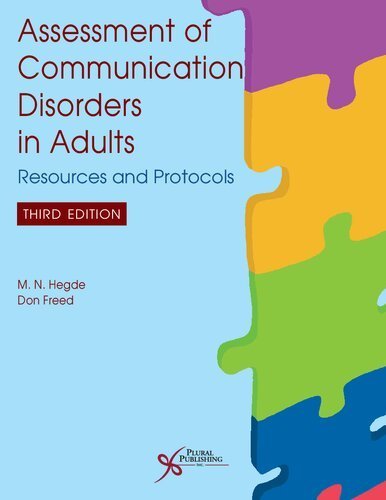
Assessment of Communication Disorders in Adults 3rd Edition by M. N. Hegde, ISBN-13: 978-1635502633
Original price was: $50.00.$19.99Current price is: $19.99.
Safe & secure checkout
Description
Description
Assessment of Communication Disorders in Adults 3rd Edition by M. N. Hegde, ISBN-13: 978-1635502633
[PDF eBook eTextbook]
- Publisher: Plural Publishing, Inc.; 2nd edition (September 29, 2020)
- Language: English
- 446 pages
- ISBN-10: 1635502632
- ISBN-13: 978-1635502633
Assessment of Communication Disorders in Adults: Resources and Protocols, Third Edition offers a unique combination of scholarly information, invaluable resources, and time-saving protocols on assessment of communication disorders in adults.
Most resource books offer limited research and scholarly information, thus making them unsuitable as textbooks for academic courses on assessment and diagnosis. Similarly, most traditional textbooks do not include practical, easy-to-use, and time-saving resources and protocols that the practicing clinicians can readily use during assessment sessions. By combining the strengths of traditional textbooks with newer assessment resources and protocols, this one-of-a-kind book offers a single, comprehensive source that is suitable as a textbook and useful as a practical clinical resource.
This bestselling and trusted text
- Covers the full range of communication disorders in adults, from aphasia to voice disorders
- Gives a comprehensive outline of basic assessment procedures
- Provides a set of protocols that are necessary to assess any communication disorder in adults
- Addresses the multicultural issues in assessing communication disorders in adults and offers an integrated assessment approach that includes the most desirable features of the traditional and several alternative approaches
- Contains two chapters for each disorder: one on resources that offers scholarly and research background on the disorder and one on resources that describe practical procedures and protocols that save preparation time and effort for the clinician
New to the Third Edition
- Expanded emphasis and specific guidelines on making a correct differential diagnosis
- Latest research on the characteristics of disorders of communication in adults
- Review of recent trends on diagnostic assessment with critical recommendations for students and clinicians
- Updated epidemiological research on communication disorders
- Revised to offer more succinct information on assessment tools and diagnostic criteria
- The latest standardized and informal assessment instruments
- Student-friendly, step-by-step instructions on how to conduct initial interviews and share final assessment results with patients in each protocol chapter
- Updated web links for key assessment materials mentioned in the text
Table of Contents:
Cover
Title Page
Copyright
Contents
Preface
Part I. Foundations of Assessment
Chapter 1. Assessment of Adults: An Overview
Written Case History
The Initial Clinical Interview
Hearing Screening
Orofacial Examination
Diadochokinetic Tasks
Speech-Language Sample
Standardized Assessment Instruments
Assessment of Functional Communication
Assessment of Quality of Life
Postassessment Counseling
Analysis and Integration of Assessment Results
Assessment Report
References
Chapter 2. Common Assessment Protocols
Adult Case History Protocol
Instructions for Conducting the Orofacial Examination in Adults: Observations and Implications
Orofacial Examination and Hearing Screening Protocol
Diadochokinetic Assessment Protocol for Adults
Functional Communication Assessment Protocol
Communication Quality of Life Assessment Protocol
Adult Assessment Report Outline
References
Part II. Assessment of Motor Speech Disorders in Adults
Chapter 3. Assessment of Apraxia of Speech (AOS): Resources
Description of AOS
Epidemiology and Etiology of AOS
Overview of Assessment of AOS
Screening for AOS
Standardized Tests for AOS
Analysis and Integration of Assessment Results
Diagnostic Criteria and Differential Diagnosis
Postassessment Counseling
Chapter Summary
Study Questions
References
Chapter 4. Assessment of Apraxia of Speech (AOS): Protocols
Overview of AOS Assessment Protocols
Assessment of AOS: Interview Protocol
AOS Assessment Protocol 1: Oral Apraxia
AOS Assessment Protocol 2: Speech Production in AOS
AOS Assessment Protocol 3: Comparing Alternate Motion Rates (AMRs) and Sequential Motion Rates (SMRs)
AOS Assessment Protocol 4: Connected Speech
Reference
Chapter 5. Assessment of Dysarthria: Resources
Types of Dysarthria
Epidemiology of Dysarthria
Etiology of Dysarthria
Overview of Dysarthric Speech
Overview of Assessment of Dysarthria
Standardized Tests for Dysarthria
Diagnostic Criteria and Differential Diagnosis
Postassessment Counseling
Chapter Summary
Study Questions
References
Chapter 6. Assessment of Dysarthria: Protocols
Overview of Dysarthria Assessment Protocols
Assessment of Dysarthria: Interview Protocol
Dysarthria Assessment Protocol 1: Orofacial Examination
Dysarthria Assessment Protocol 2: Respiratory and Phonatory Function
Dysarthria Assessment Protocol 3: Speech Production (Articulation)
Dysarthria Assessment Protocol 4: Production of Prosody
Dysarthria Assessment Protocol 5: Resonance
References
Part III. Assessment of Aphasia
Chapter 7. Assessment of Aphasia: Resources
Epidemiology and Ethnocultural Variables
Etiology and Neuropathology of Aphasia
Characteristics of Aphasia
Types of Aphasia
Overview of Assessment
Screening for Aphasia
Standardized Tests for Aphasia
Assessment of Speech Production
Assessment of Narrative and Conversational Skills
Assessment of Functional Communication
Quality of Life Assessment
Assessment of Bilingual or Multilingual Patients
Analysis and Integration of Assessment Results
Postassessment Counseling
Chapter Summary
Study Questions
References
Chapter 8. Assessment of Aphasia: Protocols
Overview of Aphasia Assessment Protocols
Aphasia Interview Protocol
Auditory Comprehension Assessment Protocol
Connected Speech and Grammatical Skills Assessment Protocol
Repetition and Echolalia Assessment Protocol
Naming and Word Finding Assessment Protocol
Fluency Assessment Protocol
Reading, Writing, and Calculation Assessment Protocol
Aphasia Summative Diagnostic Protocol
References
Part IV. Assessment of Right-Hemisphere Disorder
Chapter 9. Assessment of Right-Hemisphere Disorder (RHD): Resources
Functions of the Left and Right Hemispheres
Epidemiology of RHD
Causes and Neuropathology of RHD
Neurological Consequences of RHD
Overview of Assessment
Screening for RHD
Standardized Tests for RHD
Analysis and Integration of Assessment Results
RHD Assessment Tasks in Chapter 10
Postassessment Counseling
Chapter Summary
Study Questions
References
Chapter 10. Assessment of Right Hemisphere Disorder (RHD): Protocols
Overview of RHD Assessment Protocols
Assessment of RHD: Interview Protocol
RHD Assessment Protocol 1: Visual Neglect and Visuospatial Skills
RHD Assessment Protocol 2: Communication Skills
RHD Assessment Protocol 3: Abstract Language
Part V. Assessment of Dementia
Chapter 11. Assessment of Dementia: Resources
Overview of Dementia
Epidemiology and Ethnocultural Variables
General Etiology and Pathology of Neurodegenerative Diseases
Irreversible and Reversible Dementia
Dementia of the Alzheimer Type
Other Forms of Dementia
Overview of Dementia Assessment
Screening and Diagnostic Tests for Dementia
Assessment of Dementia in Ethnoculturally Diverse Adults
Diagnostic Criteria and Differential Diagnosis
Postassessment Counseling
Chapter Summary
Study Questions
References
Chapter 12. Assessment of Dementia: Protocols
Overview of Dementia Assessment Protocols
Assessment of Dementia: Interview Protocol
Dementia Screening Protocol 1: Saint Louis University Mental Status (SLUMS) Examination
Dementia Screening Protocol 2: Short Form of the Informant Questionnaire on Cognitive Decline in the Elderly (Short IQCODE)
Dementia Assessment Protocol 1: Mental Status and Intellectual Functioning
Dementia Assessment Protocol 2: Communication Abilities
Dementia Assessment Protocol 3: General Behavioral Evaluation
References
Part VI. Assessment of Traumatic Brain Injury
Chapter 13. Assessment of Traumatic Brain Injury (TBI): Resources
Epidemiology and Ethnocultural Variables
Etiology of TBI
Classification of Brain Injuries
Penetrating Brain Injuries
Nonpenetrating Brain Injuries
Primary and Secondary Effects of TBI
Neurophysiological and Behavioral Effects of TBI
Recovery from TBI
Communication Disorders Associated with TBI
Overview of TBI Assessment
Screening for TBI
Diagnostic Assessment
Assessment of Consciousness and Responsiveness
Global and Functional Assessment
Assessment of Memory, Reasoning, and Planning Skills
Assessment of Communication Deficits
Assessment of Quality of Life After TBI
Assessment of Dysphagia
Postassessment Counseling
Chapter Summary
Study Questions
References
Chapter 14. Assessment of Traumatic Brain Injury (TBI): Protocols
Overview of TBI Assessment Protocols
Assessment of TBI: Interview Protocol
TBI Assessment Protocol 1: Orientation and Memory
TBI Assessment Protocol 2: Perception
TBI Assessment Protocol 3: Reasoning
TBI Assessment Protocol 4: Verbally Based Planning: Discourse Analysis
TBI Assessment Protocol 5: Basic Language
TBI Assessment Protocol 6: Social Communication
Part VII. Assessment of Fluency Disorders
Chapter 15. Assessment of Fluency Disorders: Resources
An Overview of Fluency and its Disorders in Adults
Epidemiology and Ethnocultural Variables
Definition and Measurement of Stuttering
Subjective Experience of Stuttering
Additional Features of Stuttering
Diagnostic Criteria for Stuttering
Assessment of Stuttering
Neurogenic Stuttering
Cluttering
Assessment of Quality of Life and Functional Communication
Postassessment Counseling
Chapter Summary
Study Questions
References
Chapter 16. Assessment of Fluency Disorders: Protocols
Overview of Fluency Assessment Protocols
Assessment of Fluency Disorders: Interview Protocol
Dysfluency Measurement Protocol
Stuttering Variability Assessment Protocol
Associated Motor Behaviors Assessment Protocol
Avoidance Behaviors Assessment Protocol
Neurogenic Stuttering Assessment Protocol
Cluttering Assessment Protocol
Fluency Quality of Life Assessment Protocol
Part VIII. Assessment of Voice
Chapter 17. Assessment of Voice: Resources
Epidemiology and Ethnocultural Variables
Voice Disorders in Adults
Mutism and Aphonias
Dysphonias
Presbyphonia
Spasmodic Dysphonia
Transgender and Transsexual Voice
Causes of Voice Disorders
Overview of Voice Assessment
Clinical Assessment of Voice
Instrumental Assessment of Voice
Quality of Life Assessment
Postassessment Counseling
Chapter Summary
Study Questions
References
Chapter 18. Assessment of Voice: Protocols
Overview of Voice Assessment Protocols
Assessment of Voice: Interview Protocol
Adult Voice Evaluation Protocol
Resonance Assessment Protocol
Vocal Abuse and Misuse Assessment Protocol
Voice Handicap Assessment Protocol
Voice Quality of Life Assessment Protocol
References
Index
Back Cover
M. N. Hegde, PhD, is Professor Emeritus of Speech-Language Pathology in the Department of Communicative Disorders at California State University, Fresno. A highly regarded author in speech-language pathology, his books include leading texts in academic courses and valuable resources for clinicians. His books have been used in worldwide in speech-language pathology programs.
Donald B. Freed, PhD, is a professor in the Department of Communicative Disorders and Deaf Studies at California State University, Fresno. He received his MS and PhD from the University of Oregon. Prior to his PhD, he worked as a speech-language pathologist in acute care and rehabilitative medical facilities. He also worked as a research speech pathologist for three years at the Portland VA Medical Center. His research has primarily concentrated on adult language and motor speech disorders.
What makes us different?
• Instant Download
• Always Competitive Pricing
• 100% Privacy
• FREE Sample Available
• 24-7 LIVE Customer Support


Reviews
There are no reviews yet.