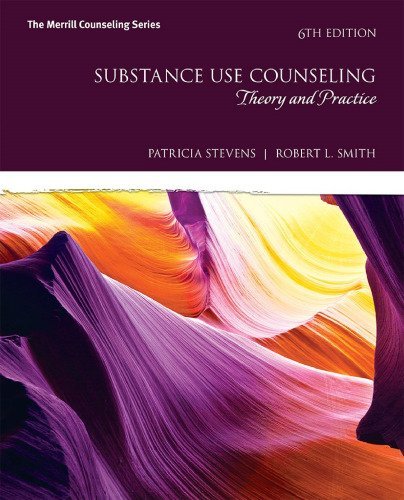
Substance Use Counseling: Theory and Practice 6th Edition by Patricia Stevens, ISBN-13: 978-0134055930
Original price was: $50.00.$14.99Current price is: $14.99.
Safe & secure checkout
Description
Description
Substance Use Counseling: Theory and Practice 6th Edition by Patricia Stevens, ISBN-13: 978-0134055930
[PDF eBook eTextbook] – Available Instantly
- Publisher : Pearson; 6th edition (April 19, 2017)
- Language : English
- 464 pages
- ISBN-10 : 0134055934
- ISBN-13 : 978-0134055930
Substance Use Counseling is intended for use in Substance Abuse Counseling and Drugs and Behavior courses or for practicing counselors and clinicians as an on-the-job resource.
A step-by-step guide through the process of working with substance-abuse and/or behavioral addiction clients.
Recognized for its clear, practical approach, Substance Use Counseling offers prospective and practicing clinicians and counselors a sound base of knowledge about alcohol, tobacco, and other drugs (ATOD), and practical help for working with individuals and families who seek assistance for substance abuse and/or behavioral addiction. While the chapters build on each other as they take readers through the counseling process, each chapter can also be used as a stand-alone resource. Illustrative case studies with critical-thinking questions give readers opportunities to examine and discuss a wide variety of cases. This popular guide also features individual chapters on special populations to delve further into the topic of substance abuse and address ways to measure the problem.
To keep readers up to date with the most current practices and trends shaping the field, the Sixth Edition reflects the changes in the DSM-5 related to the criteria for assessment and diagnosis of substance use disorders (including a new chapter on behavioral addictions and extensively updated terminology); the changing face of substance use; new effective treatment assessments, methods, and settings; and new chapter cases.
Table of Contents:
About the Authors
About the Contributors
Preface
New to This Edition
Brief Contents
Contents
Chapter 1 Introduction to Substance Use Disorder Counseling
Societal Costs of Substance use Disorders
Productivity
Substance-Related Diseases
Hepatitis
HIV/AIDS
A (Very) Short History of Substance use
Alcohol
Cocaine
Morphine, Heroin: The Opioids
Marijuana
Amphetamines
Hallucinogens
Tobacco
The Importance of Terminology in Substance use Disorder Counseling
The Profession in the 21st Century
An Overview of this Text
Conclusion
Chapter 2 Ethical and Legal Issues in Substance Use Disorder Counseling
Education and Training of Mental Health Professionals Working with Substance Use Disorder
Ethics
Confidentiality
Code of Federal Regulations 42, Part 2
Health Insurance Portability and Accountability Act of 1996 (HIPAA)
Patient Protection and Affordable Care Act
Confidentiality in Group Counseling or 12-Step Groups
Confidentiality of Minors
Family Educational Rights and Privacy Act of 1974 (FERPA)
Individuals with Disabilities Education Act of 2004 (IDEA)
Protection of Pupil Rights Amendment of 1994 (PPRA)
HIPAA
CFR 42, Part 2 in Regard to Minors
Ethical Conflicts Specific to Substance Use Disorder Counselors
Dual Relationships
Clients and Criminal Activity
Conflicting Laws
Ethical Code Conflicts
Ethical Decision Making
Conclusion
Chapter 3 The Major Substances of Use and Their Effect on the Brain and Body
The Brain
Neuroscience Research
The Structure of the Brain
Psychoactive Substances and the Brain
Controlled Substances Schedules
Depressants
Alcohol
Incidence
Psychoactive Effects
Effects on the Body
Tolerance and Withdrawal
Gender Differences
Fetal Alcohol Syndrome
Benzodiazepines: Prescription and Over-the-Counter Medications
Incidence
Psychoactive Effects
Effects on the Body
Tolerance and Withdrawal
Gender Differences
Barbiturates
Incidence
Psychoactive Effects
Nonbarbiturate Sedative-Hypnotics
Tolerance and Withdrawal
GHB (Identified as a Club Drug)
Incidence
Psychoactive Effects
Effects on the Body
Tolerance and Withdrawal
Toxic and Lethal Effects
Opiates
Incidence
Psychoactive Effects
Effects on the Body
Tolerance and Withdrawal
Overdose
Stimulants
Cocaine
Incidence
Psychoactive Effects
Effects on the Body
Tolerance and Withdrawal
Effects on the Fetus
Amphetamines
Incidence
Effects on the Body
Tolerance and Withdrawal
Tobacco
Incidence
Effects on the Body
Tolerance and Withdrawal
Caffeine
Incidence
Effects on the Body
Tolerance and Withdrawal
Cannabis
Incidence
Psychoactive Effects
Effects on the Body
Tolerance and Withdrawal
Medical Use
Cannabicycohexanol/Spice (K2)
Incidence
Psychoactive Effects
Effects on the Body
Tolerance and Withdrawal
Medical Use
Hallucinogens
Lysergic Acid Diethylamide (LSD; Identified as a Club Drug)
Incidence
Psychoactive Effects
Tolerance and Withdrawal
Phencyclidine (PCP; Identified as a Club Drug)
Incidence
Psychoactive Effects
Tolerance and Withdrawal
Ketamine (Identified as a Club Drug)
Incidence
Psychoactive Effects
Effects on the Body
A Further Look at Club Drugs
MDMA (Ecstasy)
Incidence
Psychoactive Effects
Effects on the Body
Volatile Substances or Inhalants
Anabolic-Androgenic Steroids
Conclusion
Chapter 4 Etiology of Substance Abuse: Why People Use
Understanding Theory
Overview of Substance Use Disorder Theories
Moral Theory
Aspects of Use Addressed by the Moral Theory
Continuum of Use
Change
Conclusion
Disease/Medical Theory
The Neurobiology of Substance Use Disorders
A Look at Brain Function Reward
Change
Conclusion
Genetic Theory
Aspects of Use Addressed by Genetic Theories
Continuum of Use
Change
Conclusion.
Behavioral Theories
Aspects of Use Addressed by the Behavioral Theory
Continuum of Use
Change
Conclusion.
Sociocultural Theories
Aspects of Use Addressed by Sociocultural Theories
Continuum of Use
Change
Conclusion.
An Integrated Approach: Substance Use Disorders in the 21st Century
Conclusion
Chapter 5 Assessment and Diagnosis
Issues in Assessment
The Diagnostic Interview
DSM-5 Diagnosis
DSM-5 Criteria for Substance Use Disorders
Behavioral Characteristics
Phase 1: The Prodromal Phase
Phase 2: The Crucial Phase
Phase 3: The Chronic Phase
Assessing the Behavioral Symptoms of Use
Social Characteristics
Family Characteristics
Assessing the Social and Family-Related Symptoms
Screening and Assessment Instruments
The Michigan Alcoholism Screening Test (MAST)
The Drug Abuse Screening Test (DAST-20)
The CAGE Questionnaire
Tolerance, Worried, Eye-Opener, Amnesia, K/Cut-down (TWEAK)
The Alcohol Use Disorders Identification Test (AUDIT)
The Substance Abuse Subtle Screening Inventory (SASSI-3 and SASSI-A2)
The Addiction Severity Index (ASI)
Problem Oriented Screening Instrument for Teenagers (POSIT)
Screening, Brief Intervention, and Referral to Treatment (SBIRT)
The Millon Clinical Multiaxial Inventory (MCMI-II) and Minnesota Multiphasic Personality Inventory (MMPI-2)
ASAM Criteria for Patient Placement
Diagnosis
Differential Diagnosis
Dual Diagnosis
Conclusion
Appendix A Substance Use History Questionnaire
Chapter 6 Treatment Planning and Treatment Settings
What Is Treatment Planning?
How to Develop a Treatment Plan
What Is a Treatment Setting?
Types of Treatment Settings
Medical Detoxification and Stabilization
Dual-Diagnosis Inpatient Hospitalization
Rehabilitation Programs
Partial Hospitalization Programs
Temporary Recovery or Halfway Homes
Intensive Outpatient Programs
Outpatient DUI/DWAI/DUID Programs
Special Issues Impacting Treatment Planning
Federal Legislative Changes and Implications for Treatment
External Reviewers: Health Care Accreditation Organizations and Managed Care
Conclusion
Chapter 7 Individual Treatment
Beginning Individual Treatment
Intervention
Ethical and Legal Concerns of Intervention: A Word of Caution
Direct Impact Individual Therapy
The Therapeutic Alliance
Direct Effect Theories
Motivational Interviewing
The Method of Motivational Interviewing
The Spirit of Motivational Interviewing
Acceptance
Compassion
Evocation
Collaboration
Change Talk
Motivational Enhancement Therapy
Cognitive–Behavioral Therapy
Eye Movement Desensitization and Reprocessing Therapy
The Mindfulness Technique
Pharmacotherapy
Detoxification
Medication During and After Treatment
Beyond Discontinuation of Use
Coping Skills Training/Life Skills Training
Vocational Readiness
Harm Reduction
Harm Reduction from the Therapist’s Perspective
Apply Motivational Interviewing
Applying EMDR
Coping Skills
Vocational Readiness
Applying Harm Reduction
Applying Suboxone Treatment/Self-Help Group
Conclusion
Chapter 8 Group Counseling for Substance Use Disorders
Types of Groups
Therapeutic Factors in Group Counseling for Substance Use Disorders
Matching Clients to Appropriate Group Counseling
Matching Readiness to Change
Matching Culturally Relevant Treatment
The Group Leader
Stages of Group Development
Specific Methods for Group Counseling for Substance Use Disorders
Twelve Step Facilitation Counseling Groups
Cognitive Behavior Therapy and Skill Building
Motivational Interviewing
An Example: Cannabis Youth Treatment: Integrating MI and CBT
Family and Couples Group Counseling
Group Treatment in the Continuum of Care
Group Treatment Efficacy
Conclusion
Chapter 9 Family Counseling with Individuals Diagnosed with Substance Use Disorder
Defining Family
General Systems Concepts
Homeostasis
Feedback Loops
Hierarchy, Roles, Rules, Subsystems, and Boundaries
Wholeness
Change
Values
Systems and Addictive Families
The Marital Dyad and Substance Use Disorder
The Family and Substance Use
Children in the Substance Use Family
Children’s Roles in SUD Families
Treatment with Substance Disordered Families
Programs Using Family Therapy
How Successful Is Family Therapy in SUD Treatment?
Conclusion
Chapter 10 Retaining Sobriety: Relapse Prevention Strategies
Determinants of Relapse
Environmental
Behavioral
Cognitive
Affective
Interpersonal Determinants
Summary
Models of Relapse Planning and Management
The Disease Model
Developmental Models
The Gorski Model
The Stage Model
A Cognitive–Behavioral/Social Learning Model
Social Learning Theories
Cognitive–Behavioral Model
Harm Reduction
Evidence-Based Practices toward Relapse
Self-Help Recovery Organizations: Adjuncts to Professional Intervention
Alcoholics Anonymous Model
AA Outcome Studies
Spirituality as a Resource
AA-Associated 12-Step Programs
Moderation Management (MM)
Rational Recovery
Secular Organizations for Sobriety/Save Our Selves (SOS)
Women for Sobriety (WFS)
Self-Help for Dually Diagnosed Persons
A Well-Rounded Life with Hope
Conclusion
Chapter 11 Working with Special Populations: Treatment Issues and Characteristics
Children and Adolescents
Risk Factors
Prevention and Intervention
Women
Risk Factors
Prevention and Intervention
The LGBTQ Community
LGBTQ Identity Development
Risk Factors
Prevention and Intervention
People with Disabilities
Risk Factors
Prevention and Intervention
Immigrants
Risk and Protective Factors
Barriers to Treatment
Older People
Risk Factors
Prevention and Intervention
Homelessness
Risk Factors
Treatment
The Military
Risk Factors
Prevention and Treatment
Conclusion
Chapter 12 Working with Diverse Cultures: Exploring Sociocultural Influences and Realities in Substance Use Disorder Treatment and Prevention
American Indians and Alaskan Natives
Cultural Values
Risk Factors
Barriers to Treatment
Prevention and Intervention
Asian Americans
Cultural Values
Risk Factors
Prevention and Intervention
African Americans
Risk Factors
Cultural Values
Barriers to Treatment
Prevention and Intervention
Hispanics
Cultural Values
Barriers to Treatment
Prevention and Intervention
Socioeconomic Status (SES) and Substance Use Disorders
SES and Substance Use Disorder Outcomes
Tobacco
Alcohol
Illegal Substance Use
General Substance Use
The Indirect Effects of SES
Institutions
Relationships
Neighborhood Disorder
Conclusion
Chapter 13 Prevention
The Need for Prevention
Emotional Impact
Social Impact
Medical Impact
Financial Impact
History of Substance Use Prevention
Conceptualizing Prevention
Public Health
Models and Theories of Public Health
Psychosocial Models
Social Learning
Cognitive Dissonance
Social Inoculation
Psychosocial Development
Social Development
Behavioral Intention
Stages of Change
Communication Models
Health Promotion
Communication and Behavior Change
Persuasion-Communication
Public Policy Models
Causal Model
Social-Ecological Model
Logic Model
Institute of Medicine (IOM)
Spectrum of Prevention Model
Developing Prevention Strategies
Conclusion
Chapter 14 Behavioral Addictions/Non–Substance-Related Disorders: An Overview
A Definition of Behavioral Addiction
A Word of Caution
General Criteria for Behavioral Addictions
Cognitive Changes
Emotional Changes
Gambling Disorder (GD)
Diagnosis and Assessment
Treatment Options
Summary
Sex Addiction
Diagnosis and Assessment
Treatment
Summary
Exercise Addiction
Diagnosis and Assessment
Treatment
Summary
Compulsive Buying Disorder (CBD)
Diagnosis and Assessment
Treatment
Summary
Internet Addiction Disorder (IAD)
Assessment and Diagnosis
Treatment
Summary
Conclusion
Appendix Case Study Possible Answers to Critical Thinking Questions
References
Name Index
Subject Index
Dr. Patricia Stevens is a retired Counselor Educator currently in clinical private practice in Louisville, CO. She trains student counselors through online teaching. Dr. Stevens also consults with universities in program development and accreditation (CACREP, NCATE/CAEP).
Dr. Stevens is a member of ACA, AAMFT, and served on the CACREP board for eight years. She has held multiple leadership positions in ACA and its divisions, including President of the IAMFC, Board-Member-at-Large of AACD, and Co-Chair of the Professional Standards Committee. Dr. Stevens has also served on several editorial boards of ACA and its divisions. Though retired, she continues to be active in the profession and her clinical work.
Through the years she has delivered more than 70 presentations at the local, state, regional, national, and international levels in the areas of substance abuse, gender implications in counseling, challenges of aging, and ethical/ legal issues in counseling. In the counseling field, she has published more than 50 articles, chapters, and books. Dr. Stevens has prepared and taught more than 26 different courses in the counseling curriculum.
Dr. Stevens is a Fulbright Scholar and works with the Red Cross as a Mental Health Disaster Relief volunteer. She volunteers at her local Red Cross and her local senior center.
Robert L. Smith, Ph.D., FPPR, is Professor & Chair of the Counseling and Educational Psychology Department, as well as the Doctoral Program Coordinator at Texas A&M University―Corpus Christi. He completed his Ph.D. at the University of Michigan. As a licensed psychologist, he has worked as a private practitioner in addition to serving as the chair of three counselor education programs. He is the author of several books and more than 80 professional articles. He serves as the Executive Director and co-founder of the International Association of Marriage and Family Counselors. He is also the founder of the National Credentialing Academy for Family Therapists. His research interests include the efficacy of treatment modalities in individual psychotherapy, family therapy, and substance abuse counseling. He is a Diplomate-Fellow in Psychopharmacology with the International College of Prescribing Psychologists and consultant with the Substance Abuse Program in the U. S. Navy. Dr. Smith as an international lecturer is currently involved in the development and implementation of graduate programs in counseling and psychology in Latin America.
What makes us different?
• Instant Download
• Always Competitive Pricing
• 100% Privacy
• FREE Sample Available
• 24-7 LIVE Customer Support