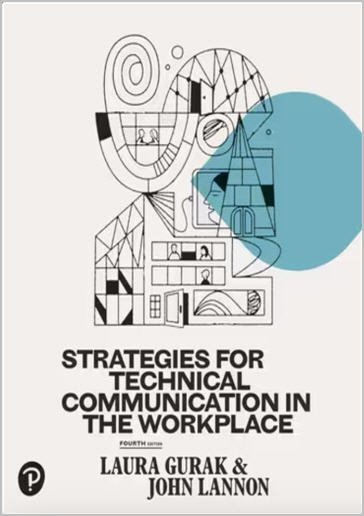
Strategies for Technical Communication in the Workplace 4th Edition by Laura J. Gurak, ISBN-13: 978-0134668543
Original price was: $75.00.$14.99Current price is: $14.99.
Safe & secure checkout
Description
Description
Strategies for Technical Communication in the Workplace 4th Edition by Laura J. Gurak, ISBN-13: 978-0134668543
[PDF eBook eTextbook] – Available Instantly
- Publisher: Pearson; 4th edition (February 19, 2018)
- Language: English
- ISBN-10: 0134668545
- ISBN-13: 978-0134668543
For introductory courses in Technical Communication.
Practical strategies for writing in the modern workplace Drawn from the strengths of their acclaimed Technical Communication, Gurak and Lannon’s Strategies for Technical Communication in the Workplace, 4/e helps professionals in all fields adapt their communication strategies as they navigate the global marketplace. This innovative book offers a clear and concise writing style, practical applications, numerous sample documents, coverage of technology and global issues, and many useful checklists to prepare for any situation. The 4th Edition maintains its focus on audience and purpose, while offering many new features — particularly updated discussions and examples of digital communication technologies. And with a fresh new look and brief format, it’s sure to appeal to learners of all writing levels.
Table of Contents
Brief Contents
Contents
Preface
Overview
What’s New in the 4th Edition
Key Features
Organization of the Book
REVEL™
Supplements
Part 1 Foundations
Chapter 1 Technical Communication: Global, Collaborative, and Digital
Learning Objectives
Chapter Outline
What is Technical Communication?
Main Features of Technical Communication
Focus is on the Reader, Not the Writer
Document Design is Efficient and Accessible
Writing Style is Clear and Relevant
Information is Persuasive, Truthful, and Based on Research
Three Primary Purposes of Technical Communication
Informational Purpose
Instructional Purpose
Persuasive Purpose
Common Types of Technical Documents
Technical Communication is Global, Collaborative, and Digital
Technical Communication is Global
Technical Communication is Collaborative
Running Successful Meetings
Identifying and Managing Group Conflicts
Reviewing and Editing the Work of Others
Technical Communication is Digital
Chapter 2 The Research Process in Technical Communication
Learning Objectives
Chapter Outline
Thinking Critically About Research
Primary Versus Secondary Sources
Exploring Secondary Sources
How to Locate Secondary Sources
Types of Secondary Sources
General Commercial, Organizational, and Academic Web Sites
Government Web Sites
Online News Outlets and Magazines
Blogs
Wikis
Online Forums and Email Lists
Digital Libraries and Collections
Periodical Databases
Hard Copy Books and Periodicals
Reference Works
Gray Literature
Exploring Primary Sources
Unsolicited Inquiries
Informational Interviews
Surveys
Observations and Experiments
Chapter 3 Providing Audiences with Usable Information
Learning Objectives
Chapter Outline
Analyze the Document’s Audience
Primary and Secondary Audiences
Relationship with Audience
Audience’s Technical Background
Audience’s Cultural Background
Determine the Document’s Purpose
Primary and Secondary Purposes
Intended Use of the Document
Know How to Be Persuasive
Using Claims as a Basis for Persuasion
Connecting with Your Audience
Create a Task Analysis for the Document
Consider Other Related Usability Factors
Setting
Potential Problems
Length
Format
Timing
Budget
Develop an Information Plan for the Document
Write, Test, Revise, and Proofread the Document
Chapter 4 Recognizing Ethical Issues in Technical Communication
Learning Objectives
Chapter Outline
Ethics, Technology, and Communication
Types of Ethical Choices
How Workplace Pressures Affect Ethical Values
Recognizing and Avoiding Ethical Abuses
Part 2 Blueprints
Chapter 5 Structuring Information for Your Readers
Learning Objectives
Chapter Outline
The Importance of an Understandable Structure
Outlining
Chunking
Sequencing
Paragraphing
The Topic Sentence
Paragraph Unity
Paragraph Coherence
Clarifying Headings
Providing an Overview
Chapter 6 Writing With a Readable Style
Learning Objectives
Chapter Outline
The Importance of a Readable Style
Writing Clearly
Avoiding Ambiguous Pronoun References
Avoiding Ambiguous Modifiers
Using Active Voice Whenever Possible
Using Passive Voice Selectively
Avoiding Nominalizations
Unstack Modifying Nouns
Avoiding Unnecessary Jargon
Writing Concisely
Avoiding Wordiness
Eliminating Redundancy and Repetition
Writing Fluently
Combining Related Ideas
Varying Sentence Construction and Length
Using Parallel Structure
Writing Personably
Adjusting Your Tone
Avoiding Biased Language
Chapter 7 Using Audience-Centered Visuals
Learning Objectives
Chapter Outline
The Importance of Using Audience-Centered Visuals
When to Use Visuals
Using Visuals to Support Text
Using Visuals on Their Own
Types of Visuals
Tables
Numeric Tables
Textual Tables
Graphs
Bar Graphs
Line Graphs
Charts
Flowcharts
Pie Charts
Organization Charts
Illustrations and Diagrams
Illustrations
Diagrams
Photographs
Videos
Icons and Symbols
Special Considerations When Using Visuals
Selecting Appropriate Visuals
Placing, Cross-Referencing, and Presenting Visuals
Using Color in Visuals
Using Visuals Fairly and Accurately
Chapter 8 Designing User-Friendly Documents
Learning Objectives
Chapter Outline
The Importance of User-Friendly Document Design
Characteristics of Well-Designed Documents
Specific Design Elements
Designing for Consistency and Cohesiveness
Grid Patterns
Margins
Paragraphs
Justification
White Space
Line Spacing and Indentation
Font Style
Font Size
Designing for Navigation and Emphasis
Headings
Color, Shading, Boldface, Italics, and Underlining
Bulleted and Numbered Lists
Running Headers and Footers
Tables of Contents and Indexes
Part 3 Documents
Chapter 9 Résumés and Other Employment Materials
Learning Objectives
Chapter Outline
Assessing Your Skills and Aptitudes
Researching the Job Market
Engage in Active Networking
Résumés
Parts of a Résumé
Contact Information
Career Objectives
Education
Work Experience
Leadership or Other Activities
References
Organizing Your Résumé
Application Letters
Solicited Application Letters
Unsolicited Application Letters
Digital versus Print Job Application Materials
Dossiers, Portfolios, and E-portfolios
Dossiers
Portfolios and E-portfolios
Interviews and Follow-up Letters
Interviews
Follow-up Communication
Thank You Note
Acceptance or Refusal Note
Chapter 10 Memos and Letters
Learning Objectives
Chapter Outline
Memo Basics, Parts, and Format
Parts and Format of Memos
Memo Tone
Types of Memos
Transmittal Memo
Summary or Follow-up Memo
Informational Memo
Letter Basics, Parts, and Format
Letter Parts and Formats
Sender’s Address
Date
Inside Address
Salutation
Body Text
Complimentary Closing
Signature
Optional Parts
Letter Tone
Establishing and Maintaining a “You” Perspective
Being Polite and Tactful
Using Plain English
Considering the Needs of International Readers
Being Direct or Indirect
Types of Letters
Inquiry Letters
Claim Letters
Sales Letters
Adjustment Letters
Chapter 11 Definitions
Learning Objectives
Chapter Outline
Audience and Purpose of Definitions
Legal, Safety, and Societal Implications of Definitions
Types of Definitions
Parenthetical Definitions
Sentence Definitions
Expanded Definitions
Methods for Expanding Definitions
Etymology
History
Negation
Operating Principle
Analysis of Parts
Visuals
Comparison and Contrast
Required Conditions
Examples
Using Multiple Expansion Methods
Placement of Definitions
Chapter 12 Descriptions
Learning Objectives
Chapter Outline
Audience and Purpose of Descriptions
Objectivity in Descriptions
Elements of Descriptions
Title
Introduction
Sequence of Topics
Visuals
Conclusion
Product and Process Descriptions
A Complex Product Description
A Complex Process Description
Specifications
Chapter 13 Instructions and Procedures
Learning Objectives
Chapter Outline
Audience and Purpose of Instructions
Types of Instructional Formats
User Manuals
Quick Reference Materials
Assembly Guides
Web-Based Instructions
Online Instructions
Safety and Legal Implications
Elements of Effective Instructions
Title
Overview or Introduction
Body
Conclusion
Visuals
Notes, Cautions, Warnings, and Danger Notices
Content, Style, and Design Considerations
Detail and Technicality
Style
Design
Procedures
Audience and Purpose Considerations
Types of Procedures
Conducting a Usability Survey
Chapter 14 Summaries
Learning Objectives
Chapter Outline
Audience and Purpose of Summaries
Elements of Effective Summaries
Accuracy
Completeness
Conciseness
Nontechnical Style
Writing Summaries Step by Step
Step 1: Read the Original Document
Step 2: Reread and Mark Essential Material
Step 3: Cut and Paste the Key Information
Step 4: Redraft the Information into Your Own Organizational Pattern and Words
Step 5: Edit Your Draft
Step 6: Compare Your Version with the Original Document
Special Types of Summaries
Closing Summaries
Informative Abstracts
Descriptive Abstracts
Executive Summaries
Summarizing Information for Social Media
Chapter 15 Informal Reports
Learning Objectives
Chapter Outline
Two Categories of Reports: Informational and Analytical
Types of Informational Reports
Progress Reports
Periodic Activity Reports
Trip Reports
Meeting Minutes
Types of Analytical Reports
Feasibility Reports
Recommendation Reports
Peer Review Reports
Chapter 16 Formal Reports
Learning Objectives
Chapter Outline
Audience and Purpose of Formal Reports
Comparative Analysis
Causal Analysis
Feasibility Analysis
Elements of Effective Formal Reports
Accurate, Appropriate, and Clearly Interpreted Data
Clearly Identified Purpose Statement
Understandable Structure
Readable Style
Audience-Centered Visuals
User-Friendly Design
Parts of Formal Reports
Letter of Transmittal
Front Matter
Title Page
Table of Contents
List of Tables and Figures
Abstract or Executive Summary
Text of the Report
Introduction
Body
Conclusion
End Matter
References or Works Cited List
Glossary
Appendices
A Sample Formal Report
Chapter 17 Proposals
Learning Objectives
Chapter Outline
Audience and Purpose of Proposals
Types of Proposals
Planning Proposals
Research Proposals
Sales Proposals
Organization of Informal and Formal Proposals
Clear Title or Subject Line
Background Information
Statement of Problem or Situation
Description of Solution or Resolution
Costs, Timing, and Qualifications
Conclusion
A Sample Formal Proposal
Part 4 Digital Media and Presentations
Chapter 18 Email
Learning Objectives
Chapter Outline
Workplace Email
Audience and Purpose of Email
Components and Organization of Email
Types of Workplace Email
Appropriate Style for Workplace Email
Copyright and Privacy in Digital Communication
Chapter 19 Blogs, Wikis, and Web Pages
Learning Objectives
Chapter Outline
Blogs
Internal Blogs
External Blogs
Wikis
Internal Wikis
External Wikis
Web Pages
Audience and Purpose of Web Pages
Elements of Effective Web Pages
Structure
Outlining (Storyboarding)
Chunking
Sequencing
Style
Visuals
Design
Grid Patterns
White Space
Font Style and Size
Headings
Color, Shading, Italic, Bold, and Underlining
Bulleted and Numbered Lists
Web Page Credibility and Privacy Issues
Chapter 20 Social Media
Learning Objectives
Chapter Outline
Considering Audience and Purpose
Audience as Contributor
Personal versus Workplace Uses of Social Media
Social Media in Technical and Workplace Communication
Customer Review Sites
Google+
LinkedIn and Other Job Sites
YouTube
Other Popular Social Media Sites
Credibility and Legal Issues
Chapter 21 Oral Presentations and Video Conferencing
Learning Objectives
Chapter Outline
Audience and Purpose of Oral Presentations
Types of Oral Presentations
Informative Presentations
Training Presentations
Persuasive Presentations
Action Plan Presentations
Sales Presentations
Parts of Oral Presentations
Introduction
Body
Conclusion
Preparing Oral Presentations
Research and Connect the Topic to Your Audience
Create an Outline or Storyboard
Determine a Delivery Style
Choose Your Technology
Plan the Use of Visuals
Practice the Presentation
Using Presentation Software
Video Conferencing
Delivering Oral Presentations
Appendix A Documenting Sources*
Outline
What is Plagiarism?
Identifying Sources and Information to be Documented
Taking Effective and Accurate Notes
Quoting, Paraphrasing, and Summarizing Properly
Quoting the Work of Others
Paraphrasing the Work of Others
Summarizing the Work of Others
Documentation: The Key to Avoiding Plagiarism
Why You Should Document
What You Should Document
How You Should Document
MLA Documentation Style
MLA Parenthetical References
MLA Works Cited Entries
MLA Works Cited Entries for Books
MLA Works Cited Entries for Periodicals
MLA Works Cited Entries for Other Sources
MLA Works Cited Entries for Digital Sources
APA Documentation Style
APA Parenthetical References
APA Reference Entries
APA Entries for Books
APA Entries for Periodicals
APA Entries for Other Sources
APA Entries for Electronic Sources
APA Entries for Gray Literature
Other Documentation Styles
Recognizing Copyright Issues
Works in the Public Domain
Fair Use
The Difference between Plagiarism and Copyright Infringement
Appendix B A Brief Handbook
Outline
Grammar
Sentence Fragments
Run-on Sentences
Comma Splices
Faulty Agreement—Subject and Verb
Faulty Agreement—Pronoun and Referent
Faulty Coordination and Subordination
Faulty Pronoun Case
Punctuation
Period
Question Mark
Exclamation Point
Semicolon
To Accompany Conjunctive Adverbs
To Separate Items in a Series
Colon
To Signal a Follow-Up Explanation
To Replace a Semicolon
To Introduce a Quotation
To Follow Salutations
Comma
To Pause Between Complete Ideas
To Pause between an Incomplete and a Complete Idea
To Separate Items (Words, Phrases, or Clauses) in a Series
To Set Off Introductory Phrases
To Set Off Nonrestrictive Phrases and Clauses
To Set Off Parenthetical Elements
To Set Off Quoted Material
To Set Off Appositives
Other Uses
Apostrophe
To Indicate the Possessive
To Indicate a Contraction
To Indicate the Plurals of Numbers, Letters, and Figures
Quotation Marks
To Set Off the Exact Words Borrowed from Another Speaker or Writer
To Indicate Titles
To Indicate Irony
Ellipses
Brackets
Italics
Parentheses
Dashes
Mechanics
Abbreviation
Hyphenation
Capitalization
Numbers and Numerals
Spelling
Usage
Transitions
Use Transitional Expressions
Repeat Key Words and Phrases
Use Forecasting Statements
Lists
Embedded Lists
Vertical Lists
Works Cited
Credits
Index
What makes us different?
• Instant Download
• Always Competitive Pricing
• 100% Privacy
• FREE Sample Available
• 24-7 LIVE Customer Support