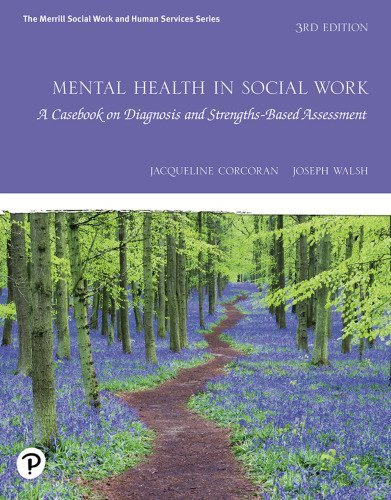
Mental Health in Social Work: A Casebook on Diagnosis and Strengths Based Assessment 3rd Edition, ISBN-13: 978-0135171905
Original price was: $50.00.$14.99Current price is: $14.99.
Safe & secure checkout
Description
Description
Mental Health in Social Work: A Casebook on Diagnosis and Strengths Based Assessment 3rd Edition, ISBN-13: 978-0135171905
[PDF eBook eTextbook] – Available Instantly
- Publisher: Pearson; 3rd edition (April 3, 2019)
- Language: English
- 288 pages
- ISBN-10: 0135171903
- ISBN-13: 978-0135171905
Learn essential clinical assessment skills for working in the mental health field using a case-based approach.
Mental Health in Social Work: A Casebook on Diagnosis and Strengths-Based Assessment emphasizes gaining competency in the DSM-5 diagnoses of mental disorders that are commonly seen in clinical and social service settings. Using a case-based approach, students and professionals learn to understand clients holistically as they proceed with the assessment and intervention process.
The 3rd Edition includes new chapters on obsessive-compulsive disorder (Ch. 9), post-traumatic stress disorder (Ch.10), and gender dysphoria (Ch. 14) It also includes additional content on socially diverse populations throughout the text, and new “Questions to Consider” for making a DSM diagnosis are included with each case study.
Table of Contents:
Preface
New to This Edition
Brief Contents
Contents
Part One: Assessment
1 Diagnosis and the Social Work Profession
The DSM Classification System
Mental Status Examination
Diagnosis
Diagnosis of Mr. Williams
Rationale for the Diagnosis
Limitations of the DSM
2 Biopsychosocial Risk and Resilience and Strengths Assessment
Definitions and Description
Individual Factors
Biological Mechanisms
Genes and Heritability
Neurotransmitters
Temperament
Physical Health
Developmental Stage
Intelligence
Psychological Mechanisms
Self-efficacy and Self-esteem
Self-regulation and Emotion Regulation
Coping Strategies
Social Mechanisms
Family
Household Composition
Traumatic Events and Loss
Neighborhood
Social Support Networks
Societal Conditions
Poverty
Ethnicity
Sexual Minorities
The Mental Health Care System
Conclusion
Part Two: DSM-5 Categories
3 Autism Spectrum Disorder
Prevalence and Comorbidity
Assessment
Biopsychosocial Risk and Resilience Influences
Onset
Heredity
Brain Abnormalities
Course and Recovery
Intervention
Behavior Management
Special Education
Family Education, Support, and Involvement
Social Skills Training
Medication
Complementary and Alternative Treatments
Critical Perspective
Reflect and Apply
4 Attention Deficit Hyperactivity Disorder
Prevalence and Comorbidity
Assessment
Biopsychosocial Risk and Resilience Influences
Onset
Genetic Influences
Social Influences
Course and Recovery
Intervention
Psychosocial Intervention
Behavioral Treatment
Cognitive-Behavioral Treatment
School-Based Services
Medication
School-Age
Preschoolers
Adolescents
Adulthood
Critical Perspective
Reflect and Apply
5 Schizophrenia
Prevalence and Comorbidity
Assessment
Biopsychosocial Risk and Resilience Influences
Onset
Genetic Influences
Biological Influences
Psychosocial Influences
Course and Recovery
Intervention
Medication
Psychosocial Interventions
Individual Interventions
Group Interventions
Family Interventions
Intensive Community Treatment and Case Management Interventions
Vocational Rehabilitation
“Recovery” Interventions
Critical Perspective
Reflect and Apply
6 Bipolar Disorder
Prevalence and Comorbidity
Assessment
Biopsychosocial Risk and Resilience Influences
Onset
Genetic and Biological Influences
Psychosocial Influences
Course and Recovery
Intervention
Medication
Psychosocial Interventions
Critical Perspective
Reflect and Apply
7 Major Depressive Disorder
Prevalence and Comorbidity
Assessment
Biopsychosocial Risk and Resilience Influences
Onset
Biological Influences
Psychological Influences
Social Influences
Course and Recovery
Intervention
Psychosocial Intervention
Medication
Youth
Adults
Critical Perspective
Reflect and Apply
8 The Anxiety Disorders
Prevalence and Comorbidity
Assessment
Biopsychosocial Risk and Resilience Influences
Onset
Biological Influences
Psychological Influences
Social Influences
Course and Recovery
Intervention
Psychosocial Intervention
CBT
Medication
Critical Perspective
Reflect and Apply
9 Obsessive-Compulsive Disorder
Prevalence and Comorbidity
Assessment
Biopsychosocial Risk and Resilience Influences
Onset
Biological Influences
Psychosocial Influences
Course and Recovery
Intervention
Psychosocial Intervention
Medication
Critical Perspective
Reflect and Apply
10 Post-Traumatic Stress Disorder
Prevalence and Comorbidity
Assessment
Biopsychosocial Risk and Resilience Influences
Onset
Biological Influences
Psychological Influences
Social Influences
Course and Recovery
Intervention
Psychosocial Intervention
EMDR
Crisis Debriefing
Other Psychosocial Approaches
Medication
Critical Perspective
Reflect and Apply
11 Eating Disorders: Anorexia Nervosa, Bulimia Nervosa, and Binge Eating Disorder
Prevalence and Comorbidity
Assessment
Biopsychosocial Risk and Resilience Influences
Onset
Biological Influences
Psychological Influences
Social Influences
Course and Recovery
Intervention
Treatment Settings
Psychosocial Interventions
CBT
Interpersonal Therapy
Motivational Interviewing
Psychodynamic Therapy
Family Therapy
Medication
Critical Perspective
Reflect and Apply
12 Oppositional Defiant Disorder and Conduct Disorder
Prevalence and Comorbidity
Assessment
Biopsychosocial Risk and Resilience Influences
Onset
Biological Influences
Psychological Influences
Social Influences
Course and Recovery
Intervention
Psychosocial Intervention
Medication
Critical Perspective
Reflect and Apply
13 Substance-Related and Addictive Disorders
Prevalence and Comorbidity
Assessment
Biopsychosocial Risk and Resilience Influences
Onset
Course and Recovery
Intervention
Psychosocial Intervention
Medication
Critical Perspective
Reflect and Apply
14 Gender Dysphoria
Prevalence and Comorbidity
Assessment
Biopsychosocial Risk and Resilience Influences
Onset
Biological Influences
Psychological Influences
Social Influences
Course and Recovery
Intervention
Psychosocial Intervention
Critical Perspective
Reflect and Apply
15 Alzheimer’s Disease
Prevalence and Comorbidity
Assessment
Biopsychosocial Risk and Resilience Influences
Onset
Biological Influences
Psychosocial Influences
Course and Recovery
Intervention
Psychosocial Intervention
Medication
Critical Perspective
Reflect and Apply
16 Borderline Personality Disorder
Prevalence and Comorbidity
Assessment
Biopsychosocial Risk and Resilience Influences
Onset
Biological Influences
Psychological Influences
Social Influences
Course and Recovery
Intervention
Psychosocial Interventions
Psychodynamic Intervention
Cognitive Behavioral Interventions
Medication
Critical Perspective
Reflect and Apply
Appendix A: Template for Preparing Diagnosis for Chapter Case Study
Diagnosis
Rationale
Additional Information Needed
Appendix B: Suggested Answers to “Questions to Consider”
Chapter 3
Chapter 4
Chapter 5
Chapter 6
Chapter 7
Chapter 8
Chapter 9
Chapter 10
Chapter 11
Chapter 12
Disruptive Behaviors
Intellectual and Learning Problems
Chapter 13
Disruptive Behaviors
Diagnosis of the Client’s Substance Use
Chapter 14
Chapter 15
Chapter 16
Appendix C: Directions and Template for “Reflect and Reply” Cases
Diagnosis
Rationale
Additional Information Needed
References
Index
Jacqueline Corcoran, Ph.D., LCSW, is a professor at the University of Pennsylvania School of Social Practice and Policy. She has published 16 books and 100 book chapters and articles on topics involving mental health and evidence-based practice.
Joseph Walsh, Ph.D., LCSW, is a professor emeritus at Virginia Commonwealth University, where he held a full-time position in the School of Social Work from 1993 to 2008. Joe taught courses in the areas of research, human behavior, and social work practice, and his own research and practice, while broad, focused primarily on clients with severe mental disorders. He published many articles and books over the years and is currently a part-time clinical social worker at Richmond Creative Counseling. Joe has also served on the Virginia Board of Social Work since 2012.
What makes us different?
• Instant Download
• Always Competitive Pricing
• 100% Privacy
• FREE Sample Available
• 24-7 LIVE Customer Support