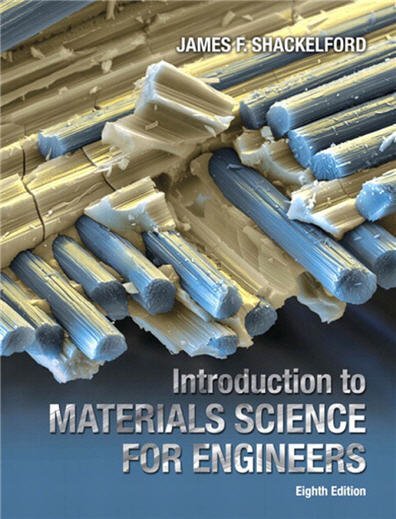
Introduction to Materials Science for Engineers 8th Edition by James Shackelford, ISBN-13: 978-0133826654
Original price was: $50.00.$14.99Current price is: $14.99.
Safe & secure checkout
Description
Description
Introduction to Materials Science for Engineers 8th Edition by James Shackelford, ISBN-13: 978-0133826654
[PDF eBook eTextbook] – Available Instantly
- Publisher: Pearson; 8th edition (April 2, 2014)
- Language: English
- 696 pages
- ISBN-10: 0133826651
- ISBN-13: 978-0133826654
This book is intended for use in a first course in Materials Sciences and Engineering taught in the departments of materials science, mechanical, civil and general engineering. It is also a suitable reference for mechanical and civil engineers and machine designers.
Introduction to Materials Science for Engineers provides balanced, current treatment of the full spectrum of engineering materials, covering all the physical properties, applications and relevant properties associated with engineering materials. It explores all of the major categories of materials while also offering detailed examinations of a wide range of new materials with high-tech applications.
Table of Contents:
Contents
Introduction to Materials Science for Engineers
Contents
Preface
New to This Edition
Supplementary Material
your work…
your answer specific feedback
About the Author
CHAPTER 1 Materials for Engineering
1.1 The Material World
1.2 Materials Science and Engineering
1.3 Six Materials That Changed Your World
Steel Bridges—Introducing Metals
Lucalox Lamps—Introducing Ceramics
Optical Fibers—Introducing Glasses
Nylon Parachutes—Introducing Polymers
Kevlar®-Reinforced Tires—Introducing Composites
Silicon Chips—Introducing Semiconductors
1.4 Processing and Selecting Materials
1.5 Looking at Materials by Powers of Ten
Summary
Key Terms
References
PART I The Fundamentals
CHAPTER 2 Atomic Bonding
2.1 Atomic Structure
Solution
Solution
Solution
Practice Problem 2.1
Practice Problem 2.2
Practice Problem 2.3
2.2 The Ionic Bond
Coordination Number
Solution
Solution
Solution
Solution
Practice Problem 2.4
Practice Problem 2.5
Practice Problem 2.6
Practice Problem 2.7
2.3 The Covalent Bond
Solution
Solution
Solution
Practice Problem 2.8
Practice Problem 2.9
Practice Problem 2.10
Practice Problem 2.11
2.4 The Metallic Bond
Solution
Practice Problem 2.12
2.5 The Secondary, or van der Waals, Bond
Solution
Practice Problem 2.13
Practice Problem 2.14
2.6 Materials—The Bonding Classification
Summary
Key Terms
References
Problems
Section 2.1 · Atomic Structure
Section 2.2 · The Ionic Bond
Section 2.3 · The Covalent Bond
Section 2.4 · The Metallic Bond
Section 2.5 · The Secondary, or van der Waals, Bond
CHAPTER 3 Crystalline Structure—Perfection
3.1 Seven Systems and Fourteen Lattices
Solution
Practice Problem 3.1
3.2 Metal Structures
Solution
Practice Problem 3.2
Practice Problem 3.3
3.3 Ceramic Structures
Solution
Solution
Practice Problem 3.4
Practice Problem 3.5
3.4 Polymeric Structures
Solution
Practice Problem 3.6
3.5 Semiconductor Structures
Solution
Solution
Practice Problem 3.7
Practice Problem 3.8
3.6 Lattice Positions, Directions, and Planes
Solution
Solution
Solution
Solution
Solution
Solution
Solution
Solution
Solution
Solution
Solution
Solution
Practice Problem 3.9
Practice Problem 3.10
Practice Problem 3.11
Practice Problem 3.12
Practice Problem 3.13
Practice Problem 3.14
Practice Problem 3.15
Practice Problem 3.16
Practice Problem 3.17
Practice Problem 3.18
Practice Problem 3.19
Practice Problem 3.20
Practice Problem 3.21
3.7 X-Ray Diffraction
Solution
Practice Problem 3.22
Summary
Key Terms
General
Structures
Diffraction
References
Problems
Section 3.1 · Seven Systems and Fourteen Lattices
Section 3.2 · Metal Structures
Section 3.3 · Ceramic Structures
Section 3.4 · Polymeric Structures
Section 3.5 · Semiconductor Structures
Section 3.6 · Lattice Positions, Directions, and Planes
Section 3.7 · X-Ray Diffraction
CHAPTER 4 Crystal Defects and Noncrystalline Structure—Imperfection
4.1 The Solid Solution—Chemical Imperfection
Solution
Solution
Practice Problem 4.1
Practice Problem 4.2
4.2 Point Defects—Zero-Dimensional Imperfections
Solution
Practice Problem 4.3
4.3 Linear Defects, or Dislocations—One-Dimensional Imperfections
Solution
Practice Problem 4.4
4.4 Planar Defects—Two-Dimensional Imperfections
Solution
Solution
Practice Problem 4.5
Practice Problem 4.6
4.5 Noncrystalline Solids—Three-Dimensional Imperfections
Solution
Practice Problem 4.7
Summary
Key Terms
References
Problems
Section 4.1 · The Solid Solution—Chemical Imperfection
Section 4.2 · Point Defects—Zero-Dimensional Imperfections
Section 4.3 · Linear Defects, or Dislocations—One-Dimensional Imperfections
Section 4.4 · Planar Defects—Two-Dimensional Imperfections
Section 4.5 · Noncrystalline Solids—Three-Dimensional Imperfections
CHAPTER 5 Diffusion
5.1 Thermally Activated Processes
Solution
Practice Problem 5.1
5.2 Thermal Production of Point Defects
Solution
Practice Problem 5.2
5.3 Point Defects and Solid-State Diffusion
Solution
Solution
Solution
Solution
Practice Problem 5.3
Practice Problem 5.4
Practice Problem 5.5
Practice Problem 5.6
5.4 Steady-State Diffusion
Solution
Practice Problem 5.7
5.5 Alternate Diffusion Paths
Solution
Practice Problem 5.8
Summary
Key Terms
References
Problems
Section 5.1 · Thermally Activated Processes
Section 5.2 · Thermal Production of Point Defects
Section 5.3 · Point Defects and Solid-State Diffusion
Section 5.4 · Steady-State Diffusion
Section 5.5 · Alternate Diffusion Paths
CHAPTER 6 Mechanical Behavior
6.1 Stress Versus Strain
Metals
Practice Problem 6.1
Solution
Solution
Solution
Practice Problem 6.2
Practice Problem 6.3
Ceramics and Glasses
Solution
Practice Problem 6.4
Polymers
Solution
Solution
Practice Problem 6.5
Practice Problem 6.6
6.2 Elastic Deformation
Solution
Practice Problem 6.7
6.3 Plastic Deformation
Solution
Practice Problem 6.8
6.4 Hardness
6.5 Creep and Stress Relaxation
Solution
Solution
Solution
Practice Problem 6.10
Practice Problem 6.11
Practice Problem 6.12
6.6 Viscoelastic Deformation
Inorganic Glasses
Organic Polymers
Elastomers
Solution
Practice Problem 6.13
Summary
Key Terms
References
Problems
Section 6.1 · Stress Versus Strain
Section 6.2 · Elastic Deformation
Section 6.3 · Plastic Deformation
Section 6.4 · Hardness
Section 6.5 · Creep and Stress Relaxation
Section 6.6 · Viscoelastic Deformation
CHAPTER 7 Thermal Behavior
7.1 Heat Capacity
Solution
Practice Problem 7.1
7.2 Thermal Expansion
Solution
Practice Problem 7.2
7.3 Thermal Conductivity
Solution
Practice Problem 7.3
7.4 Thermal Shock
Solution
Solution
Practice Problem 7.4
Practice Problem 7.5
Summary
Key Terms
References
Problems
7.1 • Heat Capacity
7.2 • Thermal Expansion
7.3 • Thermal Conductivity
7.4 • Thermal Shock
CHAPTER 8 Failure Analysis and Prevention
8.1 Impact Energy
Solution
Practice Problem 8.1
8.2 Fracture Toughness
Solution
Solution
Practice Problem 8.2
Practice Problem 8.3
8.3 Fatigue
Solution
Solution
Practice Problem 8.4
Practice Problem 8.5
8.4 Nondestructive Testing
Solution
Practice Problem 8.6
8.5 Failure Analysis and Prevention
Summary
Key Terms
References
Problems
Section 8.1 · Impact Energy
Section 8.2 · Fracture Toughness
Section 8.3 · Fatigue
Section 8.4 · Nondestructive Testing
CHAPTER 9 Phase Diagrams—Equilibrium Microstructural Development
9.1 The Phase Rule
Solution
Practice Problem 9.1
9.2 The Phase Diagram
Complete Solid Solution
Eutectic Diagram with no Solid Solution
Eutectic Diagram with Limited Solid Solution
Eutectoid Diagram
Peritectic Diagram
General Binary Diagrams
Solution
Practice Problem 9.2
9.3 The Lever Rule
Solution
Solution
Solution
Practice Problem 9.3
Practice Problem 9.4
Practice Problem 9.5
9.4 Microstructural Development During Slow Cooling
Solution
Solution
Solution
Solution
Solution
Solution
Solution
Practice Problem 9.6
Practice Problem 9.7
Practice Problem 9.8
Practice Problem 9.9
Practice Problem 9.10
Practice Problem 9.11
Practice Problem 9.12
Summary
Key Terms
References
Problems
9.1 • The Phase Rule
9.2 • The Phase Diagram
9.3 • The Lever Rule
9.4 • Microstructural Development During Slow Cooling
CHAPTER 10 Kinetics—Heat Treatment
10.1 Time—The Third Dimension
Solution
Practice Problem 10.1
10.2 The TTT Diagram
Diffusional Transformations
Diffusionless (Martensitic) Transformations
Heat Treatment of Steel
Solution
Solution
Solution
Solution
Practice Problem 10.2
Practice Problem 10.3
Practice Problem 10.4
Practice Problem 10.5
10.3 Hardenability
Solution
Solution
Practice Problem 10.6
Practice Problem 10.7
10.4 Precipitation Hardening
Solution
Practice Problem 10.8
10.5 Annealing
Cold Work
Recovery
Recrystallization
Grain Growth
Solution
Practice Problem 10.9
10.6 The Kinetics of Phase Transformations for Nonmetals
Solution
Practice Problem 10.10
Summary
Key Terms
References
Problems
10.1 • Time—The Third Dimension
10.2 • The TTT Diagram
10.3 • Hardenability
10.4 • Precipitation Hardening
10.5 • Annealing
10.6 • The Kinetics of Phase Transformations for Nonmetals
PART II Materials and Their Applications
CHAPTER 11 Structural Materials—Metals, Ceramics, and Glasses
11.1 Metals
Ferrous Alloys
Nonferrous Alloys
Solution
Practice Problem 11.1
11.2 Ceramics and Glasses
Ceramics—Crystalline Materials
Glasses—Noncrystalline Materials
Glass-Ceramics
Solution
Practice Problem 11.2
11.3 Processing the Structural Materials
Processing of Metals
Solution
Solution
Practice Problem 11.3
Practice Problem 11.4
Processing of Ceramics and Glasses
Solution
Solution
Practice Problem 11.5
Practice Problem 11.6
Summary
Key Terms
Metals
Ceramics and Glasses
References
Problems
11.1 • Metals
11.2 • Ceramics and Glasses
11.3 • Processing the Structural Materials
CHAPTER 12 Structural Materials—Polymers and Composites
12.1 Polymers
Polymerization
Solution
Solution
Practice Problem 12.1
Practice Problem 12.2
Structural Features of Polymers
Solution
Practice Problem 12.3
Thermoplastic Polymers
Thermosetting Polymers
Solution
Practice Problem 12.4
Additives
Solution
Practice Problem 12.5
12.2 Composites
Fiber-Reinforced Composites
Solution
Practice Problem 12.6
Aggregate Composites
Solution
Practice Problem 12.7
Property Averaging
Solution
Solution
Practice Problem 12.8
Practice Problem 12.9
Mechanical Properties of Composites
Solution
Solution
Practice Problem 12.10
Practice Problem 12.11
12.3 Processing the Structural Materials
Processing of Polymers
Processing of Composites
Summary
Key Terms
Polymers
Composites
References
Problems
12.1 • Polymers
12.2 • Composites
12.3 • Processing the Structural Materials
CHAPTER 13 Electronic Materials
13.1 Charge Carriers and Conduction
Solution
Solution
Solution
Solution
Practice Problem 13.1
Practice Problem 13.2
Practice Problem 13.3
Practice Problem 13.4
13.2 Energy Levels and Energy Bands
Solution
Solution
Practice Problem 13.5
Practice Problem 13.6
13.3 Conductors
Thermocouples
Superconductors
Solution
Solution
Solution
Solution
Practice Problem 13.7
Practice Problem 13.8
Practice Problem 13.9
Practice Problem 13.10
13.4 Insulators
Ferroelectrics
Piezoelectrics
Solution
Solution
Practice Problem 13.11
Practice Problem 13.12
13.5 Semiconductors
Intrinsic, Elemental Semiconductors
Solution
Solution
Solution
Practice Problem 13.13
Practice Problem 13.14
Practice Problem 13.15
Extrinsic, Elemental Semiconductors
Solution
Solution
Solution
Solution
Solution
Solution
Practice Problem 13.16
Practice Problem 13.17
Practice Problem 13.18
Practice Problem 13.19
Compound Semiconductors
Solution
Solution
Solution
Practice Problem 13.20
Practice Problem 13.21
Practice Problem 13.22
Processing of Semiconductors
Solution
Practice Problem 13.23
Semiconductor Devices
Solution
Practice Problem 13.24
13.6 Composites
13.7 Electrical Classification of Materials
Summary
Key Terms
References
Problems
13.1. · Charge Carriers and Conduction
13.2. · Energy Levels and Energy Bands
13.3. · Conductors
13.4. · Insulators
13.5. · Semiconductors
13.6. · Composites
CHAPTER 14 Optical and Magnetic Materials
14.1 Optical Materials
Solution
Practice Problem 14.1
Optical Properties
Solution
Solution
Solution
Solution
Practice Problem 14.2
Practice Problem 14.3
Practice Problem 14.4
Practice Problem 14.5
Optical Systems and Devices
Solution
Solution
Solution
Practice Problem 14.6
Practice Problem 14.7
Practice Problem 14.8
14.2 Magnetic Materials
Solution
Practice Problem 14.9
Ferromagnetism
Solution
Solution
Practice Problem 14.10
Practice Problem 14.11
Ferrimagnetism
Solution
Solution
Practice Problem 14.12
Practice Problem 14.13
Metallic Magnets
Solution
Solution
Practice Problem 14.14
Practice Problem 14.15
Ceramic Magnets
Solution
Solution
Practice Problem 14.16
Practice Problem 14.17
Summary
Key Terms
References
Problems
14.1 • Optical Materials
14.2 • Magnetic Materials
CHAPTER 15 Materials in Engineering Design
15.1 Material Properties—Engineering Design Parameters
Solution
Practice Problem 15.1
15.2 Selection of Structural Materials—Case Studies
Materials for Hip- and Knee-Joint Replacement
Metal Substitution with Composites
Solution
Practice Problem 15.2
15.3 Selection of Electronic, Optical, and Magnetic Materials—Case Studies
Light-Emitting Diode
Glass for Smart Phone and Tablet Touch Screens
Amorphous Metal for Electric-Power Distribution
Solution
Practice Problem 15.3
15.4 Materials and Our Environment
Environmental Degradation of Materials
Solution
Solution
Solution
Solution
Practice Problem 15.4
Practice Problem 15.5
Practice Problem 15.6
Practice Problem 15.7
Environmental Aspects of Design
Recycling
Summary
Key Terms
References
Problems
15.1 • Material Properties—Engineering Design Parameters
15.2 • Selection of Structural Materials—Case Studies
15.3 • Selection of Electronic, Optical, and Magnetic Materials—Case Studies
15.4 • Materials and Our Environment
Appendix 6 Glossary
Answers to Practice Problems (PP) and Odd-Numbered Problems
Chapter 2
Chapter 3
Chapter 4
Chapter 5
Chapter 6
Chapter 7
Chapter 8
Chapter 9
Chapter 10
Chapter 11
Chapter 12
Chapter 13
Chapter 14
Chapter 15
Index
Constants and Conversion Factors
Period Table of The Elements
Atomic and Ionic Radii of Selected Elementsa
Physical and Chemical Data for Selected Elementsa
What makes us different?
• Instant Download
• Always Competitive Pricing
• 100% Privacy
• FREE Sample Available
• 24-7 LIVE Customer Support