

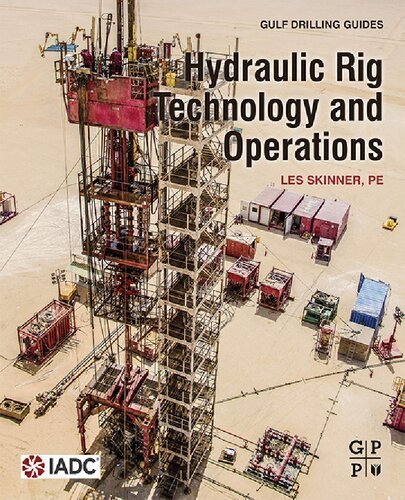
Hydraulic Rig Technology and Operations 1st Edition by Les Skinner, ISBN-13: 978-0128173527
Original price was: $50.00.$19.99Current price is: $19.99.
Safe & secure checkout
Description
Description
Trustpilot
Hydraulic Rig Technology and Operations 1st Edition by Les Skinner, ISBN-13: 978-0128173527
[PDF eBook eTextbook] – Available Instantly
- Publisher: Gulf Professional Publishing; 1st edition (December 28, 2018)
- Language: English
- 555 pages
- ISBN-10: 0128173521
- ISBN-13: 978-0128173527
Gives readers a deeper understanding of the principles, operations and future applications of hydraulic rig operations.
Hydraulic Rig Technology and Operations delivers the full spectrum of topics critical to running a hydraulic rig. Also referred to as a snubbing unit, this single product covers all the specific specialties and knowledge needed to keep production going, from their history, to components and equipment. Also included are the practical calculations, uses, drilling examples, and technology used today. Supported by definitions, seal materials and shapes, and Q&A sections within chapters, this book gives drilling engineers the answers they need to effectively run and manage hydraulic rigs from anywhere in the world.
Table of Contents:
Copyright
Dedication
Contents
List of Figures
List of Tables
Acknowledgments
Introduction
Chapter 1: History of Snubbing
1.1. Background and Definition
1.2. Early Development
1.2.1. Townsend Patent-1924
1.2.2. Otis Patent-1929
1.2.3. Minor Patent-1929
1.3. Early Snubbing Experience
1.3.1. Kettleman Hills Field-1931
1.3.2. Managed Pressure Drilling-1933
1.3.3. Pressured Completions-1929-1974
1.4. Recent Developments
1.4.1. All Hydraulic Units
1.4.2. Combination Hydraulic/Mechanical Units
1.4.3. Snub Drilling Unit
1.4.4. Miniaturized Rig-Assist Units
Chapter 1 Quiz
Bibliography
Chapter 2: Snubbing Unit Components
2.1. Introduction
2.1.1. Naming Conventions
2.1.2. Common Component Descriptions
2.2. Conventional Snubbing Unit
2.2.1. Traveling Snubbers
2.2.2. Snubbing Line
2.2.3. Counterweight Cables and Sheaves
2.2.4. Stationary Sheaves and Work Floor
2.2.5. Stationary Snubbers
2.3. Hydraulic Snubbing Unit
2.3.1. Traveling Frame or Head
2.3.2. Traveling Slips
2.3.3. Work Basket
2.3.4. Control Console
2.3.5. Jib (Mast)
2.3.6. Hydraulic Jacks
2.3.7. Telescoping Pipe Guide
2.3.8. Base
2.3.9. Stationary Slips
2.3.10. Work Window
2.3.11. Snubbing BOPs (Strippers)
2.3.12. Equalizing Loop
2.3.13. Guy Lines
2.3.14. Power-Pack
2.3.15. BOP Accumulator and Remote Controls
2.4. Hydraulic Rig-Assist Snubbing Units
2.4.1. Hydraulic Jacks
2.4.2. Traveling Head
2.4.3. Jib
2.4.4. Work Basket
2.4.5. Work Window
2.4.6. Safety BOPs
2.4.7. Equalizing Circuit
2.4.8. Power-Pack
2.4.9. Guy Lines and Anchors
2.5. Hydraulic Workover Units
2.6. Hydraulic Drilling Rigs
2.7. Push-Pull Units
Chapter 2 Quiz
Bibliography
Chapter 3: Hydraulic Unit Equipment Features
3.1. Introduction
3.2. Hydraulic Jacks
3.2.1. Basic Theory
3.2.2. Concentric Snubbing Unit
3.2.3. Snubbing Unit Sizes
3.2.4. Piston/Cylinder Sealing
3.2.4.1. Piston Wear Sleeves (Wear Guides)
3.2.4.2. Piston Seals
3.2.5. Rod Seals
3.2.5.1. Rod Wear Sleeve (Wear Guide)
3.2.5.2. Rod Seals
3.2.6. Cylinder Damage and Repair
3.2.6.1. Honing
3.2.6.2. Replating
3.2.6.3. Exterior Coating
3.2.6.4. Ovality Issues
3.2.7. Rod Damage and Repair
3.2.7.1. Straightening
3.2.7.2. Honing/Grinding
3.2.7.3. Replating
3.2.7.4. Cladding
3.2.7.5. Replacement
3.2.7.6. Twisted Unit
3.2.8. Jack Configuration
3.3. Traveling Head
3.3.1. Jack Plate
3.3.2. Hydraulic Rotary Table
3.3.3. In-Line Power Tongs
3.4. Slips
3.5. Snubbing BOPs
3.5.1. Stripping Head
3.5.2. Annular Preventer
3.5.3. Snubbing BOPs
3.5.4. Ram-to-Ram Snubbing
3.6. Equalizing Loop
3.6.1. Configuration
3.6.2. Operation During Snubbing
3.6.2.1. Snubbing in the Hole
3.6.2.2. Snubbing/Stripping Out of the Hole
3.6.2.3. Reversing Direction
3.7. Power-Pack
3.7.1. Hydraulic Pump
3.7.1.1. Hydraulic Pump Flowrate
3.7.1.2. Snubbing Unit Speed
3.7.1.3. Parasitic Devices
3.7.1.4. Pump Pressure
3.7.2. Prime Mover
3.7.3. Instrumentation
3.7.4. Power Fluid Maintenance
3.7.4.1. Hydraulic Fluid
3.7.4.2. Hydraulic Fluid Cooler
3.7.4.3. Hydraulic Fluid Reservoir
3.7.4.4. Hydraulic Fluid Filtering and Polishing
3.7.4.5. Hose Systems
3.8. Snubbing Unit Controls
3.8.1. Control Panels-Standalone Units
3.8.1.1. Gauges
3.8.1.2. Jack Operating Panel
3.8.1.3. Remote BOP Control Panel
3.8.1.4. Counterbalance Control Panel
3.8.1.5. Auxiliary Panels
3.8.2. Control Panels-Rig-Assist Units
3.8.2.1. Jack Control Panel
3.8.2.2. BOP Panel
3.8.2.3. Counterbalance Panel
3.8.3. Control Panels-HWO Units
3.8.4. Control Panels-Push-Pull Units
3.8.5. Power Tong Controls
3.8.6. Data Acquisition Systems
3.9. Vertical Pipe Racking Systems
3.9.1. Basket-Connected Fingerboards
3.9.2. Basket-Attached Structure
3.9.3. Free-Standing Rack
3.10. Work Basket Emergency Escape Devices
3.10.1. Escape Rope
3.10.2. Geronimo Line
3.10.3. Controlled Descent Device
3.10.4. Escape Pod
3.10.5. Slide
3.11. Remotely-Controlled Snubbing Units
Chapter 3 Quiz 1
Chapter 3 Quiz 2
Chapter 3 Quiz 3
Bibliography
Chapter 4: Snubbing Theory and Calculations
4.1. Introduction
4.2. Snubbing Forces
4.2.1. Expulsion Force
4.2.2. Pipe Weight
4.2.2.1. Gas-Filled Well
4.2.2.2. Fluid-Filled Well
4.2.3. Neutral Point
4.2.4. Friction
4.2.4.1. Snubbing BOPs
4.2.4.2. Pipe-on-Wall Friction
Vertical Hole Sections
Curved Hole Sections
Integral-Joint Pipe
Change in Deviation
Change in Azimuth
Effective Normal Force
Friction
Pipe With Upset Ends
Inclined Hole Sections
Integral-Joint Pipe
Pipe With Upset Ends
Horizontal Hole Sections
Integral Joint Pipe
Pipe With Upset Ends
4.3. Buckling
4.3.1. Stress/Strain Behavior
4.3.2. Failure Modes
4.3.3. Unconstrained Buckling
4.3.3.1. Moment of Inertia
4.3.3.2. Slenderness Ratio
4.3.3.3. Radius of Gyration
4.3.3.4. Effective Slenderness Ratio Calculations
4.3.3.5. Critical Unconstrained Buckling Force
4.3.3.6. Unsupported Length
4.3.4. Constrained buckling
4.3.4.1. Sinusoidal buckling
Straight Hole Segments
Vertical Holes
Inclined Holes
Horizontal Holes
Curved Hole Segments
4.3.4.2. Helical Buckling
Straight Hole Segments
Vertical Holes
Vertical Holes With Doglegs
Inclined Holes
Horizontal Holes
Curved Hole Segments
4.3.5. Factors Impacting Buckling
4.3.5.1. External Upset Connections
4.3.5.2. Internal Pressure
4.3.5.3. Applied Torque
4.3.5.4. Bottom-Hole Temperature
4.3.6. Pipe-on-Wall Friction Due to Buckling
4.3.6.1. Sinusoidal Buckling Friction
4.3.6.2. Helical Buckling Friction
Straight Vertical Holes
Straight Inclined Holes
Curved Holes
Horizontal Holes
4.3.7. Transition Intervals
4.3.8. Triaxial Stress Analysis
4.3.8.1. Axial Stress
4.3.8.2. Radial Stress
4.3.8.3. Hoop Stress
4.3.8.4. Torsional Stress
4.3.8.5. von Mises Yield Criterion
Chapter 4 Quiz 1
Sections 4.1-4.2
Chapter 4 Quiz 2
Sections 4.3.1-4.3.3
Chapter 4 Quiz 3
Sections 4.3.4-4.3.8
Bibliography
Chapter 5: Oil Field Uses of Hydraulic Rigs
5.1. Introduction
5.2. Well Control-Snubbing
5.2.1. Barriers
5.2.2. Kick Control
5.2.3. Blowout Control
5.2.3.1. Kill String Installation
Dynamic Kill
Circulating Kill
Lost Circulation Solutions
Lost circulation pills
Gunk squeezes
Barite plugs
Cement squeezes
5.2.3.2. Kill String Cleanouts
5.2.3.3. Relief Wells
5.3. Live Well Operations
5.3.1. Casing/Liner Installation
5.3.1.1. Large-Diameter Casing
Expulsion Force
Snubbing BOPs
Friction
Jib and Winch Capacity
Other Considerations
5.3.1.2. Small-Diameter Casing/Liners
Casing Equipment
External Casing Attachments
External Wireline, Cable and Power Lines
5.3.2. Production Tubing Installation
5.3.2.1. Hole Preparation
5.3.2.2. Open Holes
Open Hole Cleanup
Cased Hole Cleanup
Sand Control Equipment/Preperforated Liners
5.3.2.3. Cased Holes
Cased Hole Perforating
Sand Cleanout
Cement Squeezing and Cleanout
5.3.2.4. Packer Fluid Placement
5.3.2.5. Tubing Hanger Landing
5.3.2.6. Initiating Production
5.3.3. Recompletions
5.3.3.1. Abandoned Wells
5.3.3.2. Shut-In Wells
5.3.3.3. Producing Wells/Active Service Wells
5.3.3.4. Sidetracks
5.3.4. Live Well Workovers
5.3.4.1. Downhole Equipment Replacement/Repair
Casing Repairs
Fishing
5.3.4.2. Production Restoration
Paraffin Removal
Scale
Sand
5.3.4.3. Production Stimulation
Well Preparation
Acid Stimulation
Fracturing
5.4. Well Control-HWO Units
5.4.1. Barriers
5.4.2. Kick Control
5.5. Dead Well Operations
5.5.1. HWO v. Snubbing Unit Selection
5.5.2. Dead Well Workovers
5.6. Mobilization, Rig Up and Crew Support
5.6.1. Onshore Mobilization
5.6.2. Offshore Mobilization
5.6.2.1. Guy Lines
Bottom-Supported Vessel
Keyway Barge
Spud Barge
Posted Barge
Outriggers
5.6.2.2. Special Vessels
5.6.3. Crew Support
5.6.3.1. Transportation
5.6.3.2. Housing
5.6.3.3. Messing
5.6.3.4. Supervision
5.6.3.5. HSE Support
5.6.3.6. Crew Handover
5.6.4. Morning Report
5.7. Special Uses
5.7.1. Motion-Compensate Well Work
5.7.2. Production Riser Installation
5.7.3. Pipeline/Flowline Cleanouts
5.7.4. Storage Cavern Work
5.7.5. ESP Installations
Chapter 5 Quiz 1
Chapter 5 Quiz 2
Chapter 5 Quiz 3
Bibliography
Chapter 6: Hydraulic Rig Drilling
6.1. Introduction
6.2. Hydraulic Drilling Operations
6.2.1. Pipe Handling
6.2.2. Drill String Rotation
6.2.3. Drilling Fluid System
6.2.4. Crews, Support and Supervision
6.2.4.1. Crew Training and Experience
6.2.4.2. Crew Size
6.2.4.3. Housing and Messing
6.2.4.4. HSE Support
6.2.4.5. Communications
6.2.4.6. Crew Rotation
6.2.4.7. Crewmember Compensation
6.2.5. Transportation and Rig-up
6.2.5.1. Onshore
6.2.5.2. Offshore
6.2.5.3. Inshore
6.2.6. Initial Wellbore Assessment
6.2.6.1. New Wells
6.2.6.2. Existing Wells
6.2.7. Hydraulic Drilling Unit and Equipment Layout
6.2.7.1. Onshore
6.2.7.2. Offshore
6.2.7.3. Inshore
6.3. Advantages of Hydraulic Unit Drilling
6.3.1. Equipment Spread Size
6.3.2. Crew Size and Support
6.3.3. Fine Drilling Control
6.3.4. Continuous Annular Pressure Control
6.3.5. Weight and Load Management
6.3.6. Completion With Snubbing or HWO Unit
6.4. Disadvantages of Hydraulic Unit Drilling
6.4.1. Tripping Speeds
6.4.2. Drilling and Casing Large-Diameter Holes
6.4.3. Reduced Penetration Rate
6.4.4. Tall Stacks
6.4.5. Crew Safety
6.5. Combination Rigs
6.6. Rig Selection
6.6.1. Fit for Purpose
6.6.2. Mobilization
6.6.3. Daily Drilling Spread Cost
6.6.4. Rig Availability
6.6.5. Crew Availability and Experience
6.6.6. Rig Selection by Hole Section
6.7. Summary
Chapter 6 Quiz
Bibliography
Appendix A: Acronyms and Abbreviations
Appendix B: Glossary
Appendix C: Seal Materials and Elastomers
C.1. Nitrile (Buna-N, NBR)
C.1.1. Heat Resistance
C.1.2. Cold Flexibility
C.1.3. Chemical Resistance
C.1.4. Not Compatible With the Following
C.2. EPDM (Ethylene Propylene Diene, EPD, M-designation)
C.2.1. Heat Resistance
C.2.2. Cold Flexibility
C.2.3. Chemical Resistance
C.2.4. Not Compatible With the Following
C.3. Neoprene (Polychloroprene, CR)
C.3.1. Heat Resistance
C.3.2. Cold Flexibility
C.3.3. Chemical Resistance
C.3.4. Limited Compatibility
C.3.5. Not Compatible With the Following
C.4. Silicone (VMQ)
C.4.1. Heat Resistance
C.4.2. Cold Flexibility
C.4.3. Chemical Resistance
C.4.4. Not Compatible With the Following
C.5. Viton (Fluorocarbon, FKM)
C.5.1. Heat Resistance
C.5.2. Cold Flexibility
C.5.3. Chemical Resistance
C.5.4. Not Compatible With the Following
C.6. Polyurethane (AU, EU)
C.6.1. Heat Resistance
C.6.2. Cold Flexibility
C.6.3. Chemical Resistance
C.6.4. Not Compatible With the Following
C.7. Fluorosilicone (FVMQ)
C.7.1. Heat Resistance
C.7.2. Cold Flexibility
C.7.3. Chemical Resistance
C.8. Aflas (Tetrafluoroethylene Propylene, FEPM)
C.8.1. Heat Resistance
C.8.2. Cold Flexibility
C.8.3. Compatible With the Following
C.8.4. Not Compatible With the Following
C.9. Kalrez (Perfluoroelastomer, FFKM)
C.9.1. Heat Resistance
C.9.2. Cold Flexibility
C.9.3. Chemical Resistance
C.9.4. Not Compatible With the Following
Appendix D: Seal Types and Shapes
Appendix E: Answer Keys for All Chapter Quizzes
Chapter 1
Chapter Quiz Answer Key
Chapter 2
Chapter Quiz Answer Key
Chapter 3
Chapter Quiz 1 Answer Key
Sections 3.1-3.2
Chapter 3
Chapter Quiz 2 Answer Key
Sections 3.3-3.5
Chapter 3
Chapter Quiz 3 Answer Key
Sections 3.6-3.9
Chapter 4
Chapter Quiz 1 Answer Key
Sections 4.1-4.2
Chapter 4
Chapter Quiz 2 Answer Key
Sections 4.3.1-4.3.3
Chapter 4
Chapter Quiz 3 Answer Key
Sections 4.3.4-4.3.6
Chapter 5
Chapter Quiz 1 Answer Key
Sections 5.1-5.2
Chapter 5
Chapter Quiz 2 Answer Key
Section 5.3
Chapter 5
Chapter Quiz 3 Answer Key
Sections 5.4-5.7
Chapter 6
Chapter Quiz Answer Key
Index
Back Cover
Les Skinner graduated in 1972 with a BS in Chemical Engineering from Texas Tech University. He is a PE who has worked in the petroleum industry for 50 years. Les has written numerous articles for industry publications and authored three full-length books through the International Association of Drilling Contractors (IADC)’s Technical Publications Committee. These include Coiled Tubing Operations (IADC, 2016), Hydraulic Rig Technology and Operations (Elsevier, 2019), Well Integrity for Workovers and Recompletions (Elsevier, 2021) and Well Integrity for Abandoned Well Re-entries (2024).
Les is a member of several professional societies and associations including SPE, ICoTA, AIChE, AADE, IADC and others. He is also a member of multiple industry committees including the API Recommended Practice 1170/1171, RP 90-1 revision committee (which he chaired for five years), and the ISO 16530 revision team. He is currently on the Steering Committee for AADE’s Innovative and Emerging Technology group and ICoTA’s Technical Committee
What makes us different?
• Instant Download
• Always Competitive Pricing
• 100% Privacy
• FREE Sample Available
• 24-7 LIVE Customer Support



Reviews
There are no reviews yet.