

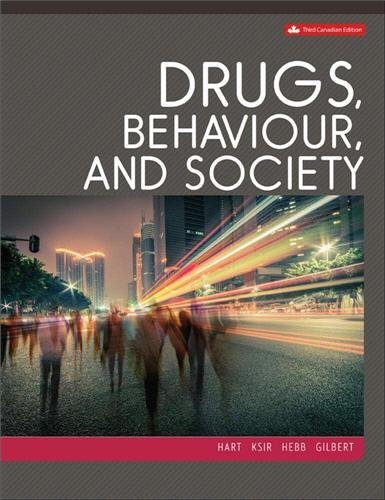
Drugs, Behaviour and Society 3rd Canadian Edition by Carl Hart, ISBN-13: 978-1259273469
Original price was: $100.00.$24.99Current price is: $24.99.
Safe & secure checkout
Description
Description
Drugs, Behaviour and Society 3rd Canadian Edition by Carl Hart, ISBN-13: 978-1259273469
[PDF eBook eTextbook]
- Publisher: McGraw Hill Ryerson; 3rd Canadian edition (April 3, 2019)
- Language: English
- 512 pages
- ISBN-10: 1259273466
- ISBN-13: 978-1259273469
Hart’s Drugs, Behaviour, and Society provides the latest information and statistics on drugs to help students understand their effects on Canadian society and human behavior. The Third Canadian Edition includes behavioural, pharmacological, historical, social, legal, and clinical perspectives, providing students with a deeper understanding of the individual problems and social conflicts related to drug use.
Table of Contents:
Title
Copyright
About the Authors
Brief Contents
Contents
Preface
Section One: Drug Use in Modern Society
1 Drug Use: An Overview
The Drug Problem
Talking about Drug Use
Four Principles of Psychoactive Drugs
How Did We Get Here?
Have Things Really Changed?
Drugs and Drug Use Today
Extent of Drug Use
Trends in Drug Use
Correlates of Drug Use
Risk and Protective Factors
Gender, Socioeconomic Status, and Level of Education
Personality Variables
Genetics
Antecedents of Drug Use
Motives for Drug Use
Summary
Review Questions
2 Drug Use as a Social Problem
Laissez-Faire
Toxicity
Categories of Toxicity
Determining the Toxicity of Drugs of Abuse and Misuse
How Dangerous Is the Drug?
Intravenous Drug Use and the Spread of Blood-Borne Diseases
Substance Dependence: What Is It?
Three Basic Processes
Changing Views of Dependence
Which Is More Important: Physical Dependence or Psychological Dependence?
Broad Views of Substance Dependence
Is Dependence Caused by the Substance?
Is Dependence Biological?
Is There an “Addictive Personality”?
Is Dependence a Family Disorder?
Is Substance Dependence a Disease?
Crime and Violence: Does Drug Use Cause Crime?
Why We Try to Regulate Drugs
Summary
Review Questions
3 Drug Policy
The History of Drug Regulations
The Opium Act of 1908
Patent Medicine Act of 1909
Narcotic Control Act of 1961
The Le Dain Commission
Canada’s Drug Strategies
Canada’s Controlled Drugs and Substances Act
Sentencing
Drug Paraphernalia Laws
Regulation of the Sale of Alcohol and Tobacco
Impaired Driving
Diversion to Treatment
International Conventions
Bill S-10: An Act to Amend the Controlled Drugs and Substances Act
Regulation of Pharmaceuticals
New-Drug Submission Processes
Provincial and Territorial Responsibilities
Compulsory Licences
Developing and Introducing a New Drug
The Pharmaceutical Industry in Canada
The Compendium of Pharmaceuticals and Specialties
Medicinal Marijuana Regulations
Canadian Marihuana Medical Access Regulations (MMAR)
Marihuana for Medical Purposes Regulations (MMPR)
Access to Cannabis for Medical Purposes Regulations (ACMPR)
Natural Health Products
Summary
Review Questions
Section Two: How Drugs Work
4 The Nervous System
Homeostasis
Components of the Nervous System
Glia
Neurons
Neurotransmission
Action Potential
The Peripheral Nervous System
Somatic Nervous System
Autonomic Nervous System
Central Nervous System
The Brain
Major Structures
Chemical Pathways
Drugs and the Brain
Life Cycle of a Neurotransmitter
Examples of Drug Actions
Chemical Theories of Behaviour
Brain Imaging Techniques
Summary
Review Questions
5 The Actions of Drugs
Sources and Names of Drugs
Names of Drugs
Categories of Drugs
Pharmacodynamics
Drug Effects
Nonspecific (Placebo) Effects
Dose–Response Relationships
Potency
Pharmacokinetics of Drug Action
Time-Dependent Factors in Drug Actions
Mechanisms of Drug Action: Getting the Drug to the Brain
A Little Chemistry
Routes of Administration
Drug Distribution and Transport in the Blood
More about the Blood–Brain Barrier
Mechanisms of Drug Actions
Effects on All Neurons
Effects on Specific Neurotransmitter Systems
Drug Metabolism and Deactivation
Drug Half-Life
Mechanisms of Tolerance and Withdrawal Symptoms
Drug Disposition Tolerance
Behavioural Tolerance
Pharmacodynamic Tolerance
Drug Classifications
Summary
Review Questions
Section Three: Uppers and Downers
6 Stimulants
Cocaine
History
Coca Wine
Local Anaesthesia
Early Psychiatric Uses
Legal Controls on Cocaine
Supplies of Illicit Cocaine in Canada
Pharmacology of Cocaine
Forms of Cocaine
Mechanism of Action
Absorption and Elimination
Medical Uses of Cocaine
Causes for Concern
Current Patterns of Cocaine Use
Cocaine’s Future
Amphetamines
History
Supplies of Illicit Methamphetamine in Canada
Pharmacology of Amphetamines
Mechanism of Action
Absorption and Elimination
Medical Uses of Amphetamines
Causes for Concern
Summary
Review Questions
7 Depressants and Inhalants
History and Pharmacology
Before Barbiturates
Barbiturates
Meprobamate
Methaqualone
Benzodiazepines
Nonbenzodiazepine Hypnotics
Mechanism of Action of Benzodiazepines
Beneficial Uses of Depressants
Prescription Sedatives
As Anxiolytics
As Sleeping Pills
As Anticonvulsants
Causes for Concern
Dependence Liability
Toxicity
Patterns of Abuse
Benzodiazepine Use in First Nations and Inuit Populations
Drugs Used to Facilitate Sexual Assault
Inhalants
Gaseous Anaesthetics
Nitrites
Volatile Solvents
Rates of Volatile Solvent Abuse in Canada
GHB (Gamma-Hydroxybutyric Acid)
Summary
Review Questions
8 Psychotherapeutic Drugs: Medicationfor Mental Disorders
Mental Illness
Concurrent Disorders
The Medical Model
Classification of Mental Disorders
Treatment of Mental Disorders
Before 1950
Antipsychotics
Antidepressants
Electroconvulsive Therapy
Mood Stabilizers
Consequences of Drug Treatments for Mental Illness Summary
Review Questions
Section Four: Alcohol
9 Alcohol
Alcoholic Beverages
Fermentation and Fermentation Products
Distilled Products
Beer
Wine
Distilled Spirits
Alcohol Use and “The Alcohol Problem”
The Temperance Movement
Prohibition
Prohibition Worked!
Prohibition Is Repealed
Regulation after 1933
Who Drinks? And Why?
Cultural Influences on Drinking
Prevalence and Patterns of Alcohol Use in Canada
Canadian Alcohol and Drug Use Monitoring Survey (CADUMS)
Alcohol Use among Postsecondary Students
Regional Differences in Alcohol Use in Canada
Alcohol Pharmacology
Absorption
Distribution
Metabolism
Mechanism(s) of Action
Behavioural Effects
Time-Out and Alcohol Myopia
Driving under the Influence
Sexual Behaviour
Blackouts
Crime and Violence
Physiological Effects
Alcohol Toxicity
Hangover
Chronic Disease States
Brain Damage
Liver Disease
Heart Disease
Cancer
The Immune System
Canadian Recommended Guidelines for Low-Risk Drinking
Fetal Alcohol Syndrome
Alcohol Dependence
Withdrawal Syndrome
Dependent Behaviours
Summary
Review Questions
Section Five: Familiar Drugs
10 Tobacco
Tobacco History
Early Medical Uses
Chewing Tobacco
Cigars
Cigarettes
Tobacco under Attack
The Quest for “Safer” Cigarettes
Current Cigarette Use
Smokeless Tobacco
Are Cigars Back?
Adverse Health Effects
Passive Smoking: The Danger of Second-Hand Smoke
Smoking and Pregnancy
Pharmacology of Nicotine
Absorption and Metabolism
Physiological Effects
Behavioural Effects
Nicotine Dependence
How to Stop Smoking
Summary
Review Questions
11 Caffeine
Caffeine: The World’s Most Common Psychostimulant
Coffee
Tea
Chocolate
Other Sources of Caffeine
Soft Drinks
“Energy” Drinks
Over-the-Counter Drugs
Caffeine Pharmacology
Time Course
Mechanism of Action
Physiological Effects
Behavioural Effects
Causes for Concern
Cancer
Pregnancy and Conception
Heart Disease
Caffeinism
Summary
Review Questions
12 Natural Health Products and Over-the-Counter Drugs
Natural Health Products
Some Natural Health Products Have Psychoactive Properties
St. John’s Wort
SAMe
Ginkgo Biloba
Caffeine
Weight-Control Products
Sleep Aids
Over-the-Counter Drugs
Regulation of Over-the-Counter Products
Improved Labelling of Over-the-Counter Drugs
Over-the-Counter versus Prescription Drugs
Behind-the-Counter Nonprescription Drugs
Sleep Aids
Analgesics
People and Pain
Aspirin
Acetaminophen
Ibuprofen and Other NSAIDs
Products Containing Codeine
Cold and Allergy Products
The All-Too-Common Cold
Treatment of Cold Symptoms
Allergy and Sinus Medications
Choosing an OTC Product
Summary
Review Questions
Section Six: Restricted Drugs
13 Opioids
History of Opioids
Opium
Morphine
Heroin
Opium and Heroin Supply, Distribution, and Trafficking in Canada
The Changing Profile of Opioid Users
Abuse of Prescription Opioids
Pharmacology of Opioids
Chemical Characteristics
Mechanism of Action
Beneficial Uses
Pain Relief
Intestinal Disorders
Cough Suppressants
Causes for Concern
Dependence Potential
Toxicity Potential
Patterns of Abuse
Research Studies and Pilots Addressing the Needs of Injection Drug Users in Canada
Insite: Vancouver’s Supervised Injection Facility
North American Opiate Medication Initiative (NAOMI)
Study to Assess Long-Term Opioid Maintenance Effectiveness (SALOME)
Summary
Review Questions
14 Hallucinogens
Animism and Religion
Terminology and Types
Phantastica
Indole Hallucinogens
Catechol Hallucinogens
Deliriants
PCP
Anticholinergic Hallucinogens
Amanita Muscaria
Salvia Divinorum
Summary
Review Questions
15 Cannabis
Cannabis, the Plant
Cannabis Preparations
History of Cannabis
Early History
The Nineteenth Century: Romantic Literature and the New Science of Psychology
History of Cannabis Policy in Canada
Legalization of Cannabis in Canada
Marijuana Supply, Distribution, and Trafficking in Canada
Hashish and Hash Oil Supply, Distribution, and Trafficking in Canada
Prevalence Rates of Cannabis Use
What Canadian Youth Think about Cannabis
Worldwide Use of Cannabis
Pharmacology
Cannabinoid Chemicals
Absorption, Distribution, and Elimination
Mechanism of Action
Physiological Effects
Behavioural Effects
Medical Uses of Cannabis in Canada
Nausea and Vomiting
Wasting Syndrome in AIDS and Cancer
Multiple Sclerosis and Amyotrophic Lateral Sclerosis
Epilepsy
Pain
Psychiatric Disorders
Other Diseases and Symptoms
Contraindications
Causes for Concern
Abuse and Dependence
Toxicity Potential
Cannabis and Psychosis
Cannabidiol
Summary
Review Questions
16 Performance-Enhancing Drug Abuse
Historical Use of Drugs in Athletics
Ancient Times
Early Use of Stimulants
Amphetamines
International Drug Testing
North American Football
Steroids
The BALCO Scandal
The Battle over Testing
Stimulants as Performance Enhancers
Steroids
Mechanism of Action
Prevalence of Illicit Steroid Use in Canada
Psychological Effects of Steroids
Adverse Effects on the Body
Regulation
Other Hormonal Manipulations
Beta-2 Agonists
Blood Doping
Creatine
Getting “Cut”
Summary
Review Questions
Section Seven: Prevention and Treatment
17 Preventing Substance Abuse
Defining Goals and Evaluating Outcomes
Types of Prevention
Prevention Programs in Schools
Why Invest in Young People?
The Knowledge-Attitudes-Behaviour Model
Affective Education
Antidrug Norms
Development of the Social Influence Model
Prevention Programs That Work
School-Based Prevention Programs
Project ALERT
Drug Abuse Resistance Education (DARE)
Life Skills Training
Programs That Target Peers, Parents, and the Community
Peer Programs
Parent and Family Programs
Strengthening Families for the Future
Community Programs
Prevention in the Workplace
What Should We Be Doing?
Summary
Review Questions
18 Treating Substance-Related Disorders
The Social and Economic Costs of Alcohol and Other Drugs in Canada
Pharmacological Treatments
Detoxification (Withdrawal Management) and Maintenance Phase
Alcohol
Nicotine
Opioids
Cocaine
Cannabis
Management of Problematic Substance Use in Pregnancy
Pharmacological Treatments for Adolescents with Substance- Related Disorders
Behavioural and Psychosocial Treatments
Defining Treatment Goals
Motivational Enhancement Therapy
Contingency Management
Relapse Prevention
Transtheoretical Model (Stages of Change) and Substance Abuse Treatment
Harm Reduction
Substance Abuse in Canada: Concurrent Disorders
Treatment and Rehabilitation: The Big Picture in Canada
Is Treatment Effective?
Alcoholics Anonymous
A Systems Approach to Substance Use in Canada
Summary
Review Questions
Glossary
Dr. Carl Hart is an Associate Professor in both the Departments of Psychiatry and Psychology at Columbia University and is also a Research Scientist in the Division of Substance Abuse at the New York State Psychiatric Institute. A major focus of Dr. Hart’s research is to understand the complex interactions between neurobiological and environmental factors that mediate and modulate the actions of drugs of abuse, including drug-taking behaviour and cognitive performance. Dr. Hart’s research has been supported by the National Institute on Drug Abuse for the past several years. In addition to his substantial research responsibilities, Dr. Hart teaches an undergraduate Drugs and Behaviour course and was recently awarded Columbia University’s highest teaching award.
Charles Ksir received his bachelor’s degree in Psychology from the University of Texas at Austin and his Ph.D. from Indiana University in Bloomington. Following his postdoctoral training in Neurobiology at the Worcester Foundation in Massachusetts, he began a 34-year career in teaching and research at the University of Wyoming, where he also served in a variety of administrative positions. Now a professor emeritus, he focuses his efforts on teaching and textbook writing. He has taught the psychology course Drugs and Behaviour to more than three thousand students since 1972 and has received several teaching awards.
Dr. Robert Gilbert is an Associate Professor in the Faculty of Health Professions at Dalhousie University. He received his M.Sc. in Medicine from Memorial University and a Ph.D. in Pharmacology and Neurosciences from Dalhousie University. Dr. Gilbert is an educator and applied clinical research scientist. His research interests include the development of nonpharmacological approaches for managing anxiety in persons undergoing withdrawal from psychoactive substances; the evaluation and development capacity for evidence-informed decision making in addiction prevention and treatment; and the development of novel approaches for engaging problem gamblers in treatment.
Dr. Andrea L. O. Hebb received her bachelor’s degree in Psychology at Dalhousie University and her M.Sc. and Ph.D. from Carleton University. She pursued postdoctoral training in Neurobiology and Pharmacology at the Universities of Ottawa and Dalhousie. Her research investigated putative therapeutic genetic targets for the diagnosis and treatments of neurobiological disease. Dr. Hebb is the inventor on two patents and has published more than 20 papers and several major review papers and book chapters. Dr. Hebb is a Research Scientist with the Departments of Pharmacology and Neurosurgery at Dalhousie University and holds a faculty position at St. Mary’s University, where she teaches undergraduate classes in development, neuroscience, pharmacology, and addiction.
What makes us different?
• Instant Download
• Always Competitive Pricing
• 100% Privacy
• FREE Sample Available
• 24-7 LIVE Customer Support
Reviews
There are no reviews yet.